
Last updated September 20, 2026
Free on-site gate assessment - hinges, posts, and your LiftMaster or Nice gate operator checked before anything is quoted
The assessment is free and the quote is the invoice.
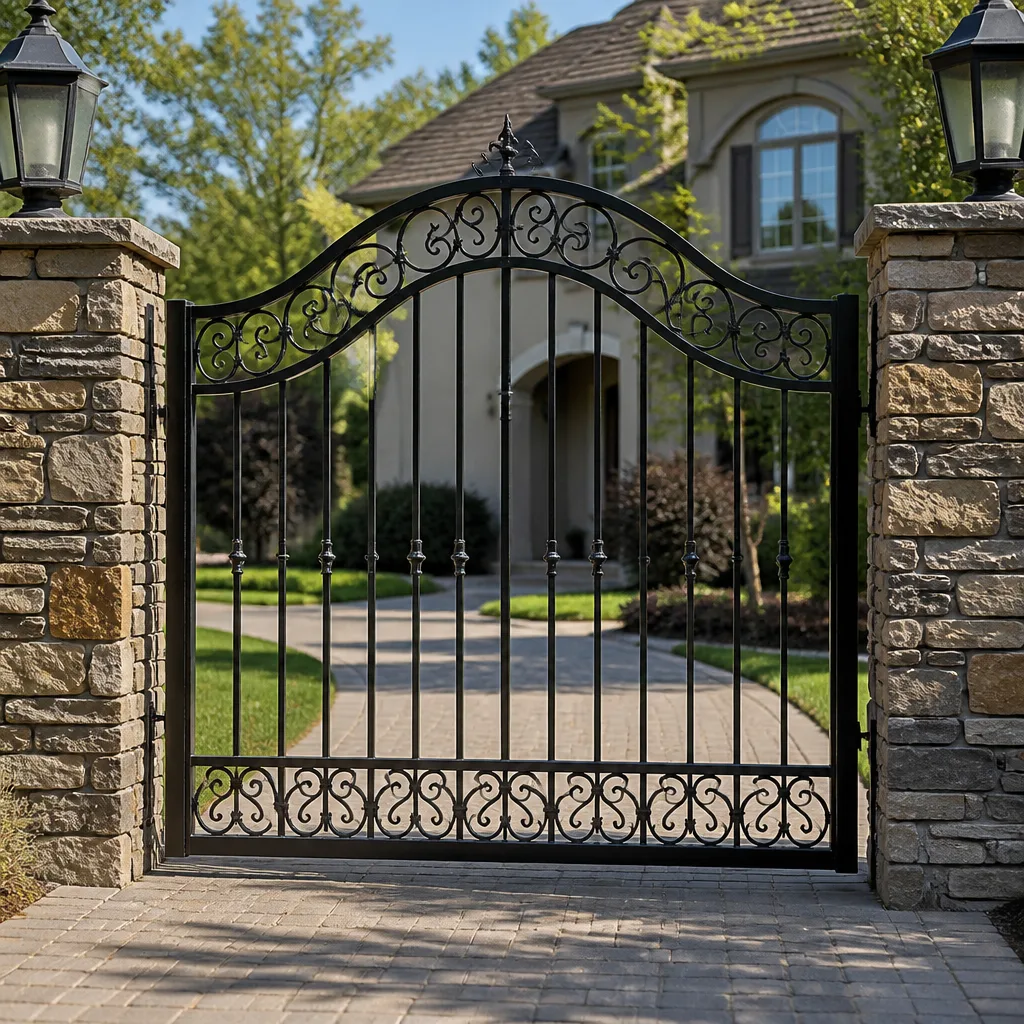
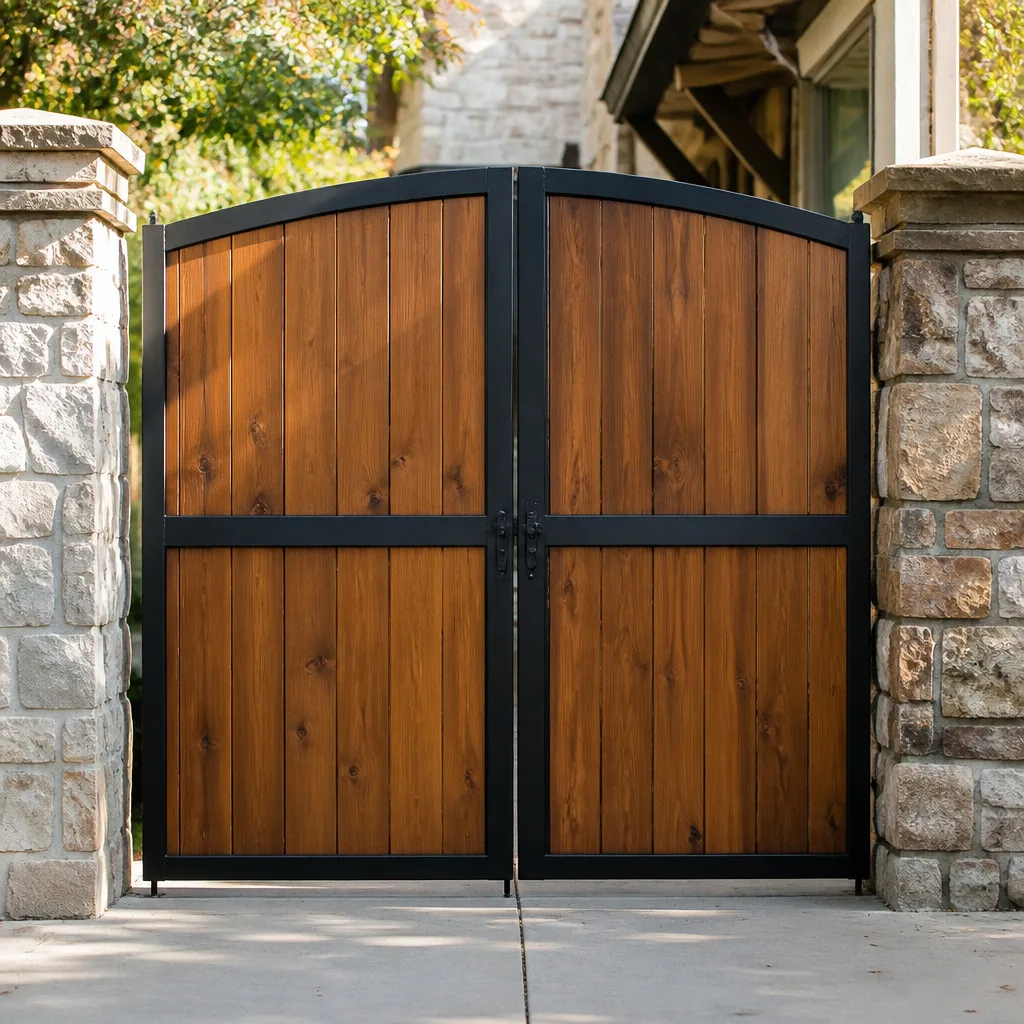
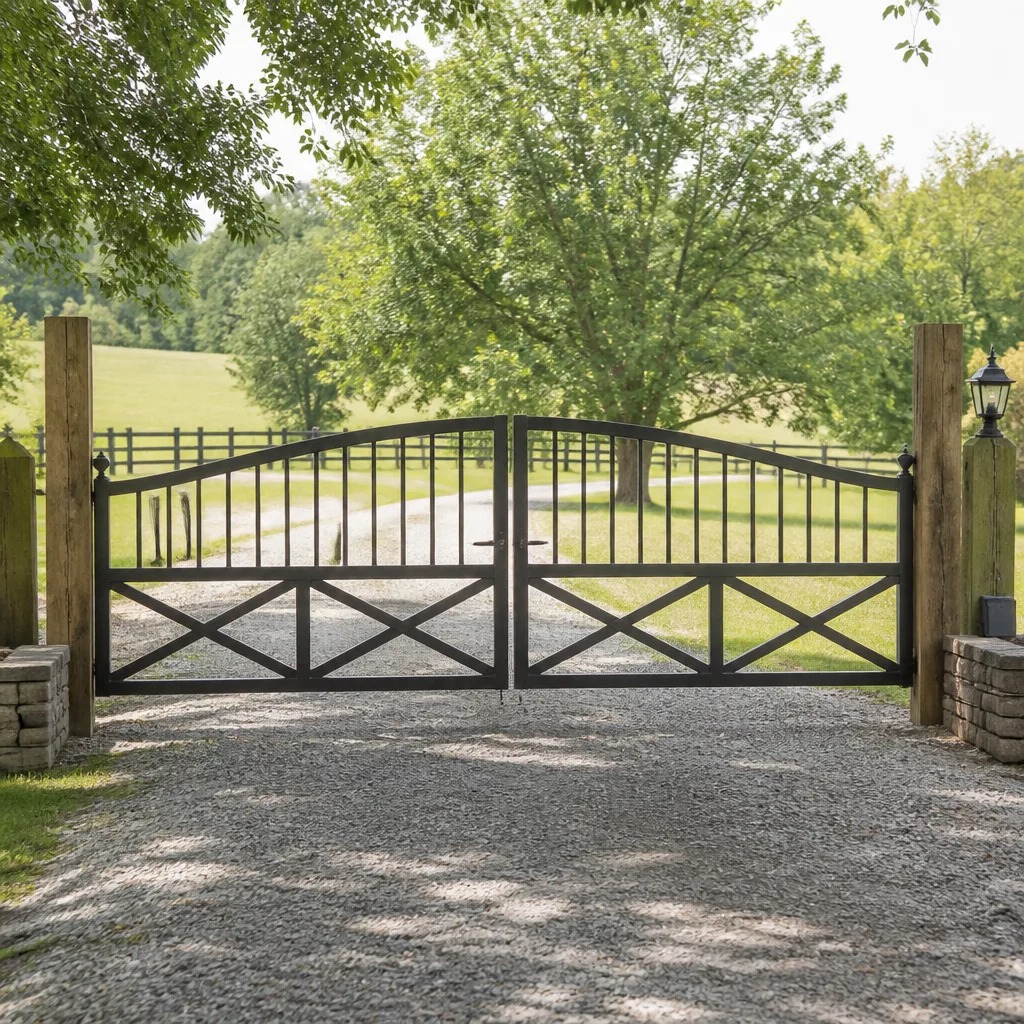
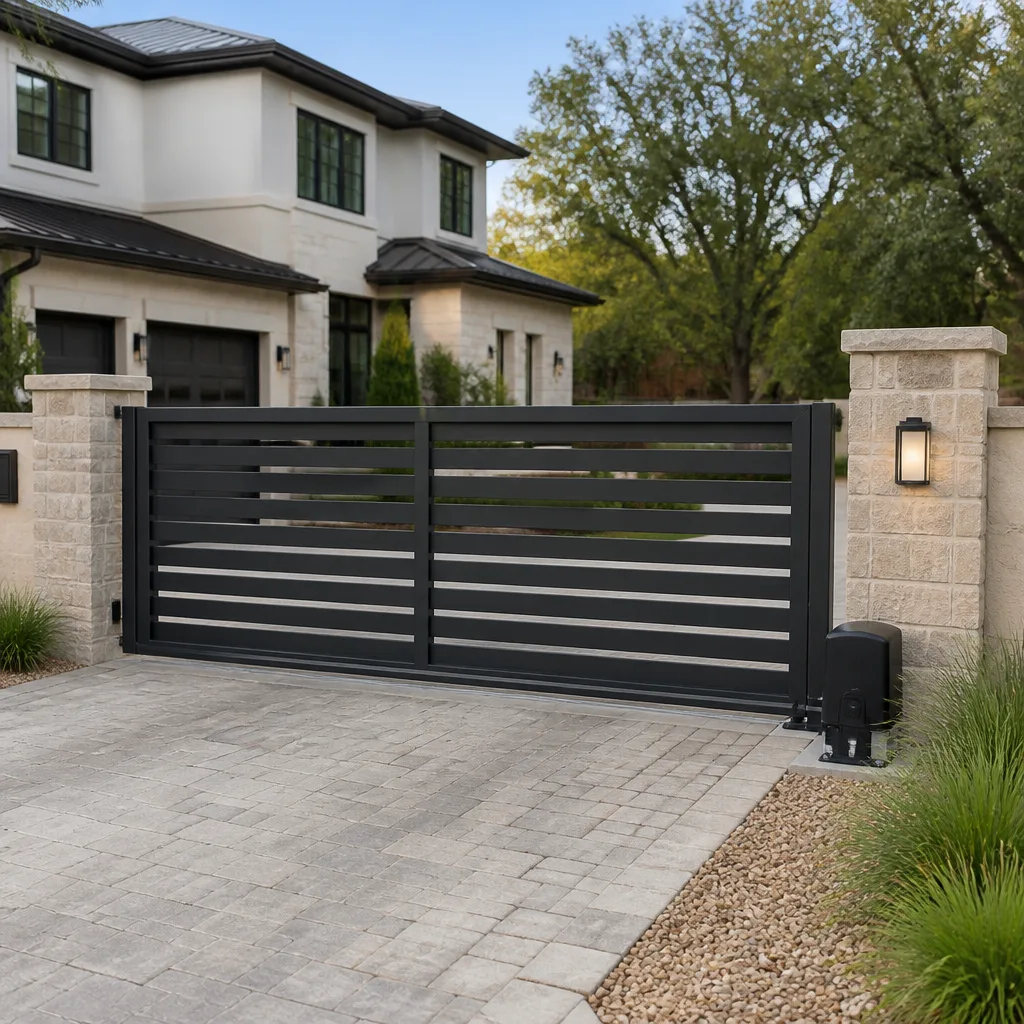
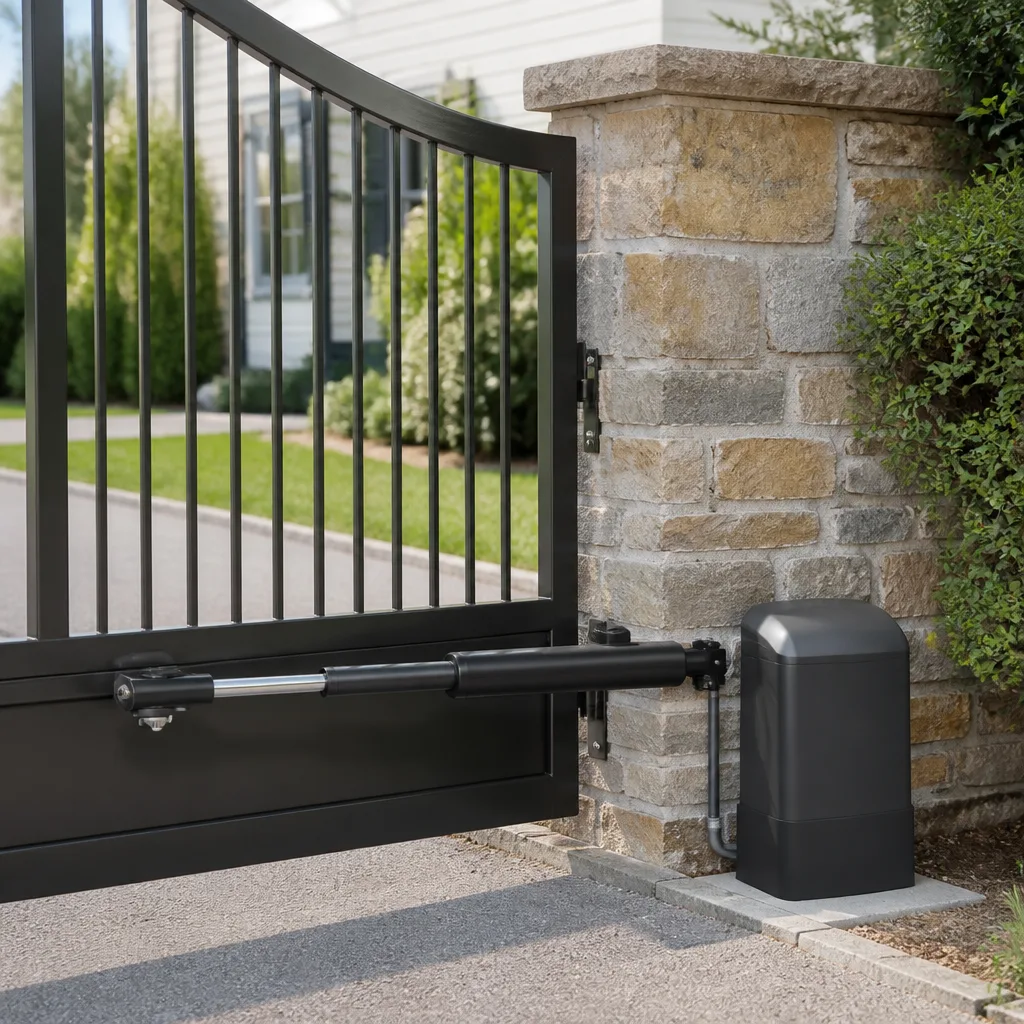
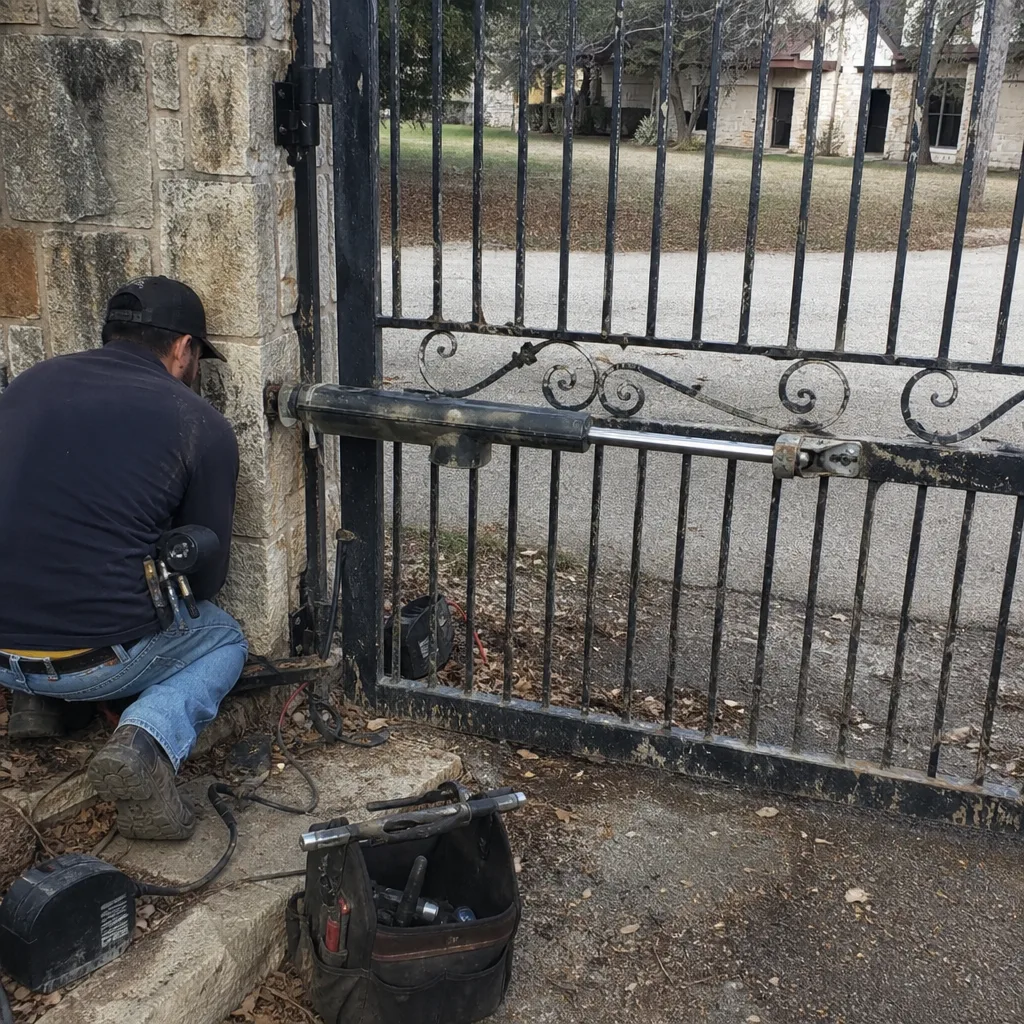 Before
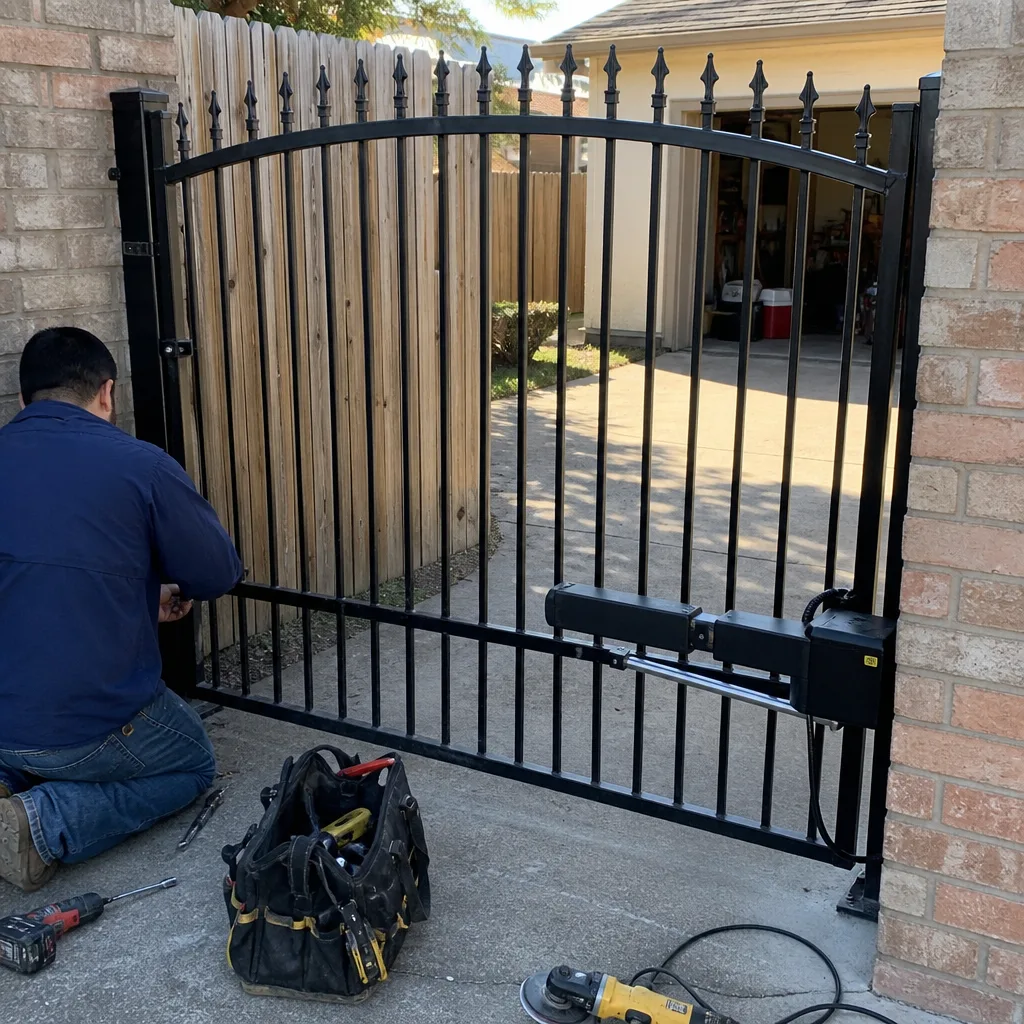 After
After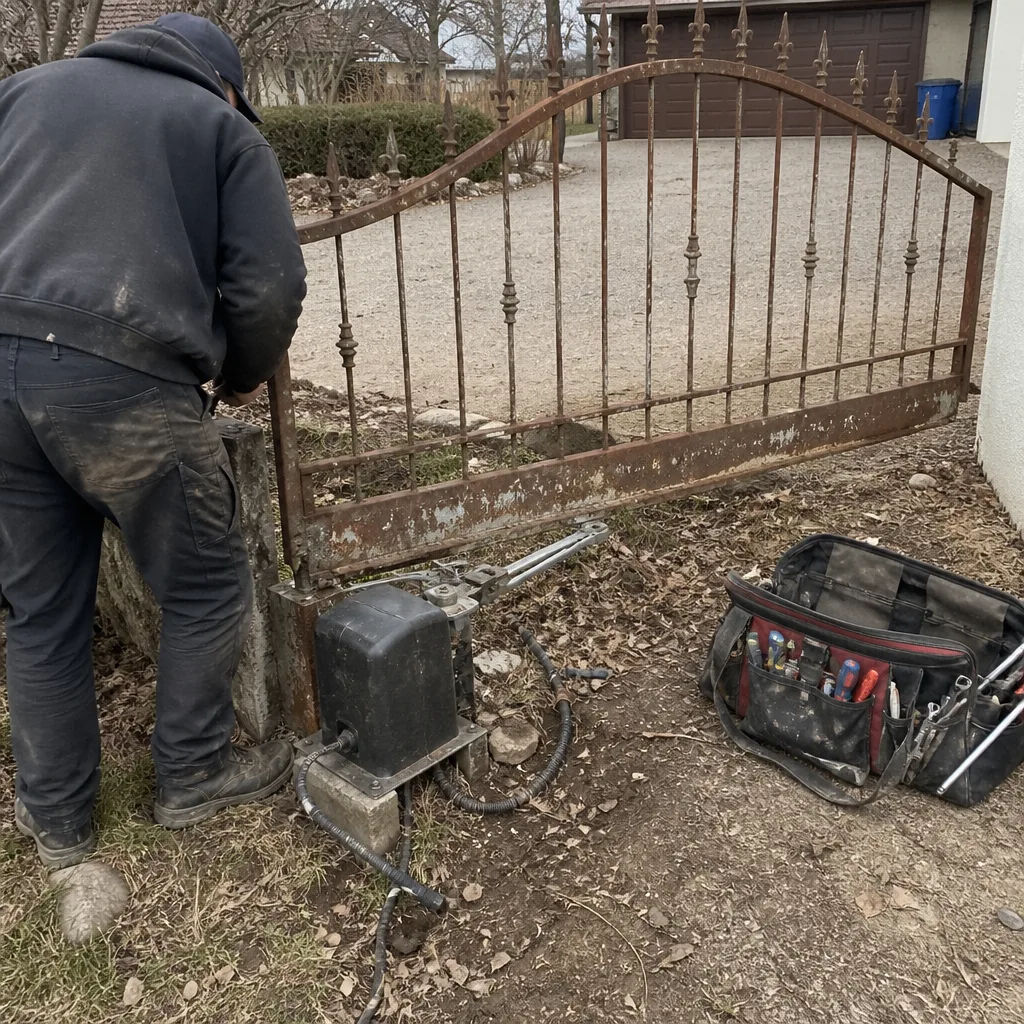 Before
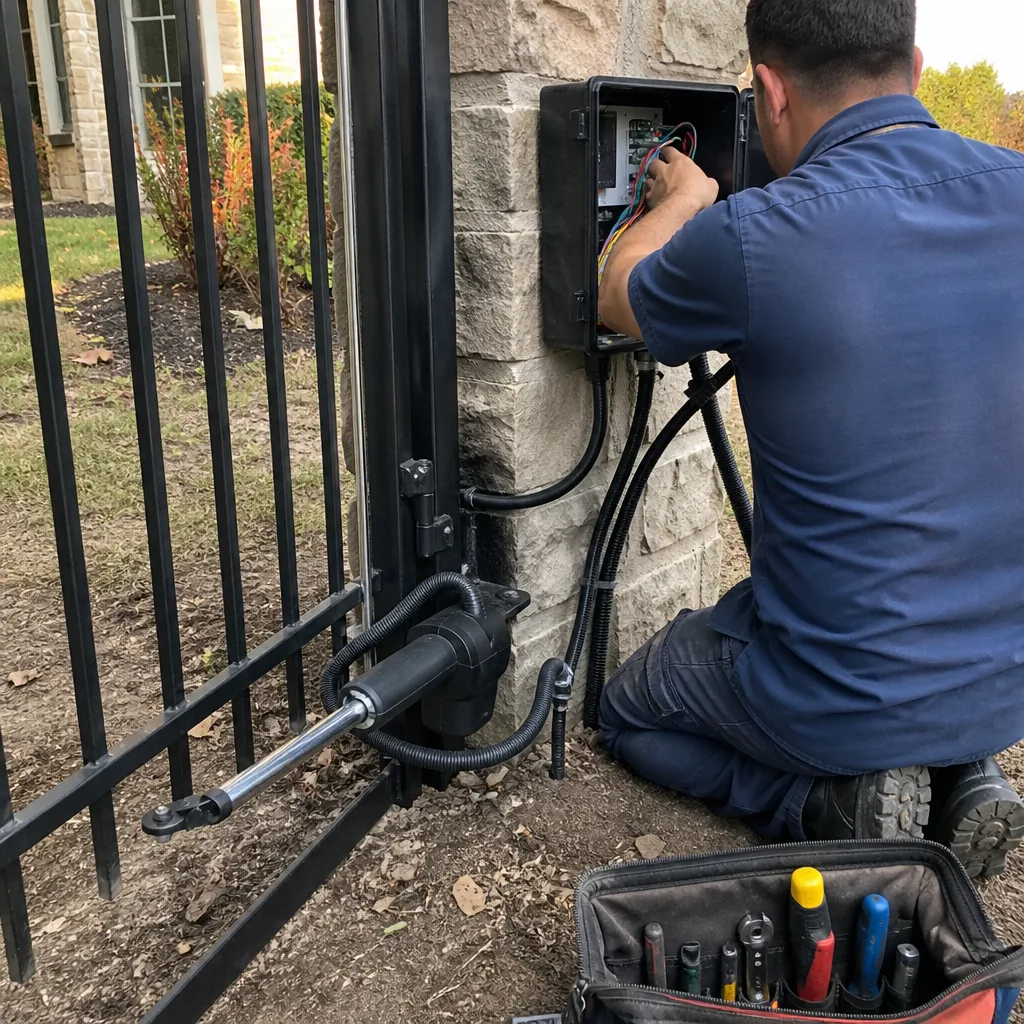 After
After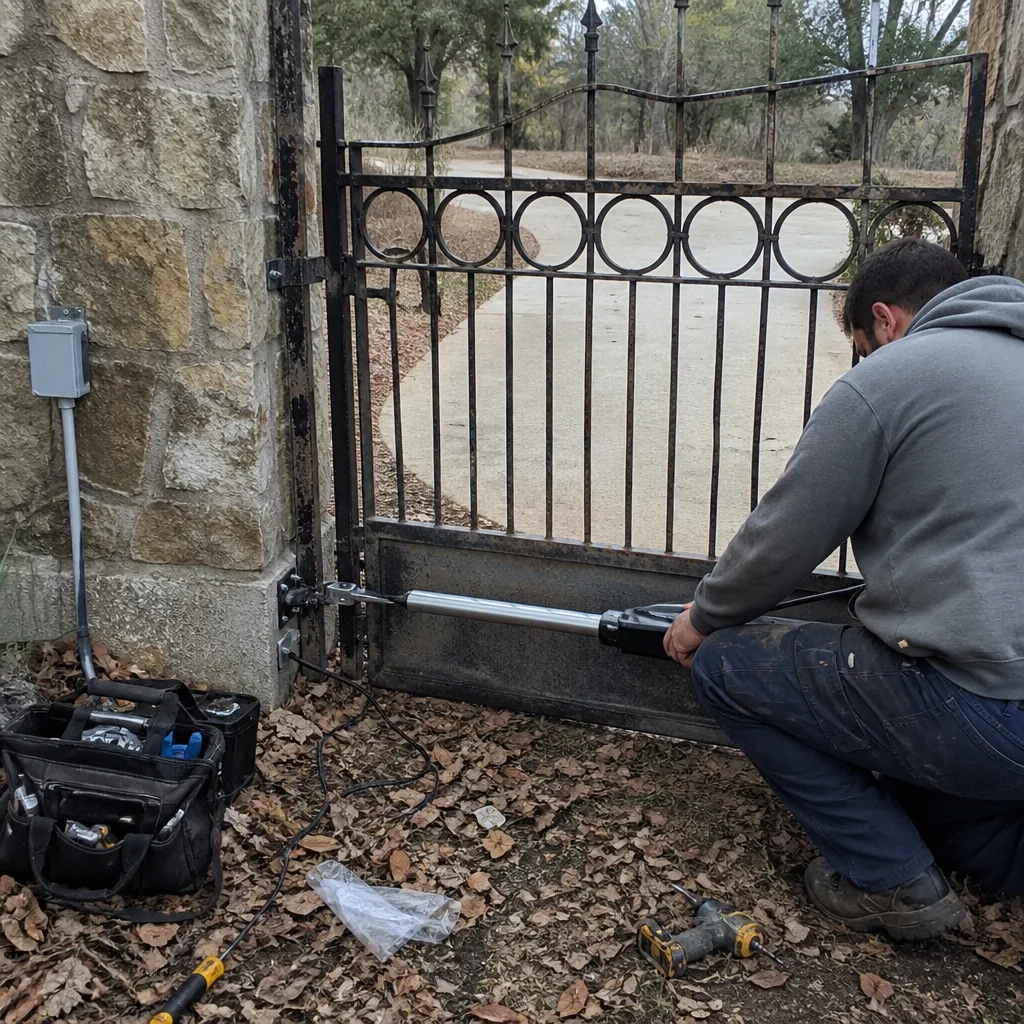 Before
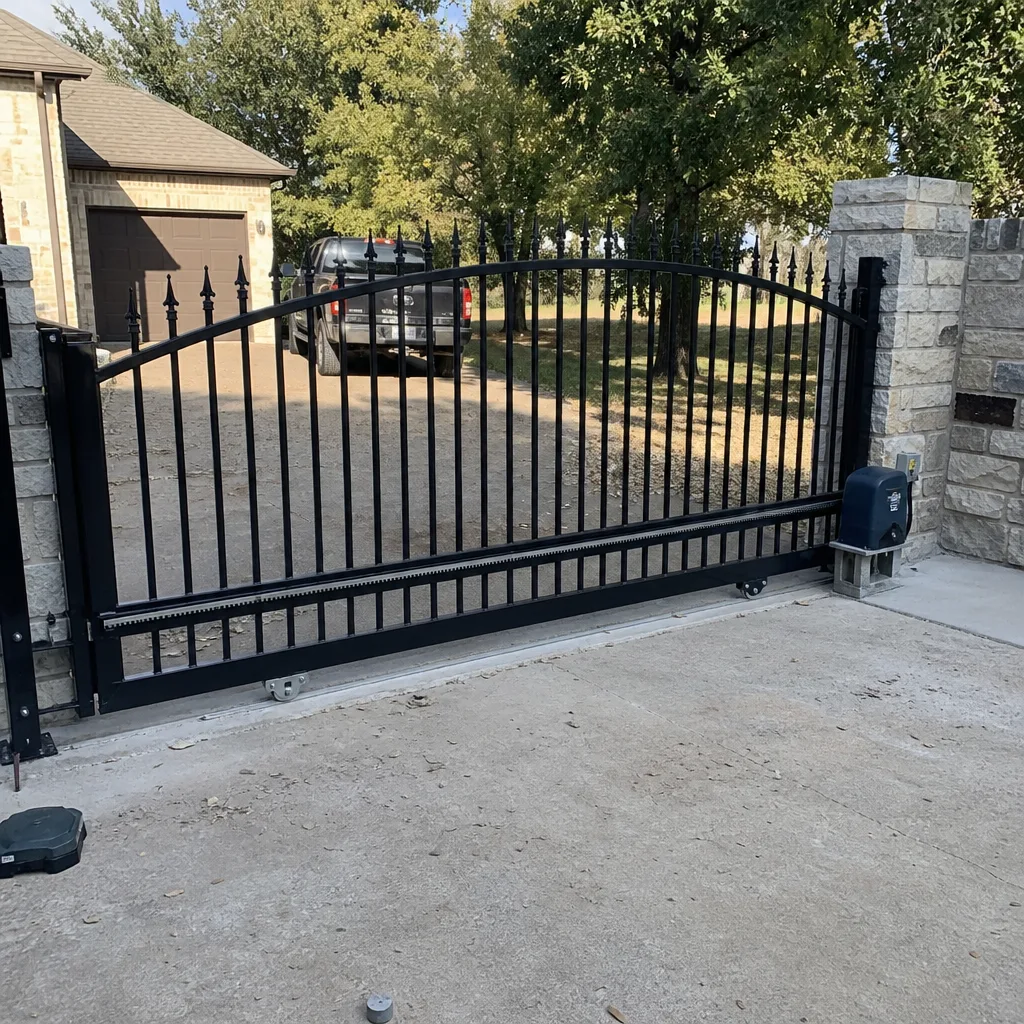 After
AfterThe Complete Guide to Gate Repair in Weatherford
The gate that won’t open on a Tuesday morning usually failed on a Wednesday three months ago. The symptom just took that long to finish the job. In Weatherford, where clay-heavy soil shifts with every wet-dry cycle, the root cause often predates the visible breakdown by an entire season. This guide maps the full diagnostic chain behind gate failures in Parker County, so you can identify where the problem actually started, not just where it became visible. For more guides & resources, visit our blog.
Quick Answer
Our Gate Repair services in Weatherford typically cost between $145 and $900 depending on whether the failure is mechanical, electrical, or structural, with most residential repairs falling in the $200 to $450 range. The most common issues we document are misaligned photo-eyes, failed capacitors on gate motors, and posts that have shifted due to clay soil movement. A thorough diagnostic that traces the failure to its root cause, rather than just replacing the part that finally broke, is what separates a repair that lasts from one that recurs in six months.
Table of Contents
- The Diagnostic Chain: Why Gate Repair Is Never One Fix
- How Weatherford’s Clay Soil Breaks Gates Before Any Part Fails
- The Diagnostic Order: Structure First, Power Second, Logic Third, Hardware Last
- Swing Gate vs. Slide Gate: Two Different Failure Patterns in Parker County
- How to Read a Repair Quote: Symptom Replacement vs. Root Cause
- What Gate Repair Costs in Weatherford: A Line-Item Breakdown
- What a Wiring Diagram Left On-Site Actually Prevents
- Common Mistakes to Avoid
- When to Call a Professional
- Frequently Asked Questions
- The Bottom Line
BeforeAfterThe Diagnostic Chain: Why Gate Repair Is Never One Fix
A gate is a system, not a collection of parts. The motor, the hinges, the wheels, the photo-eyes, the control board, the limit switches, the keypad, the loop detector under the driveway, the power supply: all of these are connected, and a failure anywhere along that chain eventually shows up as a symptom somewhere else. This is the core reality of gate repair in Weatherford, and it is the main reason homeowners end up paying twice for the same problem.
Here is a real sequence we see regularly. A homeowner notices the gate is slower than it used to be. They ignore it for a month. Then the gate starts reversing halfway through its travel, as if something is blocking it. The homeowner assumes the motor is failing. But when we trace it back, the root cause is a post that shifted half an inch during the spring rains, putting the gate’s hinge load out of square. The motor has been working harder for weeks. The reversing issue is the photo-eye losing alignment as the gate travels along its now-skewed path. The motor itself was never the problem.
Every homeowner in Weatherford should understand this map of dependencies:
- Structure sits upstream of everything. Posts, hinges, wheels, and the track (on slide gates) carry the gate’s weight. When structure shifts, every downstream component compensates until something gives.
- Power comes second. A gate can have perfect mechanics and a dead capacitor, a tripped breaker, or a corroded wire nut. No amount of hinge adjustment fixes a power problem.
- Logic sits third. Photo-eyes, limit switches, loop detectors, and the control board all “tell” the gate what to do. When those signals are wrong, the gate behaves erratically even though the hardware is intact.
- Hardware is last. Motors, gearboxes, chains, and circuit boards are the endpoints. They fail when everything upstream has been stressing them, or when they simply reach the end of their operational life.
The homeowner who understands this chain can ask a better question when a technician shows up: “What did you find upstream?” If the answer is vague, the fix will likely be temporary.
How Weatherford’s Clay Soil Breaks Gates Before Any Part Fails
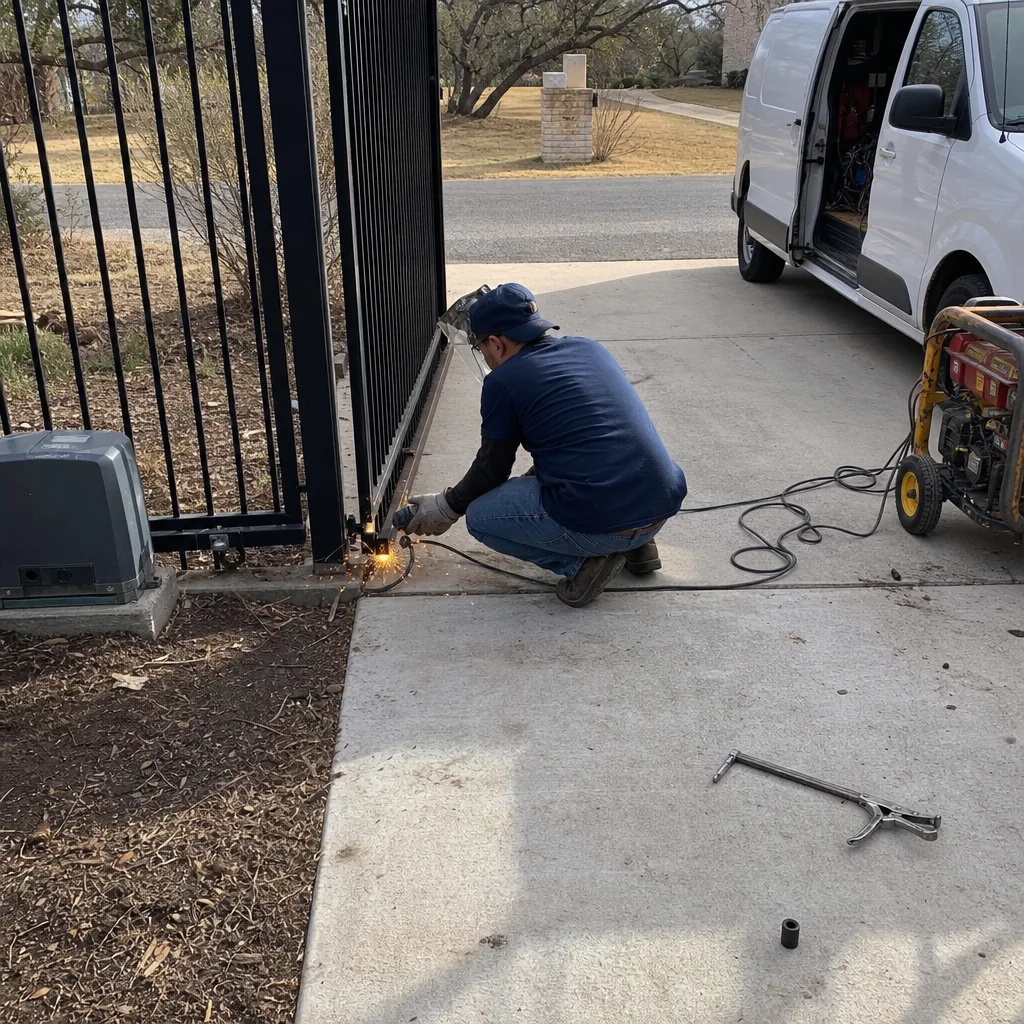
Weatherford sits on expansive clay soil. The technical term is “vertisol,” and it matters to gate owners because it expands when wet and contracts when dry, sometimes moving several inches over the course of a single season. Concrete footings poured into this soil are subjected to lateral and vertical pressure year-round. Gate posts set in concrete are essentially levers with a gate hanging off one end and the soil squeezing the footing on the other.
The result in Parker County is consistent: post lean. We document it on the majority of residential gate repairs that involve binding hinges, dragging gates, or photo-eyes that quit aligning. The gate didn’t fail because a part wore out. The gate failed because the geometry of the opening changed underneath it.
Most standard gate posts in Weatherford are set 36 to 42 inches deep. That is the industry norm, and in stable soil it works fine. In clay soil that moves with moisture, it is often marginal. When we set replacement posts, we dig deeper, backfill with gravel or lean concrete, and account for the soil’s seasonal behavior. The fix is not more steel; it is better interaction with the soil.
Here are the specific symptoms that indicate a structural root cause before any mechanical part:
- Gate drags on the ground or scrapes on the latch post at one specific point in its travel
- Hinges show uneven wear, with the top hinge loose and the bottom hinge compressed
- The gap between the gate and the fence varies by more than half an inch from top to bottom
- The gate reverses or stops at the same spot every time, regardless of adjustments to the limits
- The keypad or lock post is visibly out of plumb when you sight down the fence line
None of these are electrical problems. Adjusting the motor limits or replacing the photo-eye will not fix them. The root cause is in the ground, and until the post is re-set or the hinge geometry is corrected, the gate will continue to fail at regular intervals.
The Diagnostic Order: Structure First, Power Second, Logic Third, Hardware Last
When we arrive at a gate repair call in Weatherford, there is an order to the work. It is not negotiable, because skipping ahead causes misdiagnosis. This is the sequence we use, and it is the sequence any thorough technician should follow.
Step 1: Structure
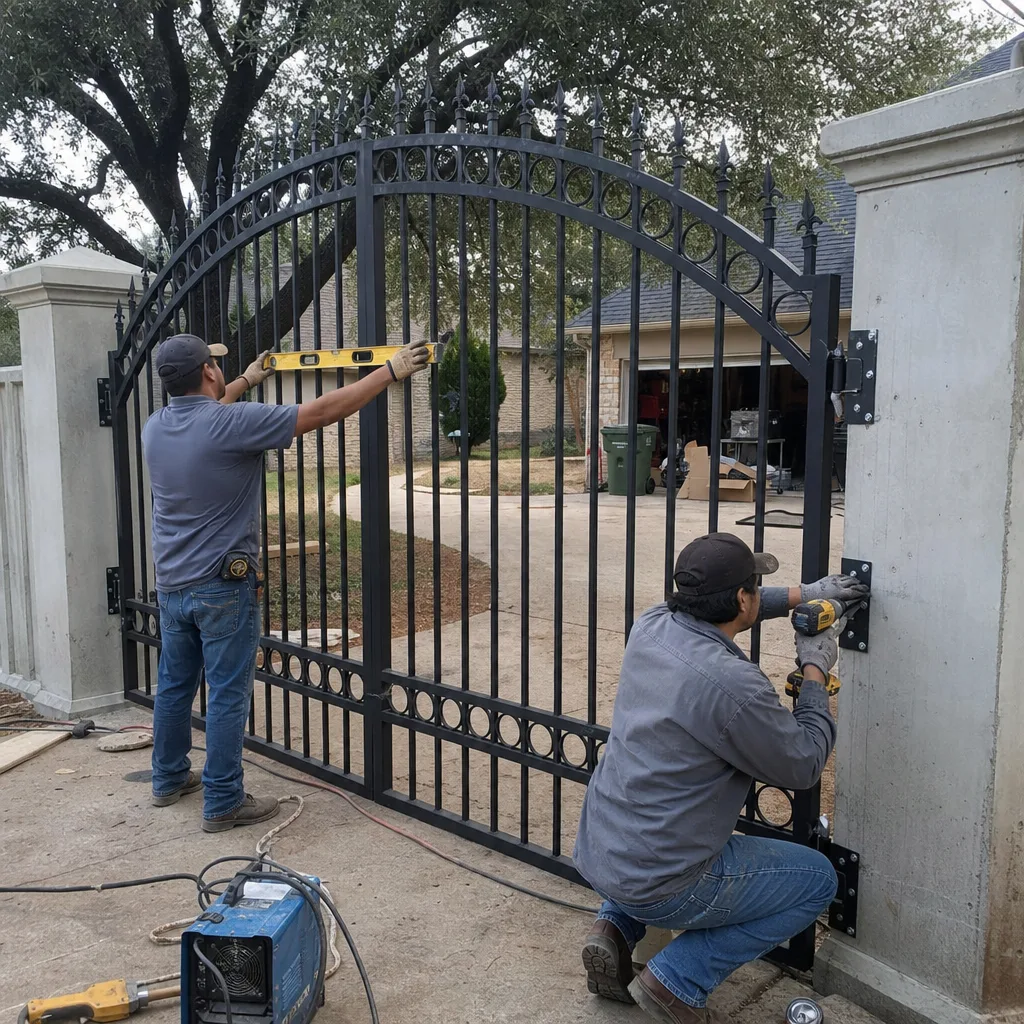
Open and close the gate manually, with the motor disengaged. Feel the weight, watch the hinge travel, and listen for binding. Check plumb on the posts with a level. Inspect the wheels and track on slide gates for wear patterns. If the gate is hard to move by hand, no amount of automation will make it operate correctly.
Step 2: Power
Check the breaker. Check the GFCI outlet most gate motors plug into. Inspect for corrosion at wire connections, especially at the junction box near the gate. In Weatherford, humidity and temperature swings cause wire nuts and terminal screws to loosen over time. We test voltage at the motor and at the control board, both at rest and under load. A motor that gets 110 volts when idle and 80 volts when running has a supply problem, not a motor problem.
Step 3: Logic
Photo-eyes, limit switches, loop detectors, keypads, and the control board itself. We align the photo-eyes, then check the limit switch settings against actual gate travel. We test the loop detector by driving a vehicle over it. We verify that the keypad is sending the right signal. These are the “senses” of the gate, and when they lie, the gate behaves in ways that look like motor failure.
Step 4: Hardware
Only after structure, power, and logic are verified do we test the motor, gearbox, chain, or circuit board. This is where the expensive parts live, so it is the last place to look. It is also the place where most unlicensed or under-experienced repair companies start, because replacing a motor is faster and more profitable than diagnosing a ground problem.
This sequence is available to any homeowner in Weatherford who wants to understand what their technician is doing. Ask them what they tested, in what order. If they cannot answer, that is a signal.
Swing Gate vs. Slide Gate: Two Different Failure Patterns in Parker County
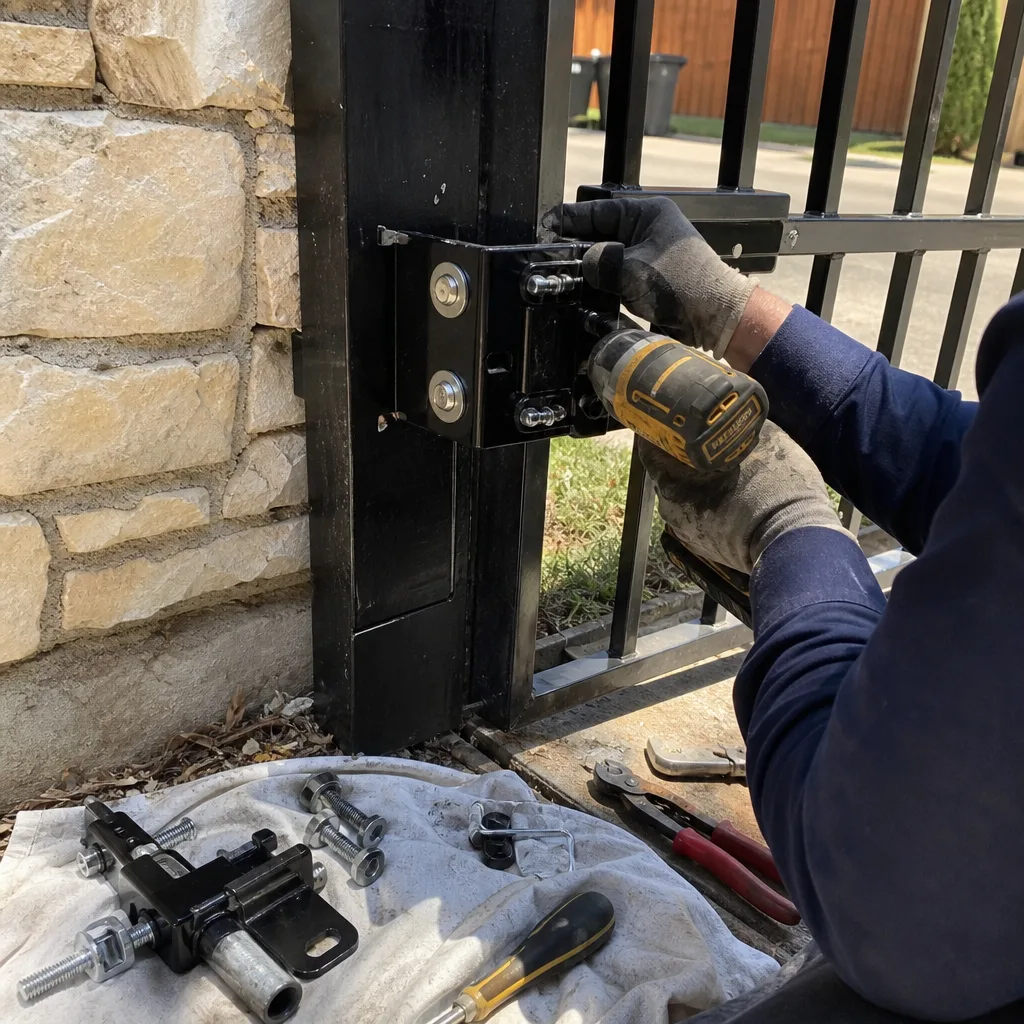
Weatherford driveways come in two basic shapes: flat enough for a slide gate, or graded enough to need a swing gate. The failure patterns for each are different, and knowing which one applies to your setup helps you anticipate problems before they strand you outside your own driveway.
Swing Gates
Swing gates hang on hinges and pivot on posts. In clay soil, the number one failure is post lean. The number two failure is hinge wear, which accelerates once the gate is out of square. The number three is wind load. Weatherford gets strong spring winds, and a solid-panel swing gate acts like a sail. The motor’s gearbox absorbs that load every cycle, and if the gate is not properly balanced on its hinges, the gearbox wears prematurely.
Swing gate maintenance in Weatherford starts with hinge lubrication and post inspection. If the post is moving, the hinge will follow, and the motor will be next.
Slide Gates
Slide gates ride on wheels along a track, and the track sits directly on or slightly above grade. In Weatherford, the failure pattern is different: soil movement shifts the track out of alignment, debris builds up in the track channel (especially after windstorms), and the cantilever or wheel carriage wears unevenly. Slide gates also collect grass, gravel, and mud that swing gates never touch, which means drive wheels and guide rollers need cleaning and inspection more often than homeowners expect.
Slide gate maintenance in Parker County starts with clearing the track and checking wheel wear. If the track has settled or shifted, the gate will bind at a specific point, and the motor will draw excessive current every time it pushes through that bind.
Both types are fully serviceable. Neither is inherently more reliable. The difference is the soil, the wind, and the debris load specific to your property.
How to Read a Repair Quote: Symptom Replacement vs. Root Cause
Here is a skill that will save you money on gate repair in Weatherford: learn to read the quote. A quote reveals more about the technician than about the gate.
A symptom-replacement quote lists parts and labor. It might say: “Replace photo-eye, $180.” That is not a diagnosis. That is a shopping list. A photo-eye fails for a reason. It might be misaligned because the post shifted. It might be wired to a circuit with an intermittent short. It might be a cheap aftermarket unit that was never compatible with the control board. Replacing the part without identifying the reason means the same failure returns, or a related failure shows up next month.
A root-cause quote reads differently. It names the failure, then names the cause, then names the correction. For example: “Photo-eye misaligned due to post lean of 3/4 inch over 6 feet. Reset post, realign photo-eye, verify operation.” That quote documents a technician who looked upstream. That is the quote you want.
Here is what to look for on any gate repair quote in Weatherford:
- A named cause. Not just “gate not working” but “capacitor failed due to voltage drop from corroded connection at junction box.”
- A specific scope. What exactly will be removed, tested, replaced, or adjusted, with part numbers or brand names where applicable.
- A written price. Before any work starts. If the price is verbal, it is not a price; it is a suggestion.
- A record trail. A technician who documents measurements, settings, and part numbers is a technician who found something. A technician who documents nothing probably looked at nothing.
Under our Gate Repair in Weatherford service standard, every quote is written, every job is documented, and every repair is priced before tools come out. If another company has quoted you a repair and you are not sure whether it addresses the root cause, bring the paperwork. We review written estimates from any other contractor at no charge.
What Gate Repair Costs in Weatherford: A Line-Item Breakdown
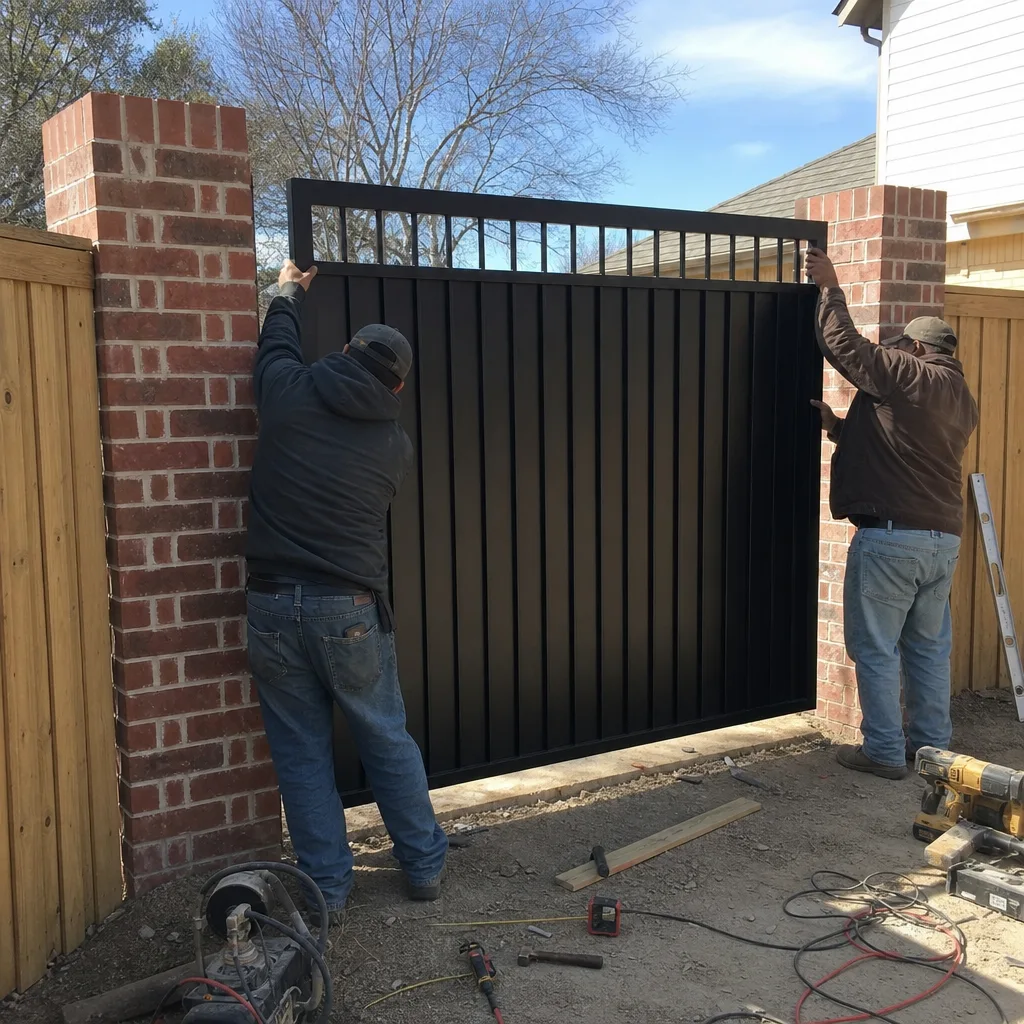
Here is the pricing transparency section. Homeowners in Weatherford consistently tell us they want to see numbers on the page before they call, and we agree. These ranges reflect what we see across Parker County for residential gate work, and they assume a standard single-driveway gate with power already present at the gate.
- Photo-eye alignment or replacement: $120 to $240, depending on whether the unit itself is bad or just misaligned. Most replacements use photo-eyes compatible with FAAC, BFT, Linear, or Viking systems.
- Limit switch adjustment or replacement: $90 to $185. This is a common repair when a swing gate reverses mid-travel or stops short of the closed position.
- Capacitor replacement: $110 to $190. A failed capacitor is one of the most common single-part failures on gate motors in Weatherford, especially after heat exposure.
- Control board replacement: $250 to $600, depending on brand and model. Control boards on FAAC and BFT systems tend to be more expensive than entry-level residential boards, but they are also more repairable.
- Post reset (single post): $350 to $700, including concrete work and regrading. This is the structural repair that fixes most recurring hinge and alignment problems in clay soil.
- Hinge replacement (set): $180 to $400, depending on gate weight and hinge type. Heavy custom gates need heavier hardware.
- Slide gate track repair: $200 to $500, including welding or track replacement where needed.
- Full motor replacement: $600 to $1,400, depending on brand, horsepower, and whether the arm bracket and mounting hardware can be reused.
Most residential gate repairs in Weatherford fall in the $200 to $450 range when the root cause is caught early. The number climbs when the gate has been running against a structural problem for months and the motor, hinges, and control board all need attention at once. Our advice is consistent: address the first symptom when it appears. The repair is cheaper and simpler than the cascade that follows.
Every price we quote is written and agreed before any work begins, under Clause 1 of the Haven Standard. The price on the quote is the price on the invoice, no exceptions.
What a Wiring Diagram Left On-Site Actually Prevents
Here is a question we wish more Weatherford homeowners asked: “Will you leave me a record of what you did?” The answer from most gate companies is no, because producing that record takes time and most customers never ask for it. But that record is the difference between a one-time repair and a repair that actually compounds in value.
When we finish a job, every customer receives a written record of what was found, what was adjusted, and what was installed. On electrical work, that includes a wiring diagram. On mechanical work, it includes before-and-after photos of the critical clearances, hinge alignment, and limit switch positions. On structural work, it includes the measurements we took and the correction we made.
Here is what that record prevents:
- Paying twice to rediscover the same problem. If the gate fails again in two years, the next technician starts from our documented baseline instead of guessing at what a previous person did. That is faster diagnostics and a smaller bill.
- Misdiagnosis by a future contractor. A wiring diagram prevents a future technician from assuming a wire is what it is not. It also prevents accidental disconnection of a safety circuit during unrelated work.
- Warranty disputes and finger-pointing. A written record of what was done, when, and with what parts gives you the leverage of evidence. No he-said-she-said.
- Lost knowledge if you sell the house. The next owner inherits a gate system with documentation. That has real value in a Weatherford real estate transaction.
Most gate companies do not produce this because it adds unbillable time to the job. We produce it because we spent years documenting commercial access-control systems before we ever worked on a residential driveway, and the habit carried over. It is how we work. If you ever get a Gate Motor & Opener in Weatherford repaired by us, you will leave with the same paper trail a commercial facility would demand.
Common Mistakes to Avoid
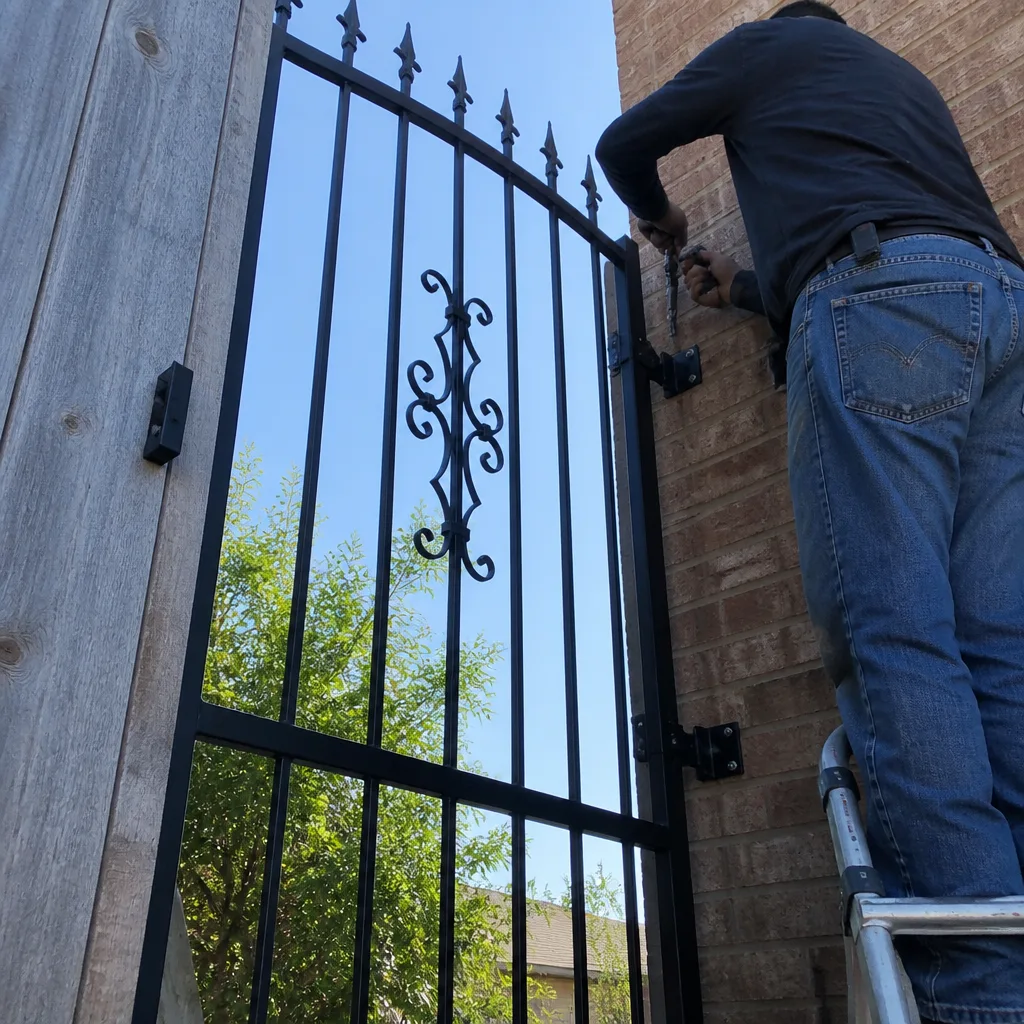
- Lubricating the gate to fix a structural problem. Spraying hinge lubricant on a gate that is binding due to post lean treats the symptom, not the cause. The squeak goes away for a week, then returns along with accelerated wear.
- Adjusting the motor limits without checking the structure. When a gate reverses at the same spot, the instinct is to adjust the limit switch. But if the post shifted, you are retraining the gate to compensate for a geometry problem, which stresses the motor and delays the real fix.
- Replacing the photo-eye when the post is the problem. Photo-eyes fail to align because the gate’s path changed. New eyes will misalign again within weeks. The fix is the post, not the sensor.
- Ignoring slow operation. A gate that is slightly slow is a gate that is working harder than it should. That is the early warning. It is cheaper to diagnose on week one than on month three.
- Choosing a repair company based on price alone. The cheapest quote often reflects a symptom-level repair. You will pay again in six months. A root-cause repair looks more expensive on paper and is cheaper over two years.
- Skipping the written quote. Verbal prices create the exact scenario every Weatherford homeowner fears: an invoice at the end that does not match the number discussed at the start. Get it in writing, every time.
- Letting the gate run with a known safety sensor problem. A photo-eye that is dirty, misaligned, or bypassed creates a real safety hazard, especially for children and pets. Do not disable or ignore it.
When to Call a Professional
Call a professional when the gate moves in a way it did not move last month, for any reason. That means slow travel, reversing at unexpected points, scraping on the ground, hesitation after a command, or any noise that was not there before. These are not cosmetic issues; they are early warnings from a system that is trying to tell you something. Call when the photo-eye will not stay aligned, when the keypad works intermittently, or when the gate trips a breaker. Call when you see visible post lean, cracked concrete at the base of a post, or a slide gate that is wearing grooves into its own track. These are structural failures in progress, and they do not self-correct. Vance Gate Repair Weatherford offers free estimates in Weatherford and throughout Parker County. Call (940) 353-4158 to schedule a diagnostic visit, and you will get a written price before any work begins.
Frequently Asked Questions
Most residential gate repairs in Weatherford run between $200 and $450, with smaller jobs like photo-eye alignment starting around $120 and full motor replacements ranging up to $1,400. The exact price depends on what the diagnostic reveals, and every quote is written before work starts, so there are no surprises at the end. Call (940) 353-4158 for a free estimate.
A gate that reverses before it closes is usually complaining about the photo-eye or the limit switch: either the photo-eye is misaligned (often due to post shift in Weatherford’s clay soil) or the limit switch is set past the gate’s actual travel, triggering the obstruction sensor. It can also indicate a voltage drop at the motor when the gate hits resistance. We diagnose the exact cause with the sequence described above, and the fix is documented in writing.
Yes. We service nine gate automation brands, including FAAC, BFT, Linear, and Viking gate motors, regardless of who installed the system. We do not steer customers toward replacement when a repair is viable. We will evaluate the existing setup, identify the root cause, and give you a written price for the repair.
We repair both. Slide gates and swing gates fail differently in Weatherford, and we address each according to its specific pattern. Slide gates are more prone to track debris and wheel wear; swing gates are more prone to post lean and hinge stress. Both diagnoses start with structure, and both repairs are documented the same way.
Yes. Every visit includes a written record of what was found, what was adjusted, and what was installed, including a photo log of the work and a wiring diagram where electrical work was involved. That is part of the Haven Standard, and it is included at no additional charge.
We maintain daily diagnostic availability throughout Weatherford and Parker County. A live person answers the phone 24/7, so you can schedule at the time that works for you. Call (940) 353-4158 and we will give you a dispatch window and a written price before any work begins. Your first Gate Installation in Weatherford or repair visit also comes with a review of any written estimate from another company, at no charge.
The Bottom Line
Gate repair in Weatherford is a diagnostic process, not a parts transaction. The gate that fails today was telling you something weeks ago, and the root cause usually sits upstream of the broken part, often in the clay soil beneath the posts or in a wire connection that corroded over the winter. A repair that names the cause and documents the correction lasts. A repair that replaces the symptom costs you twice. That is why Vance Gate Repair Weatherford home puts everything in writing: the diagnosis, the price, and the record of what we did. You leave with evidence, not just a gate that works. Call (940) 353-4158 to schedule your free estimate.
Written by Adrian Vance, Owner at Vance Gate Repair Weatherford, serving Weatherford since 2014.