
Last updated September 20, 2026
Free on-site gate assessment - hinges, posts, and your LiftMaster or Nice gate operator checked before anything is quoted
The assessment is free and the quote is the invoice.

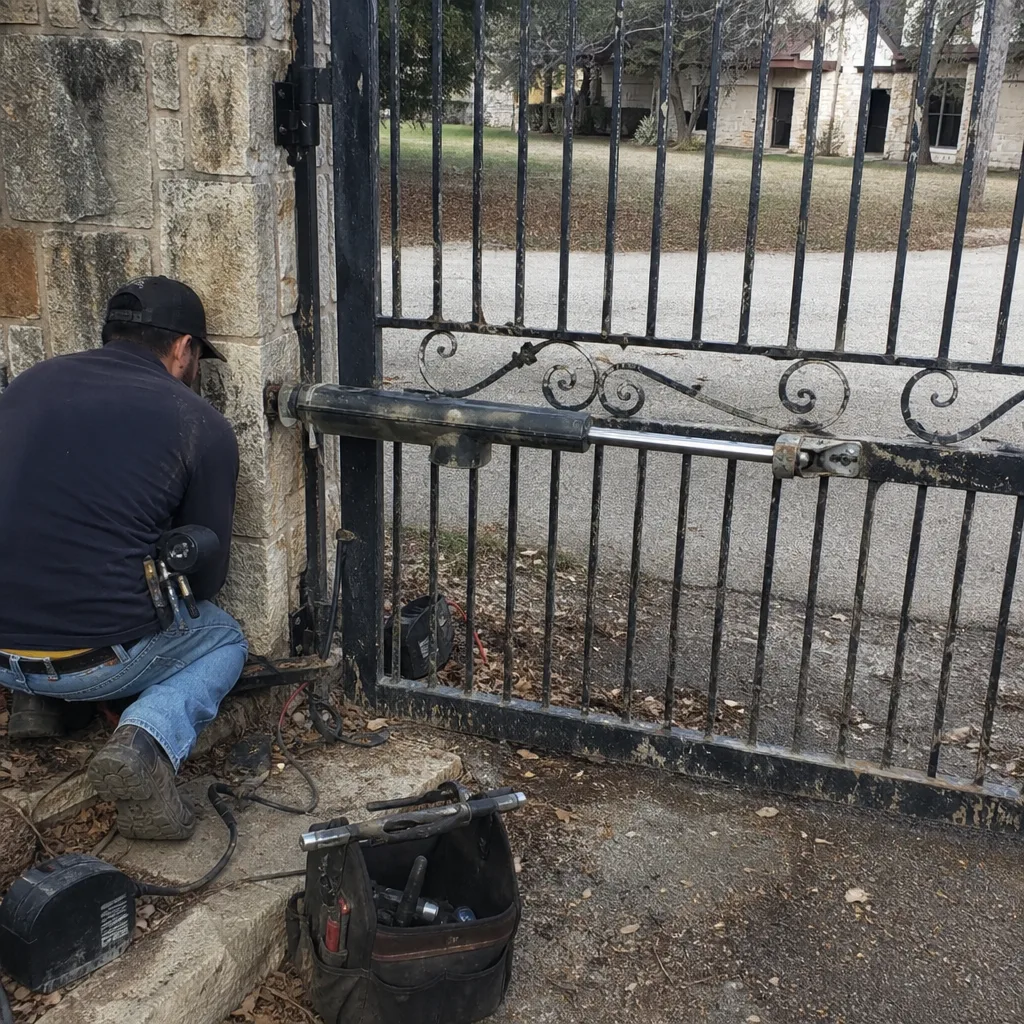 Before
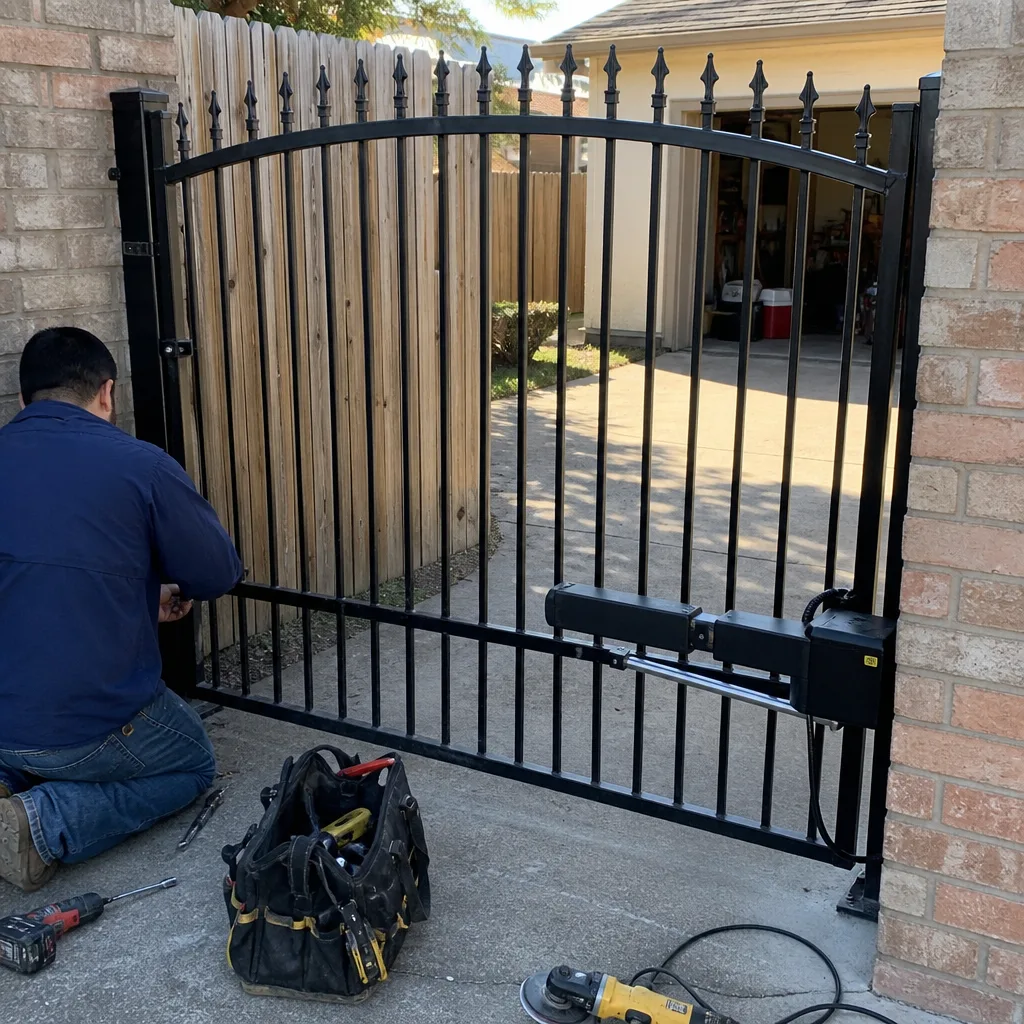 After
After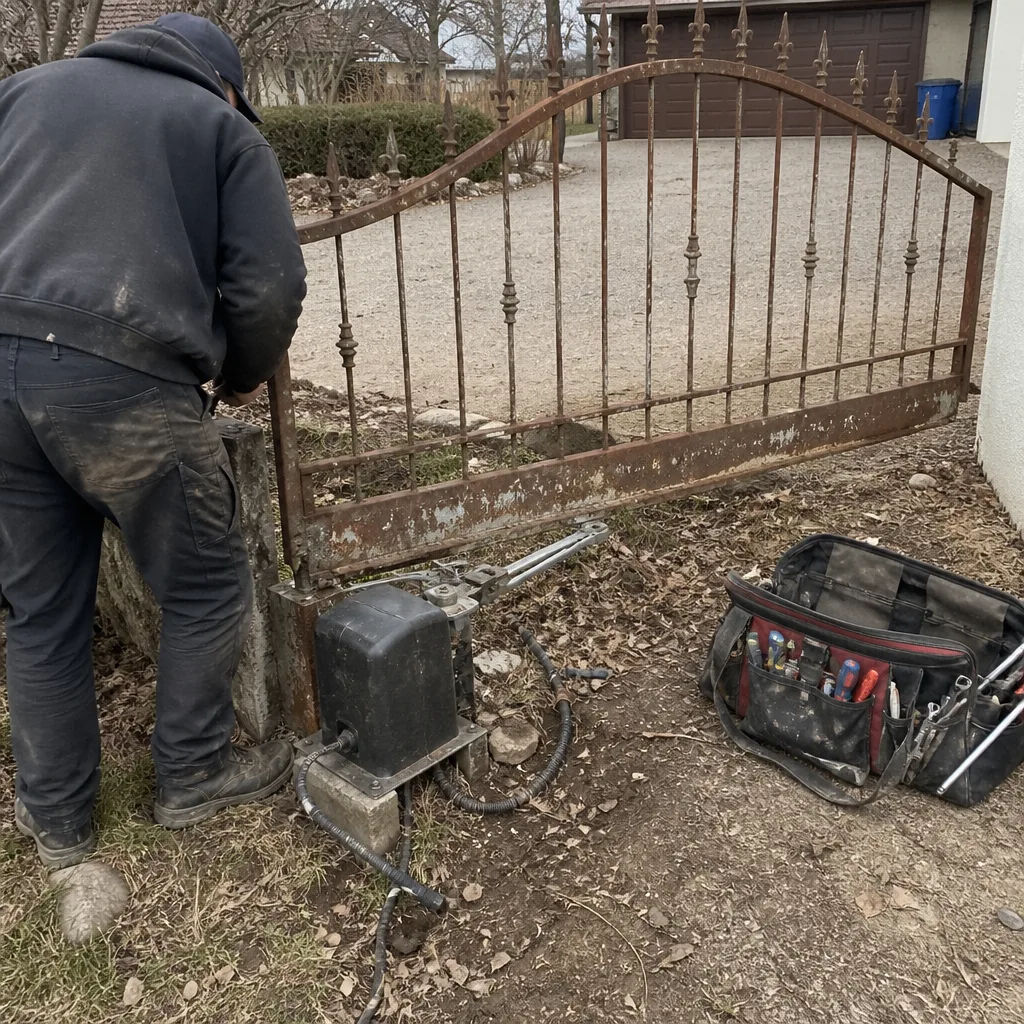 Before
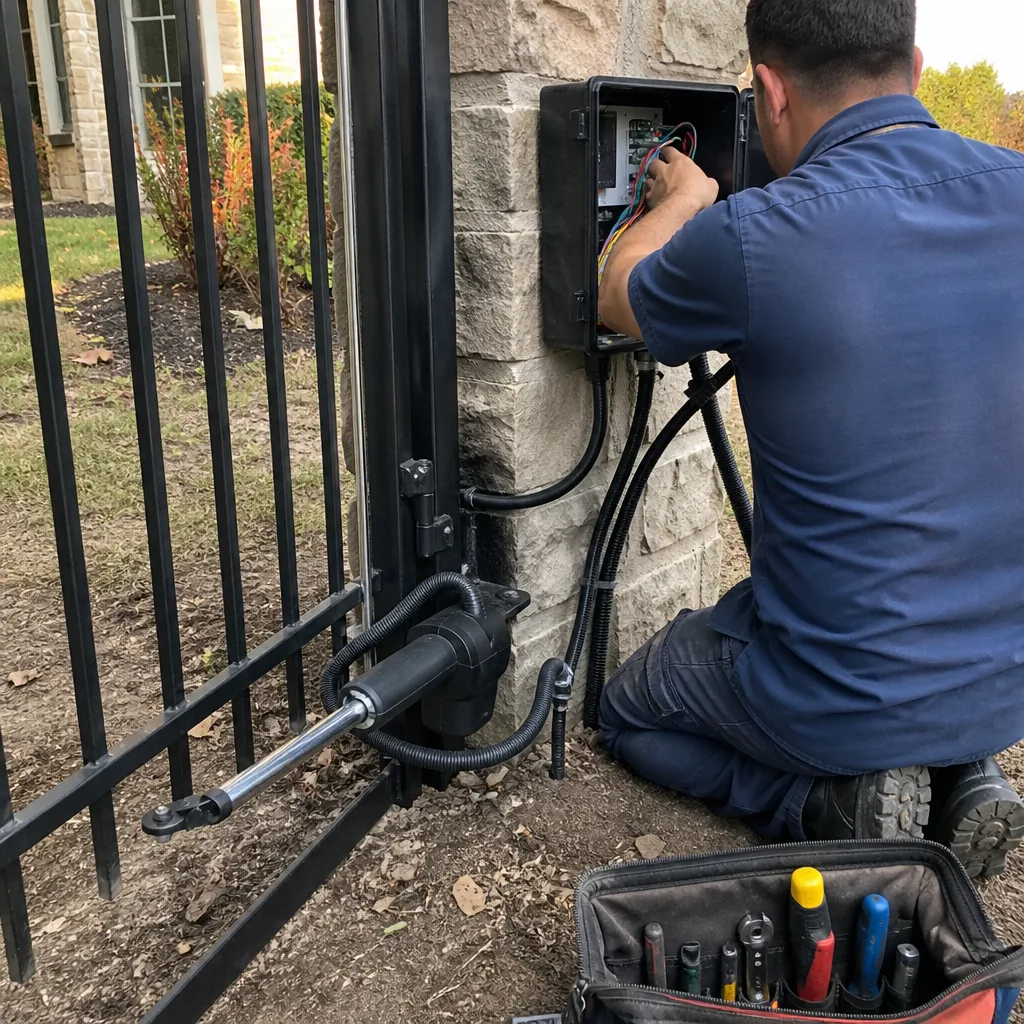 After
After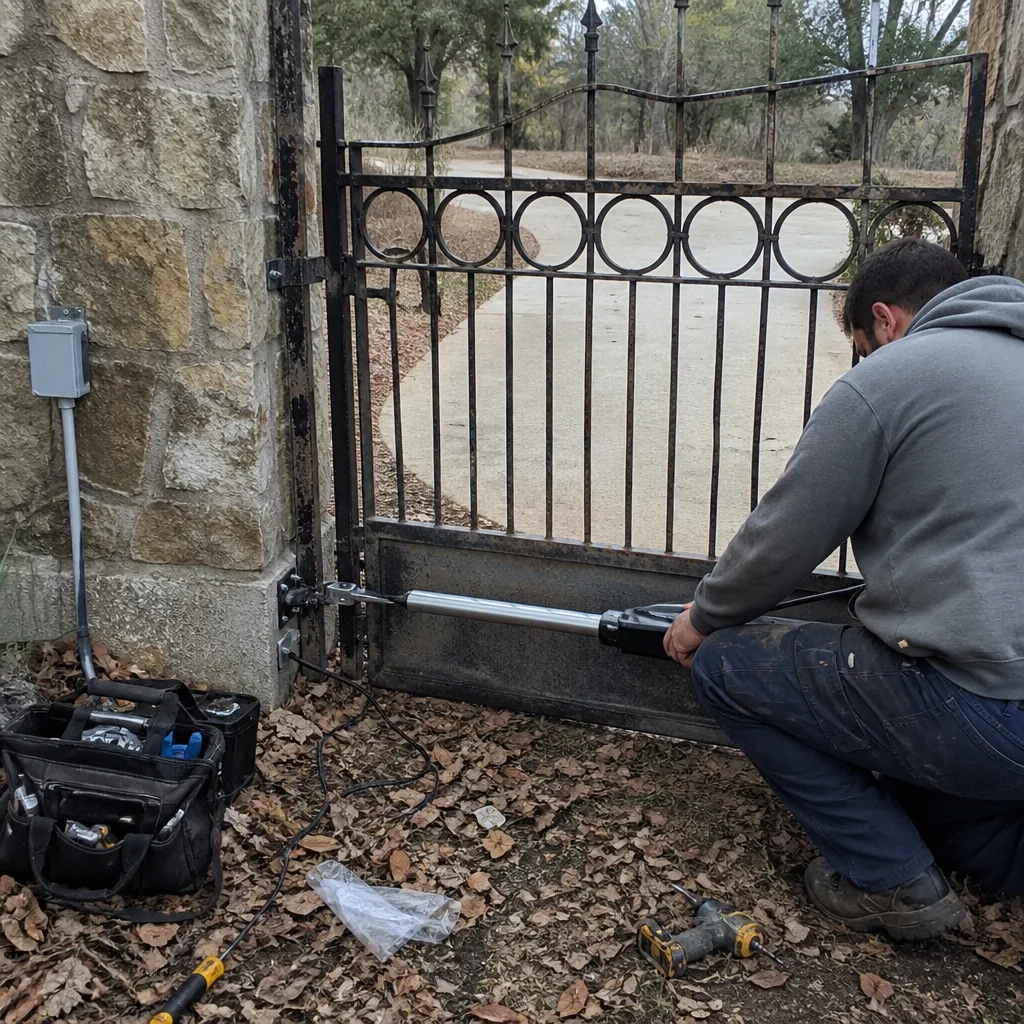 Before
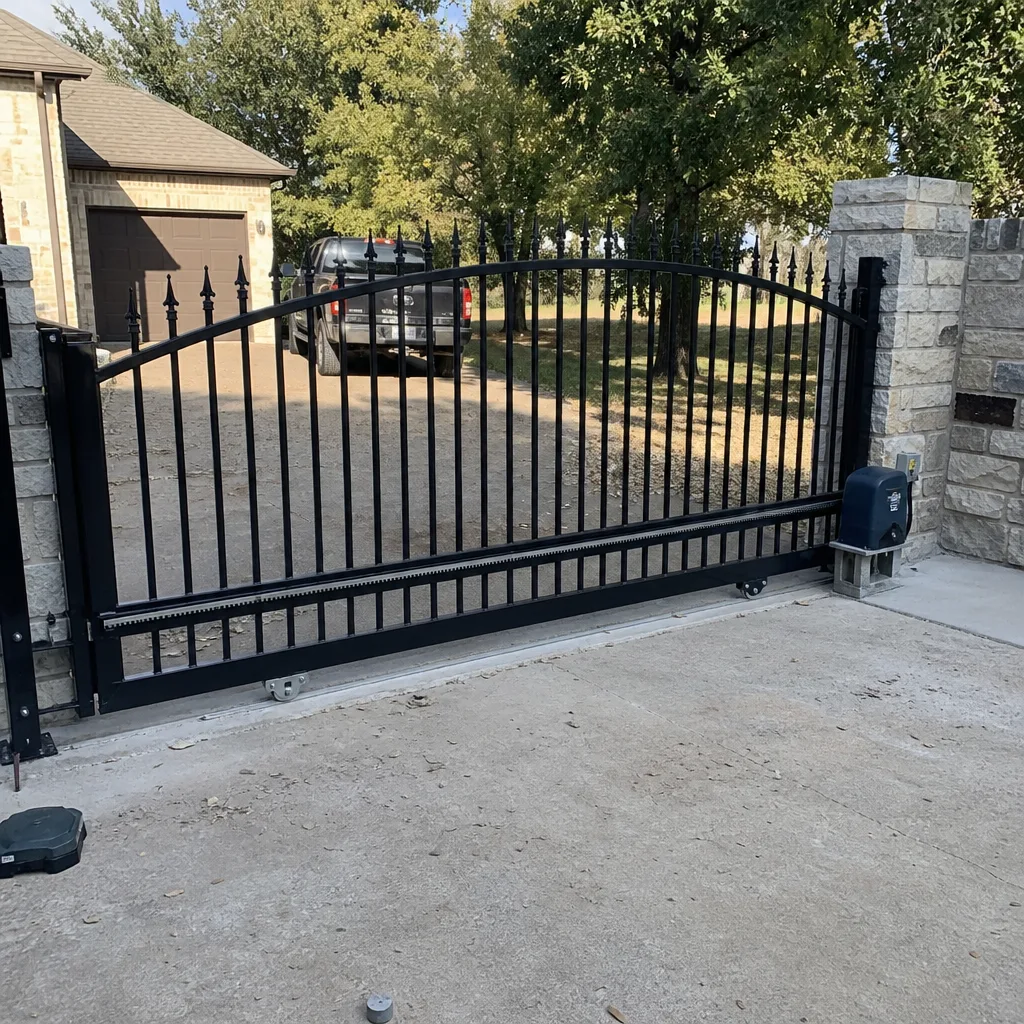 After
AfterGate Repair Permits, Codes & Inspections in TX: What You Need to Know
A gate motor swap in Weatherford doesn’t require a permit. Running a new electrical line from your house to a new keypad location might. The line between “repair” and “modification” is narrower than most contractors admit, and getting it wrong carries consequences that don’t show up until the gate fails, someone gets hurt, or you try to sell the house. This guide walks through what actually triggers a permit in Texas and Parker County, what codes govern gate work, what your HOA can and cannot demand, and what documentation you should keep after the job is done. For related reading, see our Gate Repair Warning Signs: A Weatherford Homeowner’s Reference Guide.
Quick Answer
Most residential gate repairs in Texas, including motor swaps, hinge replacements, and board replacements, do not require a permit. Permits typically become necessary when the work involves new electrical runs, structural post replacement, or changes to access-control infrastructure like adding entry keypads or vehicle loop detectors. Weatherford follows Texas state codes and Parker County amendments, but HOAs add a separate approval layer that municipalities don’t enforce.
Table of Contents
- What Actually Triggers a Permit in Weatherford and Parker County
- Repair vs. Modification: The Legal Distinction
- UL 325 and Entrapment Protection: What It Requires
- HOA Gate Approval vs. Municipal Permits: How They Interact
- Inspection Documentation: What to Request and File
- Unpermitted Gate Work and Property Sales
- Weatherford and Parker County Specifics
- Common Mistakes to Avoid
- When to Call a Professional
- Frequently Asked Questions
- The Bottom Line
BeforeAfterWhat Actually Triggers a Permit in Weatherford and Parker County
Let’s start with the answer most homeowners actually need: a standard gate repair, meaning a motor replacement, hinge fix, board swap, or sensor realignment, is treated as maintenance under Texas law and requires no permit. You can put in a new LiftMaster operator on an existing swing gate in Weatherford today and never visit City Hall. The triggers come from three specific categories of work: electrical, structural, and access-control modification.
Electrical Work That Requires a Permit
The City of Weatherford adopts the National Electrical Code, and Parker County enforces the same standard for unincorporated areas. Under NEC, any new branch circuit from your main panel to an outdoor gate operator requires an electrical permit. That means:
- New power run to a gate that previously had no electricity: If you’re adding a motor to a manual gate, the trench, conduit, wire, and panel connection all fall under permitted electrical work.
- New low-voltage run to a new keypad location: Even low-voltage wiring, if it runs inside a wall or underground conduit, can trigger a permit when it’s a new installation rather than a replacement.
- Panel modification: Adding a breaker for a gate circuit is a panel change, and that requires a permit and inspection.
- Replacing wiring, not just the motor: If the existing wire is damaged and you’re pulling new conductors, the permit determination depends on whether it’s a like-for-like replacement or a new run.
Structural Work That Requires a Permit
If a post is rotted, leaning, or fractured and the fix involves digging out the old footing and pouring new concrete, that’s structural. Weatherford building codes classify post replacement as a structural repair when the post supports a gate leaf weighing more than 200 pounds or when an operator is mounted to it. A like-for-like post swap in the same footprint may only need a simple permit, but any change in post size, depth, or location moves it into full structural permitting. In our experience in Weatherford, the most common trigger is a swing gate post that’s cracked at the base, which happens fast in Parker County clay soil that expands and contracts through wet and dry cycles.
Access-Control Changes
Adding a vehicle loop detector cut into the driveway, a new keypad bollard with its own concrete footing, or a telephone-entry system tied to the house all constitute modifications to the property’s infrastructure, and each one has its own permit path in Weatherford.
Repair vs. Modification: The Legal Distinction
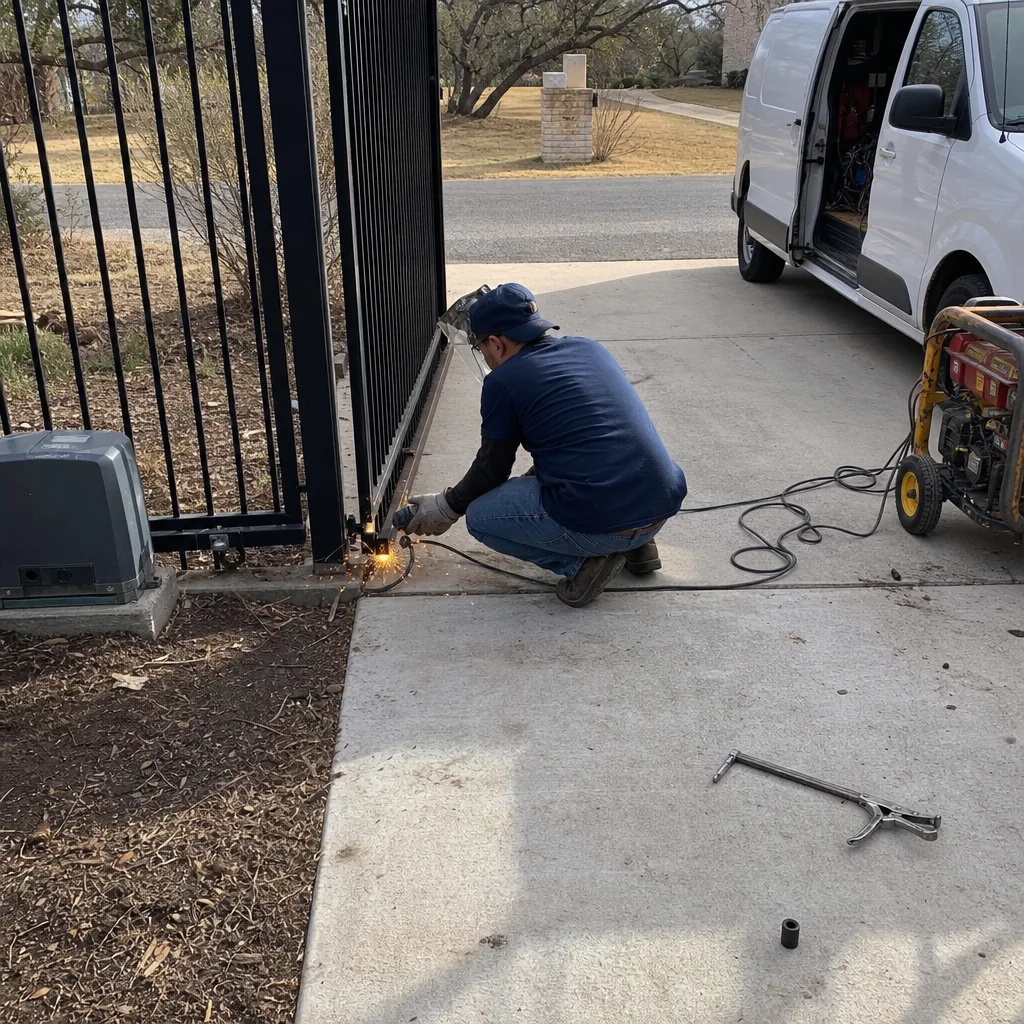
Texas building codes distinguish between repair and alteration. A repair restores something to its original condition or function. An alteration changes it. The distinction matters because permits attach to alterations, not to repairs. Here’s how that plays out with gates:
- Replacing a FAAC board with the same model: Repair. No permit.
- Replacing a FAAC board with a different model that changes the gate’s speed or force profile: Potentially an alteration, because the gate now operates differently than when originally installed.
- Adding a safety edge to a gate that never had one: Alteration. It changes the entrapment protection profile, and depending on the scope of wiring, may require a permit.
- Moving a gate operator from one post to another: Alteration. The mounting structure and force distribution change.
- Replacing a broken hinge with the same spec hinge: Repair. No permit.
- Converting a single swing gate to a double swing gate: Full alteration. Permits, inspections, and likely an HOA filing.
In Weatherford, the city’s Development Services department handles permit intake. A homeowner can pull their own permit, but if a contractor does the work and pulls the permit, the contractor’s name goes on the record, which is important for liability and warranty claims later.
UL 325 and Entrapment Protection: What It Requires
UL 325 is the national safety standard for automatic gates, and it’s the code reference that matters most after a repair or installation. It mandates that every automatic gate operator respond correctly to entrapment situations: stopping or reversing when a person or object obstructs the gate. The standard applies to residential and commercial gates alike, and it is enforced at the inspection stage when a permit is pulled.
Here’s what UL 325 requires on a residential gate operator in Texas:
- Inherent entrapment protection: the motor’s internal current sensing must detect obstruction and reverse within two seconds.
- External entrapment protection: at least one additional device, such as photo-eyes or a contact edge, mounted in a position that covers the gate’s travel path.
- Warning signage: two warning signs, one on each side of the gate, visible from the street and the property side.
- Manual release: a way to disengage the operator from the gate in a power failure, accessible without special tools.
Where this gets serious for homeowners: if a gate is repaired and the repair leaves the gate non-compliant with UL 325, and the gate later causes an injury, the homeowner can be named in the liability claim even if a contractor did the work. In Texas, property owners carry premises liability. A contractor’s insurance may not shield you if the claim is based on the condition of the gate itself. We’ve seen cases in Weatherford where a motor was replaced but the photo-eye was never wired back in, and the homeowner didn’t know until the gate hit a car. The repair was “done” but the gate was non-compliant.
What You Can Check Yourself
- Does the gate reverse when you block the photo-eye beam with your hand? (Use a cardboard box, not your body.)
- Are warning signs present on both sides of the gate?
- Is there a manual release that works without the motor running?
- Does the gate stop within two seconds of hitting a resistance source?
If the answer to any of these is no, the gate is not UL 325 compliant, and that’s a liability that belongs to you as the property owner. This is a safety issue. High-force gate operators can cause serious injury, and a gate that does not reverse on contact is a physical danger to children, pets, and anyone walking through. Do not attempt to adjust force settings or bypass entrapment devices yourself. A trained technician should verify compliance, because the force measurements require specific tools and knowledge of the manufacturer’s adjustment sequence.
HOA Gate Approval vs. Municipal Permits: How They Interact
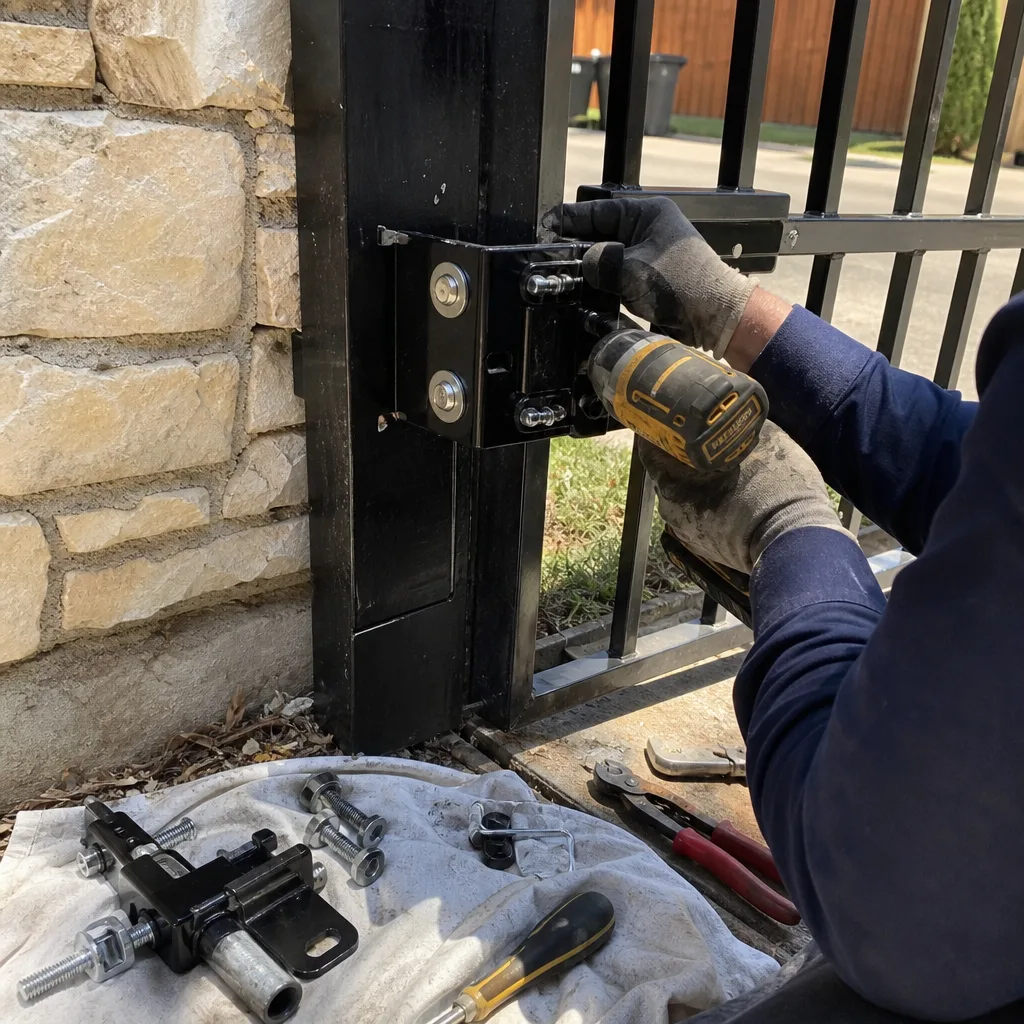
Weatherford and Parker County have dozens of HOA-governed communities, and their gate rules operate on a completely separate track from city permits. An HOA cannot waive a municipal permit requirement, and the city does not enforce HOA design guidelines. You may need both approvals, one, or neither, depending on the work. Here’s the typical layering:
- Determine if the HOA has gate rules. Many Parker County HOAs have architectural guidelines that cover gate style, height, material, and finish. A gate that’s visible from the street is usually subject to design review.
- Determine if the work is a like-for-like repair. Most HOA guidelines exempt repairs that restore the original appearance. A motor swap, hinge repair, or board replacement is almost never an HOA issue.
- Determine if the work changes appearance. A new gate, a different gate color, a taller gate, or a gate on a different post configuration is a design change and will almost certainly require HOA approval before work starts.
- Determine if the work triggers a city permit. Refer to the permit triggers above. The city doesn’t care about gate color. The HOA doesn’t care about your NEC compliance. They’re separate gates, separate applications, separate timelines.
A practical note from Weatherford work: HOA approval commonly takes 30 to 60 days in Parker County communities with active architectural review committees. If you’re planning a new gate installation, file the HOA paperwork first, then pull the city permit once approval comes through. Doing it in the reverse order risks a city permit expiring while you wait on the HOA.
Inspection Documentation: What to Request and File
When permitted gate work is completed, a city or county inspector signs off, and that inspection record is the proof that the work was done to code. But the inspection is only one artifact. Here’s what a complete documentation file should contain after any permitted gate job in Weatherford:
- The permit record itself: permit number, date issued, scope of work described.
- The final inspection sign-off: the inspector’s approval, whether it’s a green tag, a digital record, or a signed inspection report.
- The contractor’s invoice showing the permit number. This ties the work to the permit.
- Photos of the completed work: post footing depth before concrete pour, conduit runs before backfill, operator mounting, and final gate position.
- UL 325 compliance verification: documentation that external entrapment protection devices were installed and tested.
- Wiring diagram or as-built notes: where the power originates, what breaker feeds the gate, what low-voltage wires run where.
- The buyer’s inspector notes a gate installation that doesn’t match the permit record, or a gate installed after construction with no permit on file.
- The buyer’s lender or insurance carrier may require the work to be brought to code before closing. This is especially true for FHA and VA loans, which have property condition requirements.
- The seller is now fixing a gate under deadline pressure. The cost is whatever it costs, and the seller has no negotiating leverage.
- If the work can’t be permitted retroactively, the gate may need to be removed or the sale renegotiated.
- Check the city’s permit database. Weatherford’s permit records are searchable, and a quick query pulls every permit attached to the address.
- Look for the permit sticker or tag. Electrical panels often carry the inspector’s sticker. Gate operators sometimes get the same tag on the motor housing.
- Ask the previous owner. Most homeowners keep some record, and the question is honest: “Was the gate installation ever permitted?”
- Look for code-specific details. Warning signs on both sides of the gate, photo-eyes mounted correctly, a proper manual release. Missing these usually means the work was done unpermitted or by someone unfamiliar with UL 325.
- Assuming all gate work needs a permit. Most repairs don’t, and pulling an unnecessary permit adds cost and delay for no benefit. Know the triggers before you pay for paperwork you don’t need.
- Assuming no gate work needs a permit. The opposite mistake is worse. New electrical runs and structural post work do require permits, and skipping them creates a liability and a resale problem.
- Ignoring the HOA because the city doesn’t care. The HOA has its own enforcement path, and in Weatherford communities with active architectural committees, an unapproved gate change can trigger fines and a demand to restore the original appearance.
- Skipping the UL 325 check after a repair. A gate that doesn’t reverse on contact is a loaded weapon. After any motor or sensor work, verify the entrapment protection before using the gate normally.
- Losing the paper trail. Buyers ask for permit records. Insurance companies ask for them after claims. If you don’t have them, you’re paying twice to prove something that should already be on file.
- Treating a gate like a cosmetic fixture. An automatic gate is a machine that moves a heavy object under motor power. The permits, codes, and inspections exist because gates can injure people when they’re wrong.
- Using a contractor who won’t pull permits. If a contractor tells you a permit isn’t needed and you later find out one was, the contractor’s warranty will not protect you from the city’s enforcement. Insist on the permit determination in writing.
The reason for keeping this file isn’t bureaucratic completeness. It’s resale protection and future repair efficiency. A homeowner in Weatherford who has this file can answer every question a buyer or inspector asks, and can hand a future technician a record instead of forcing a rediscovery. That’s the documentation habit we practice on every gate repair and installation we do. Under Clause 4 of our Haven Standard, every visit includes a documented photo record at no additional charge, because evidence beats memory.
Unpermitted Gate Work and Property Sales
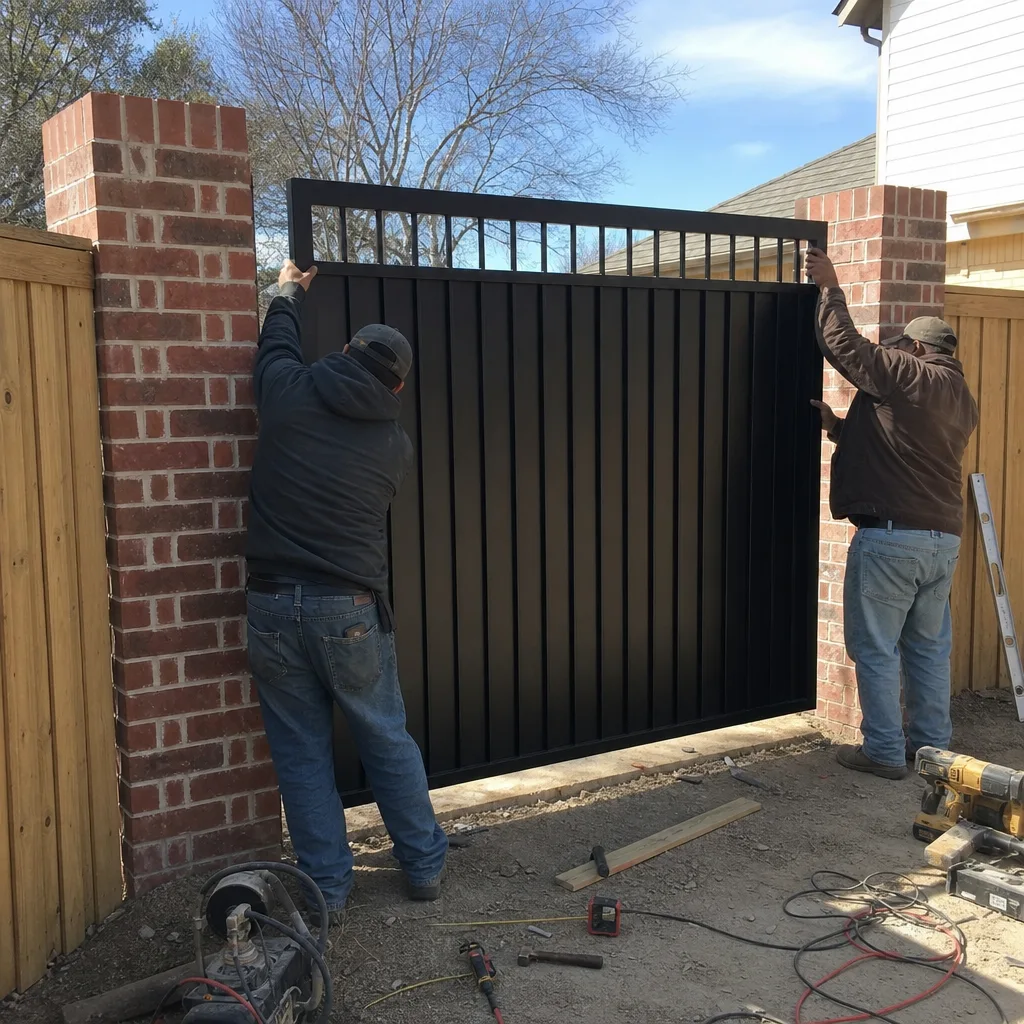
Unpermitted structural or electrical gate work surfaces during property transactions more often than any other time, and the discovery usually happens during the buyer’s inspection, not at the title desk. Here’s the chain of events we typically see in Weatherford:
How to identify if prior gate work was done without a permit, before it becomes a closing problem:
If you discover unpermitted gate work, the remedy is usually a retroactive permit. Weatherford’s process for retroactive permits on existing work requires an inspection of the completed installation, and if the inspector finds code violations, those get corrected before the permit closes. It’s not a punishment routine. The city wants the work to meet code, and the homeowner wants the work to clear a sale. The process is cooperative.
Weatherford and Parker County Specifics
Weatherford sits on the western edge of the Dallas-Fort Worth metro, in Parker County, and the local conditions directly affect gate work. The soil is expansive clay, which moves a lot with moisture. We see gate posts shift out of square every year, especially on the north and west sides of town where drainage is slower. A gate that was square in June can be binding by December if the post footing wasn’t deep enough.
Parker County is unincorporated in large stretches, which means many Weatherford-area homes fall under county jurisdiction rather than city. The county enforces the same NEC and building codes as the city, but the permitting process runs through the county’s planning and development office, and the timeline can be different. If you’re outside Weatherford city limits but in Parker County, verify jurisdiction before pulling a permit, because the wrong office will send you back to the other one and the clock keeps running.
The local wind is also a real factor. Weatherford sees strong south winds in spring and persistent north winds in winter, and an improperly reinforced gate panel will get worked loose. Building code here requires gate posts to be set below frost depth, which in Parker County is 12 inches, but the practical depth for a solid gate post in expansive clay is 36 to 48 inches. The code is a floor, not a recommendation. For any structural gate work in Weatherford, deeper footings are the standard, not the exception.
For more on the repair side specifically, see our Gate Repair in Weatherford page, or visit our Vance Gate Repair Weatherford home page for the full scope of what we do across Weatherford and Parker County.
Common Mistakes to Avoid
When to Call a Professional
If any of these apply, the right move is to call someone who does this work every day: if you’re adding power to a gate that has never had it, replacing a structural post, adding a keypad or loop detector, or dealing with an HOA approval that references code terms you don’t recognize. Also call if you’ve discovered unpermitted prior work and need a retroactive permit, or if the gate has hit something or someone and you’re not sure whether the entrapment protection is functioning. For help choosing the right professional, read How to Hire a Gate Repair Contractor in Weatherford: A Step-by-Step Guide. Vance Gate Repair Weatherford offers free estimates in Weatherford and the surrounding Parker County area. Call (940) 353-4158 and describe what you’re seeing. We’ll tell you whether a permit is needed, and if it’s not, we’ll tell you that too. What you get before any work starts is a written price, not a phone estimate. Under Clause 1 of our Haven Standard, the flat price is written and handed over before work begins, and Clause 4 means you get a documented photo record of everything we touched. That’s been the standard on every one of the 22,000+ gates we’ve repaired and installed since 2014, and it’s not changing.
For installation-specific questions, see our Gate Installation in Weatherford page. For motor and opener work, our Gate Motor & Opener in Weatherford page covers the brands and the repair process.
Frequently Asked Questions
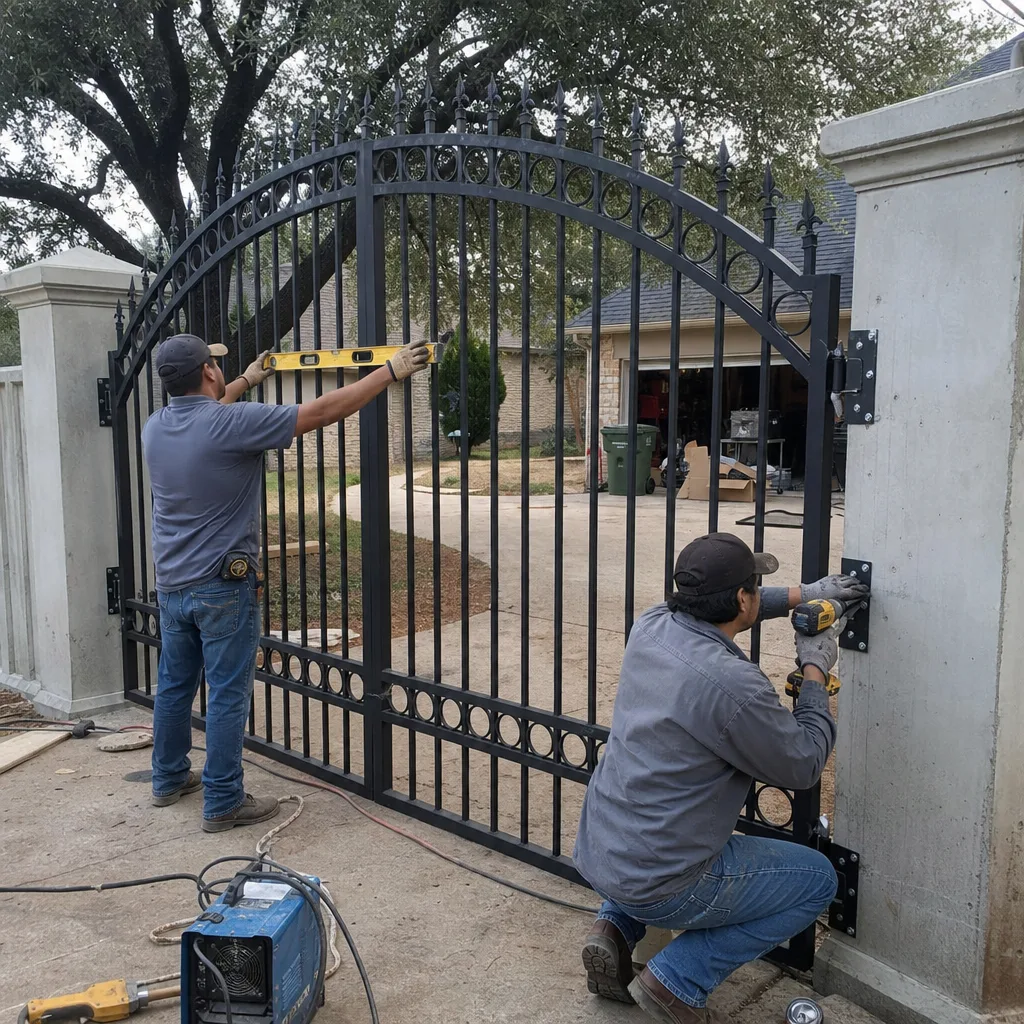
No. Replacing a gate motor or opener on an existing gate is classified as a repair, and Texas building codes do not require a permit for repairs. The exception is when the replacement involves running new electrical wiring or modifying the panel, which then falls under electrical permitting rules. After any motor replacement in Weatherford, verify that the UL 325 entrapment protection is functioning. If you’re not sure, call (940) 353-4158 and we’ll walk you through what to check.
Yes, in most cases. A new gate installation typically involves setting new posts, which is structural work, and often involves running power to a new operator, which is electrical work. Both trigger permits in Weatherford and Parker County. The HOA layer is separate and may require design approval before the city permit is issued. Call (940) 353-4158 for a free estimate and we’ll map the permit path for your specific situation.
UL 325 is the national safety standard for automatic gate operators, and it requires inherent entrapment protection plus at least one external device like a photo-eye or contact edge, warning signs on both sides, and a working manual release. The quick check is to block the photo-eye with an object and confirm the gate stops or reverses, then check for warning signs on both sides. If the gate doesn’t respond correctly to an obstruction, it’s non-compliant and should be serviced. This is a safety-critical system. Do not attempt to adjust force limits or disable entrapment devices yourself. Call a trained technician.
Permit fees in Weatherford and Parker County vary by the scope and valuation of the work, with electrical and structural permits typically running in the $50 to $300 range for residential gate projects. The exact fee depends on the valuation you declare and the fee schedule in effect at the time. Call (940) 353-4158 for an estimate that includes the permit fee as a line item, so you see the full cost before the work starts.
Yes. HOAs enforce private deed restrictions that run on a separate track from municipal codes. In Weatherford, many Parker County communities require architectural review for street-visible gates, and an HOA can deny a design, demand changes, or impose fines for unapproved work, even if the city permit is already in hand. File HOA paperwork first, then pull the city permit.
Keep the permit record with the permit number, the final inspection sign-off, the contractor’s invoice referencing the permit number, photos of the work before backfill and after completion, a UL 325 compliance check, and a wiring diagram or as-built note showing where the power originates. This file protects you in a resale, an insurance claim, or a future repair. Every Vance Gate Repair Weatherford visit includes a documented photo record left with the homeowner, so your file starts building itself.
The Bottom Line
Most gate repairs in Texas need no permit. The exceptions are specific: new electrical runs, structural post replacement, and access-control additions. Weatherford and Parker County enforce the same NEC and building codes, but permit intake runs through different offices depending on jurisdiction. Your HOA is a separate layer that can stop a gate project the city already approved. UL 325 compliance is non-negotiable on every automatic gate, permitted or not, because the liability for a non-compliant gate lands on the property owner. Keep the documentation. Check the entrapment protection. Get the permit determination in writing before work starts. That’s the whole game, and it’s one we see missed constantly.
Written by Adrian Vance, Owner at Vance Gate Repair Weatherford, serving Weatherford since 2014.
Have questions about a gate repair, permit, or code issue in Weatherford or Parker County? Call (940) 353-4158 for a free, written estimate. A live person answers, any hour, every day.