
Last updated September 20, 2026
Free on-site gate assessment - hinges, posts, and your LiftMaster or Nice gate operator checked before anything is quoted
The assessment is free and the quote is the invoice.

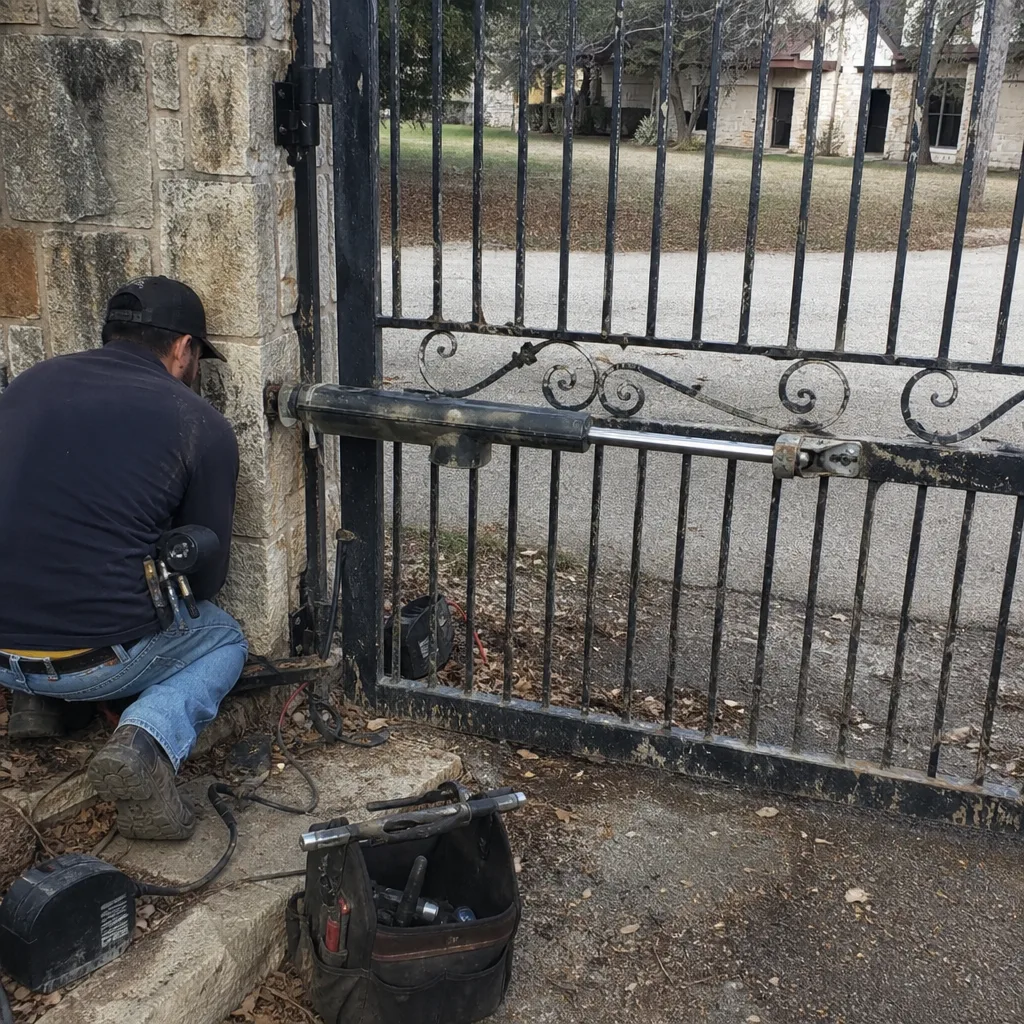 Before
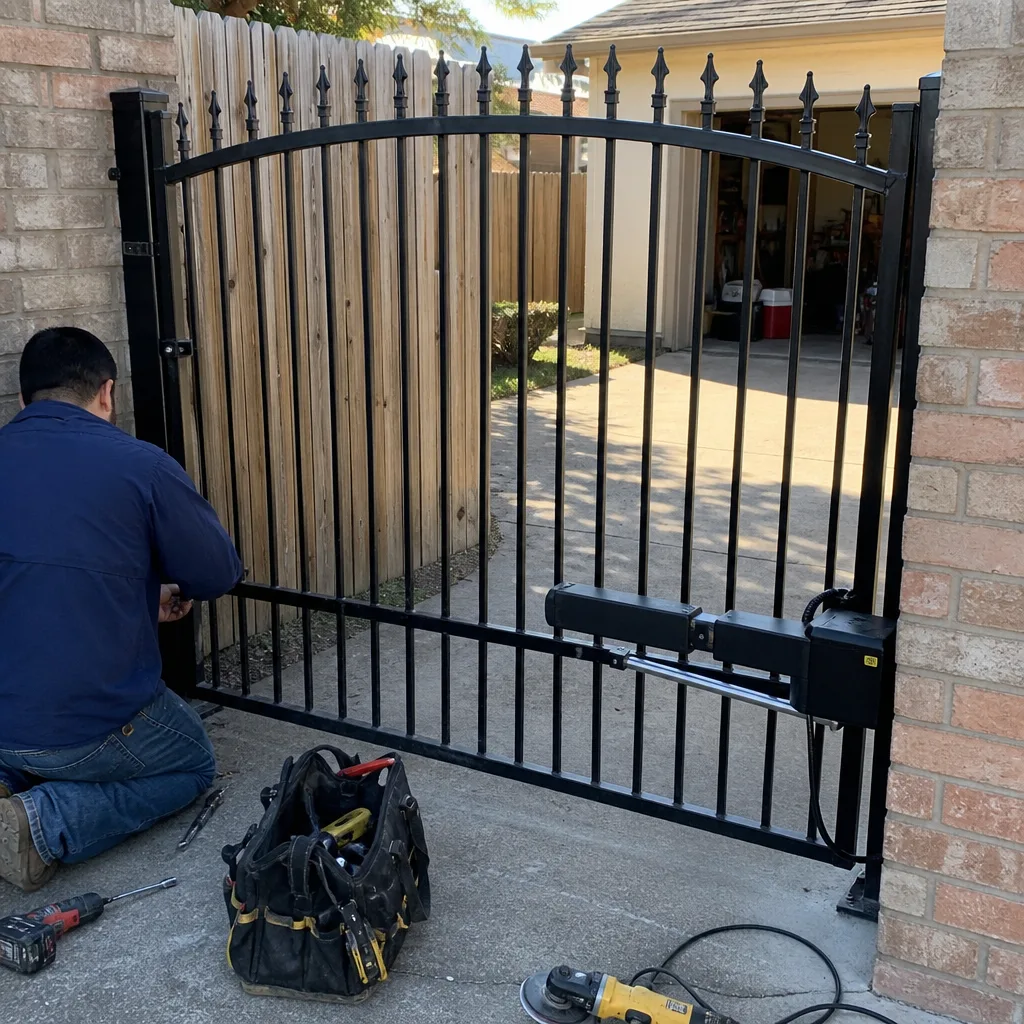 After
After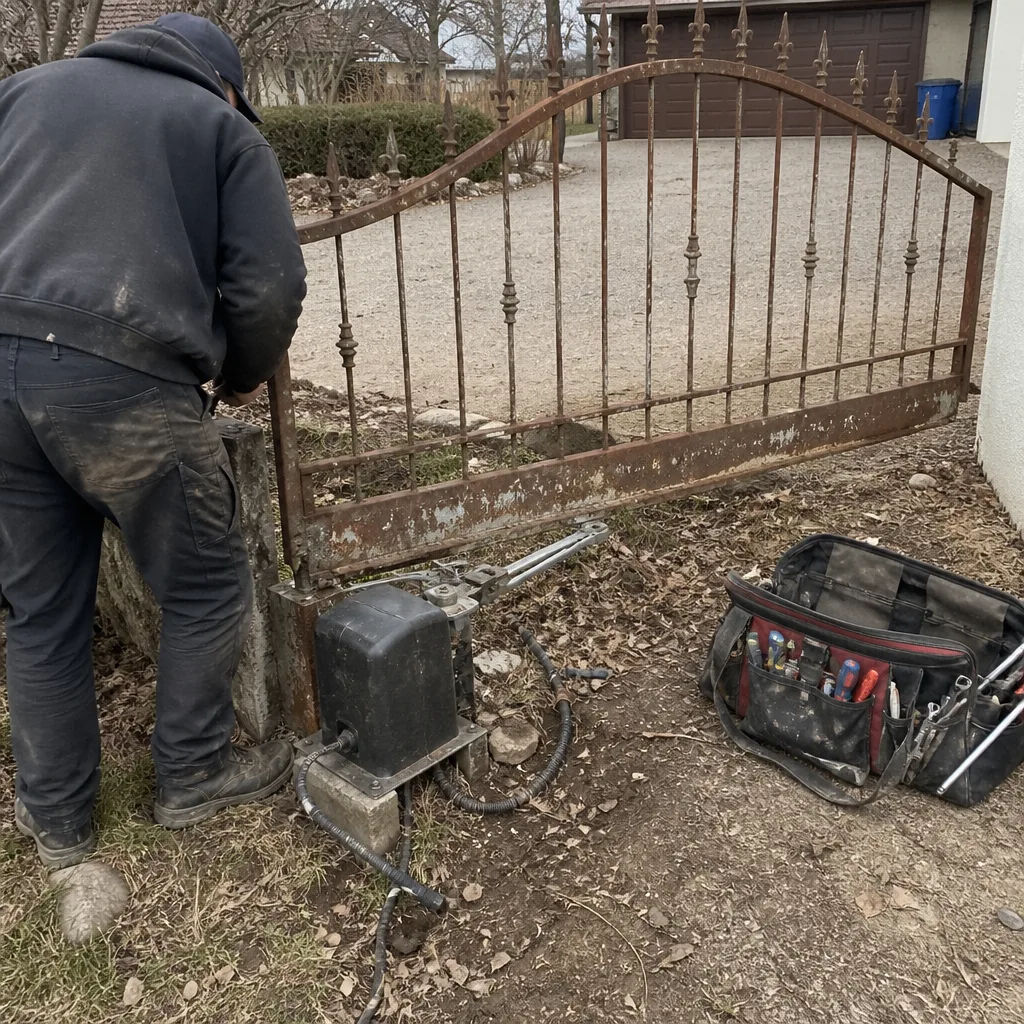 Before
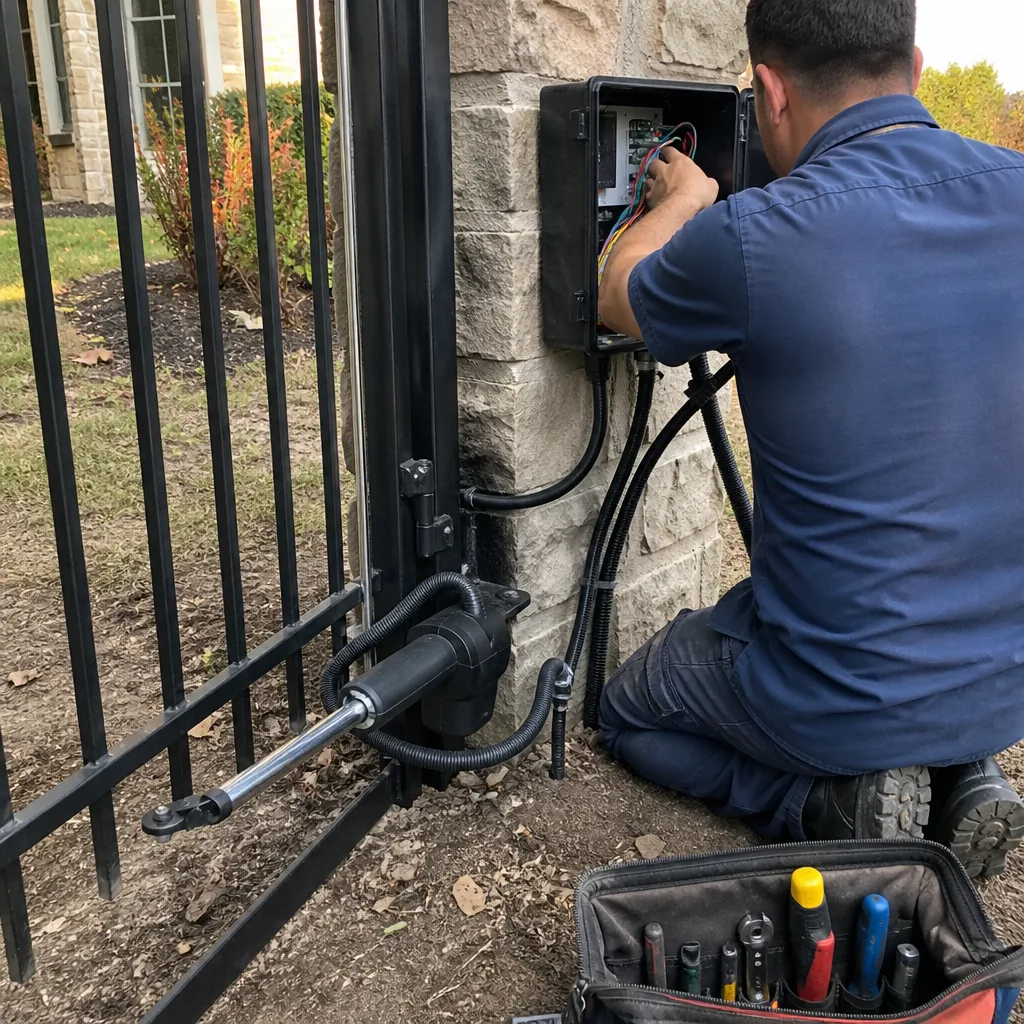 After
After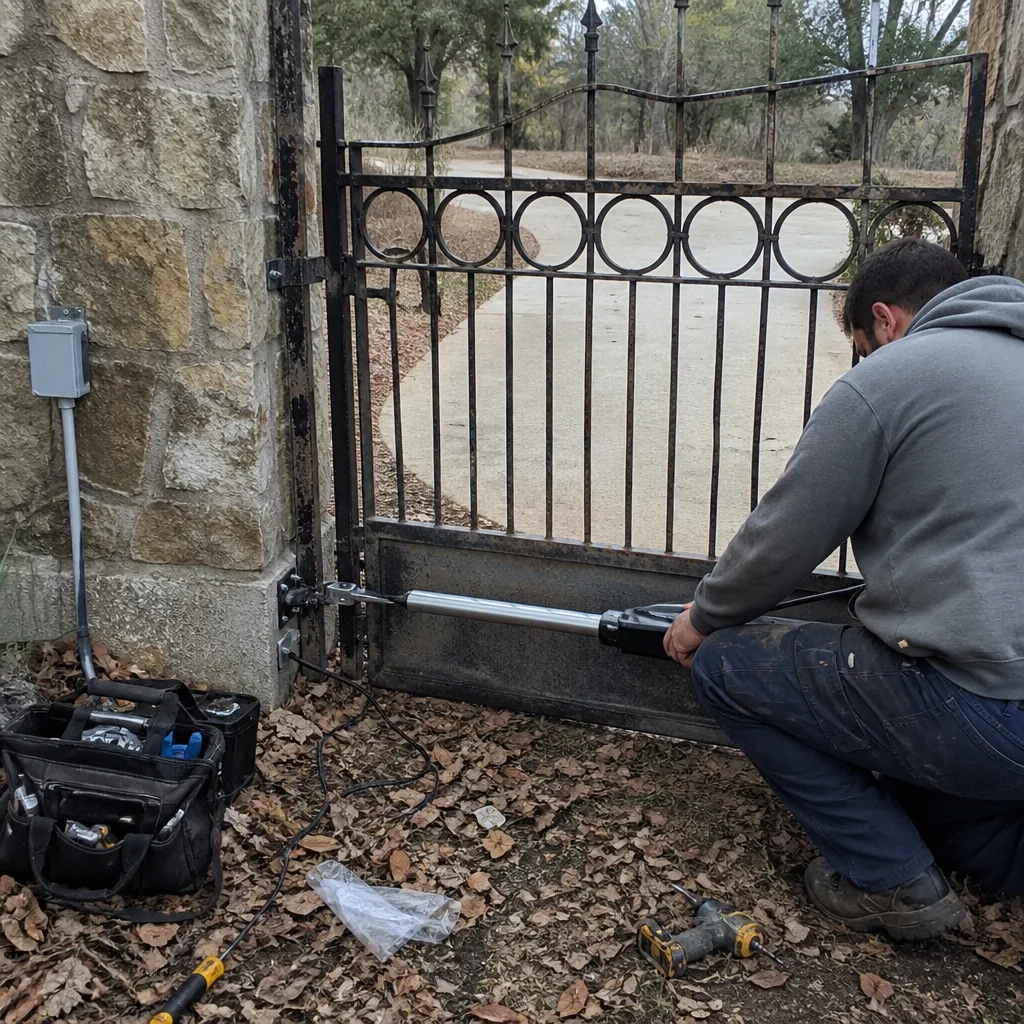 Before
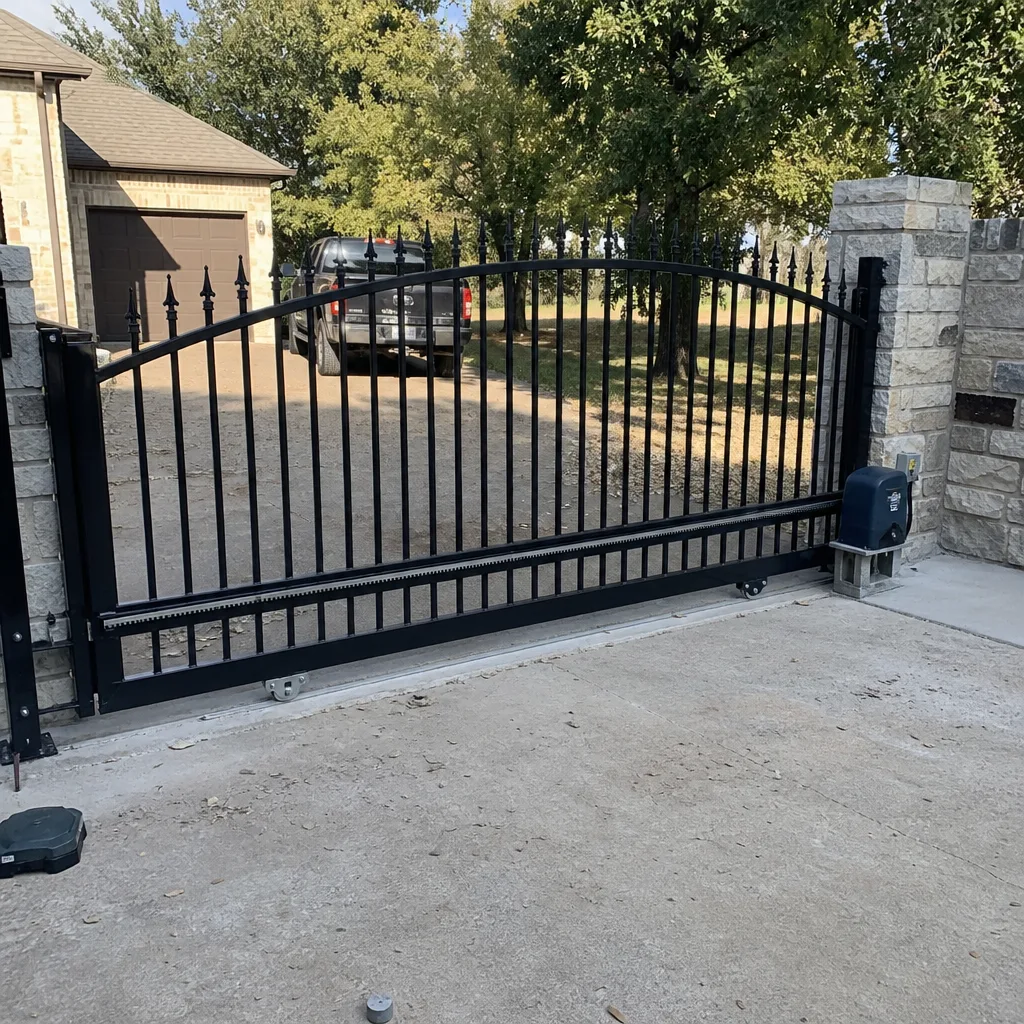 After
AfterSeasonal Gate Repair Care for Weatherford: Year-Round Homeowner’s Guide
August is when Weatherford gates fail in October. The ground shifts under the post, the operator compensates a fraction of a degree each cycle, and nobody notices until the first cold snap turns a minor misalignment into a motor that won’t move. This guide explains what to check in each season, which Weatherford-specific soil and temperature conditions cause the most damage, and how to build a documentation habit that catches a two-millimeter drift before it becomes a $900 operator replacement. For a deeper dive, see The Complete Guide to Gate Repair in Weatherford. By the end, you’ll know exactly what to measure, what to lubricate, what to photograph, and when to call someone who can read a limit switch without guessing.
Quick Answer
Seasonal gate repair care in Weatherford means checking for post plumb and clay soil movement in summer, lubricating specific components before first freeze, testing battery voltage before winter storms, and inspecting welds and hinge plates after spring thaw. A quarterly inspection schedule, documented with photos and measurements, prevents most operator failures and catches structural issues before they require a full gate replacement. Most seasonal maintenance tasks take under 30 minutes, and a written record of each check makes future repairs faster and cheaper.
Table of Contents
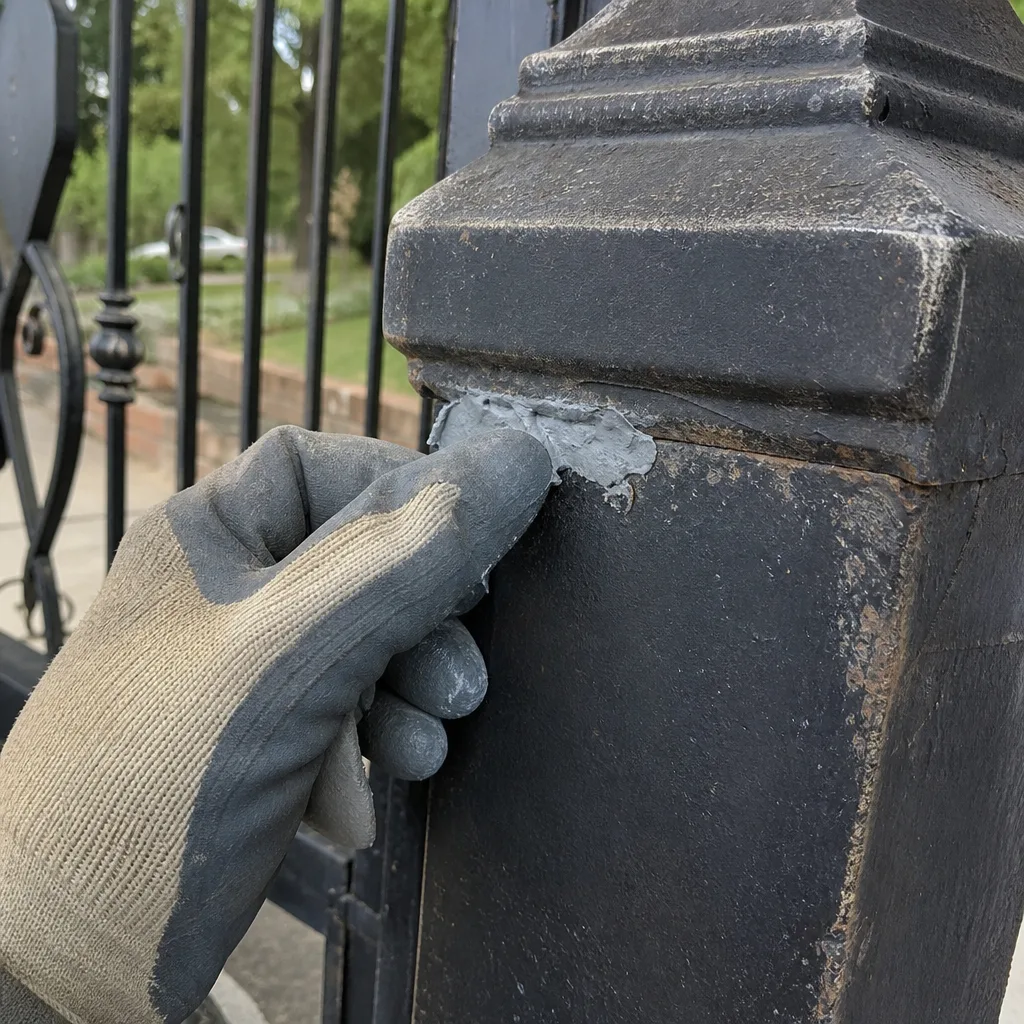
- Why Weatherford’s Climate Attacks Gates Differently
- Summer Care: Clay Soil Movement and Post Plumb
- Fall Care: Lubrication Before the Freeze
- Winter Care: Battery Voltage and Cold-Weather Operator Strain
- Spring Care: Weld Inspection After Freeze-Thaw
- The Monthly Documentation Habit
- Common Mistakes to Avoid
- When to Call a Professional
BeforeAfterWhy Weatherford’s Climate Attacks Gates Differently
Weatherford sits on expansive clay soil, the same black gumbo that cracks foundations and heaves fence posts across Parker County. When it rains, that clay absorbs water and swells. When the August sun bakes it for three weeks straight, it contracts and pulls away from the post footing. A gate post set in concrete still moves with the surrounding soil, because the concrete pier itself tilts as the earth around it shifts. That movement telegraphs straight into the gate frame, the hinges, and eventually the operator.
We’ve measured post drift on Weatherford properties ranging from a quarter-inch to over two inches in a single summer. The failures don’t announce themselves. The gate still opens, the motor still hums, but the operator’s limit switches are now compensating for geometry that changed underneath them. By October, when temperatures drop and metal contracts, the accumulated strain becomes audible. The motor labors. The gate slows mid-travel. Then it stops.
The other factor is the temperature swing. Weatherford can see 105°F in July and 15°F in January. Metal gates expand and contract across that range, and every cycle works bolts, brackets, and welds microscopically. Lubricants that perform fine in June turn to paste in December. Batteries that held a full charge in September deliver half their rated capacity at 20°F. Seasonal care is about anticipating these specific, measurable changes rather than reacting to the failure they cause.
Summer Care: Clay Soil Movement and Post Plumb
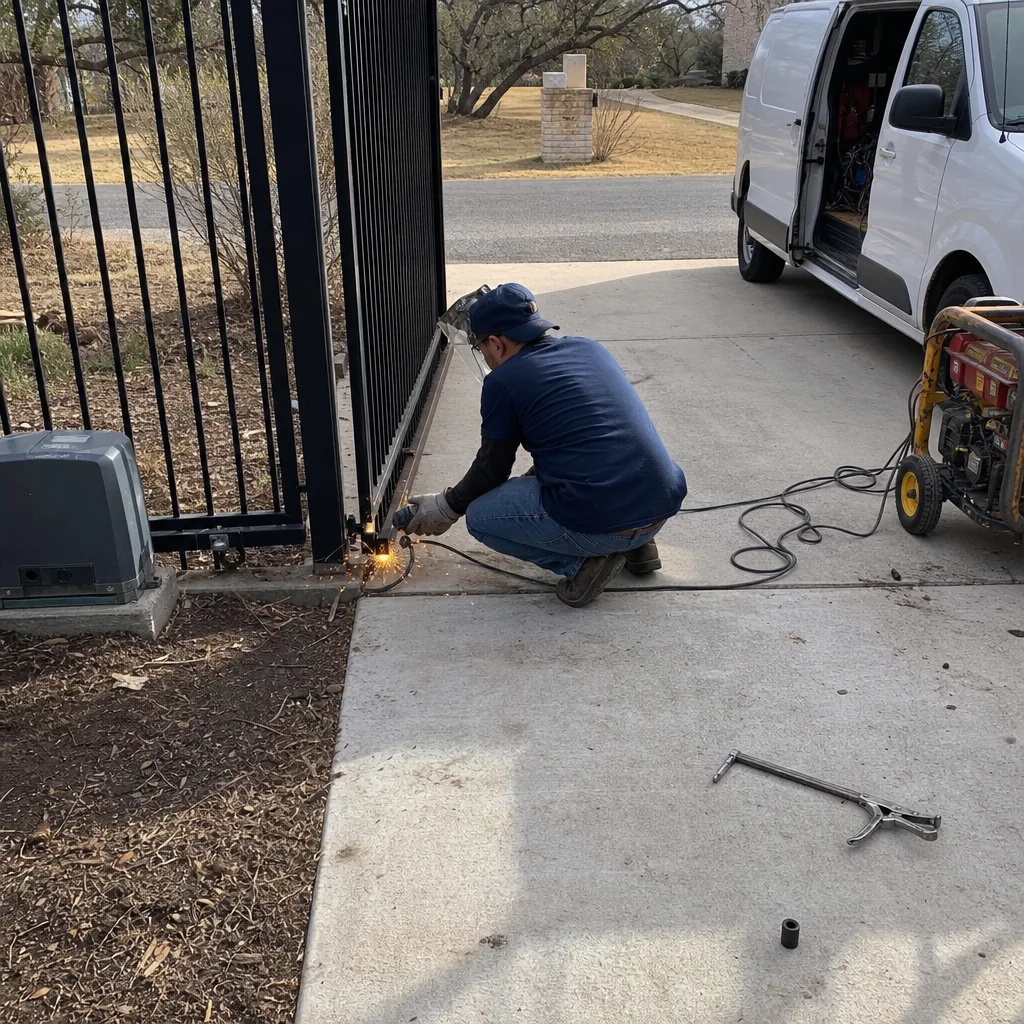
Summer in Weatherford is when the damage begins. The clay soil around your gate post shrinks as it dries, creating a gap between the concrete footing and the surrounding earth. That gap allows the post to lean, often toward the direction the gate travels. A post that’s out of plumb by even one degree changes the hinge geometry enough to strain the operator and wear the latch unevenly.
The measurement to catch is post plumb, and it takes two minutes with a four-foot level. Place the level vertically against the post on two adjacent faces, facing the gate and perpendicular to it. If the bubble is outside the lines on either face, the post has moved. Record the measurement. A quarter-inch drift in one season is worth monitoring. A half-inch drift means the operator is already fighting the change, and a full inch or more means the post footing needs attention before the operator fails.
Here’s what to check during a summer inspection in Weatherford:
- Post plumb on both faces – measure with a level, not by eye. A one-degree lean is invisible to the eye but meaningful to the operator.
- Soil gap around the post footing – a visible crack between soil and concrete means the clay has contracted. This is normal in Parker County summers, but it signals when the post is also likely to move.
- Hinge wear – lift the gate slightly at the latch end. Vertical play beyond a quarter-inch means the hinge pins or barrels are wearing, and dry summer dust accelerates that wear.
- Operator limit switch behavior – if the gate begins opening or closing slightly past its normal stopping point, or reverses unexpectedly, the geometry has shifted and the limit settings no longer match the travel.
- V-track and roller condition for slide gates – summer dust and grit collect in the track, and a roller that’s clogged with debris adds load to the motor.
We see a specific pattern in Weatherford subdivisions like Silverstone and Crown Valley: gates on the west side of the house, facing afternoon sun, show faster post drift than shaded gates. The soil there dries faster, contracts more aggressively, and the metal post itself expands in direct sun, adding thermal movement to the soil movement. If your gate faces west, check it more often in summer.
For anyone with a gate motor or opener in Weatherford, summer is also the season to listen. An operator that hums at a higher pitch than it did in spring, or that labors in the last third of travel, is telling you the gate is out of alignment. The motor is a very accurate strain gauge. Trust what it’s reporting.
Fall Care: Lubrication Before the Freeze
The single most consequential fall task in Weatherford is lubrication, and the most common mistake is using the wrong product. Many lubricants labeled “all-season” or “multi-temperature” thicken below 32°F to the point of adding significant drag to the gate. The operator then pushes harder, draws more current, and generates more heat at the motor windings. That’s how a gate that worked fine in October fails on the first genuinely cold night in January.
What to lubricate before first freeze:
- Hinge pins and barrels – apply a silicone-based or synthetic lubricant that remains fluid below freezing. Standard WD-40 is a water displacer, not a lubricant, and it washes out quickly. Use lithium grease or a dedicated gate hinge lubricant.
- V-track rollers and guide wheels – clean the track first with a dry brush or compressed air, then lubricate the roller bearings. Don’t grease the track itself; it attracts dirt.
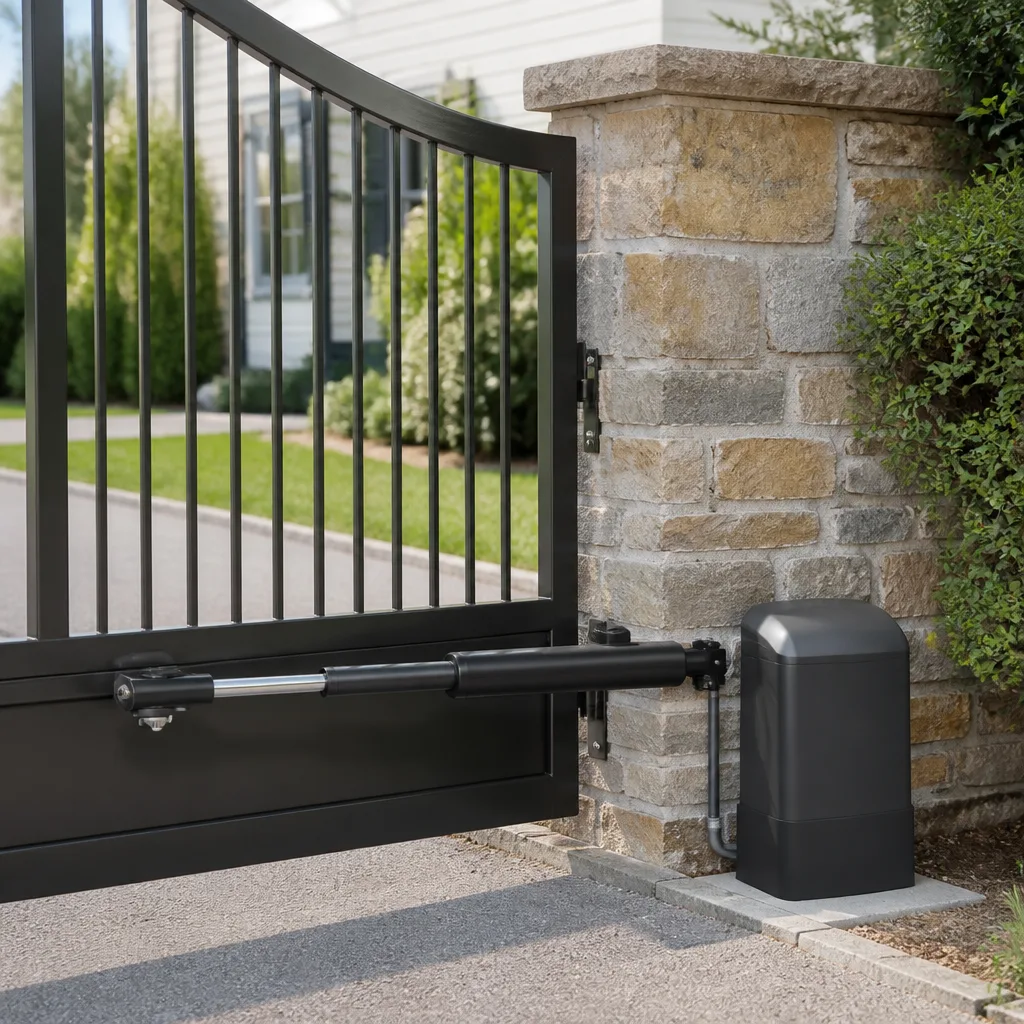
- Operator drive components – for chain-drive operators, inspect chain tension and lubricate if the manufacturer specifies it. For screw-drive operators, check the manufacturer’s guidance before applying anything.
- Latch and lock mechanism – a lock that freezes is a lock that gets forced. Lubricate the internal mechanism with a dry-film lubricant to prevent ice binding.
The lubricant question matters more in Weatherford than in Dallas or Fort Worth because our temperature swings are sharper. A product rated to 20°F will work in Dallas on most winter nights but fail in Weatherford on the nights when we see single digits. Check the product’s temperature rating on the can, not the marketing copy on the front. If the label doesn’t specify a temperature range, assume it’s not suitable for freeze conditions.
Fall is also the time to check the gate’s physical alignment one more time before cold weather locks everything in place. A gate that’s mildly out of alignment in September, when the metal is warm and expanded, will be more out of alignment in January, when the metal contracts and the gap grows. The operator has to work harder across the entire cold season, and the strain accumulates.
We recommend scheduling fall gate maintenance before Thanksgiving. The ground is usually still workable, the hardware hasn’t started contracting, and you’re ahead of the first freeze. If you’re looking for a broader maintenance checklist, our gate repair service in Weatherford includes a seasonal inspection as part of every visit.
Winter Care: Battery Voltage and Cold-Weather Operator Strain
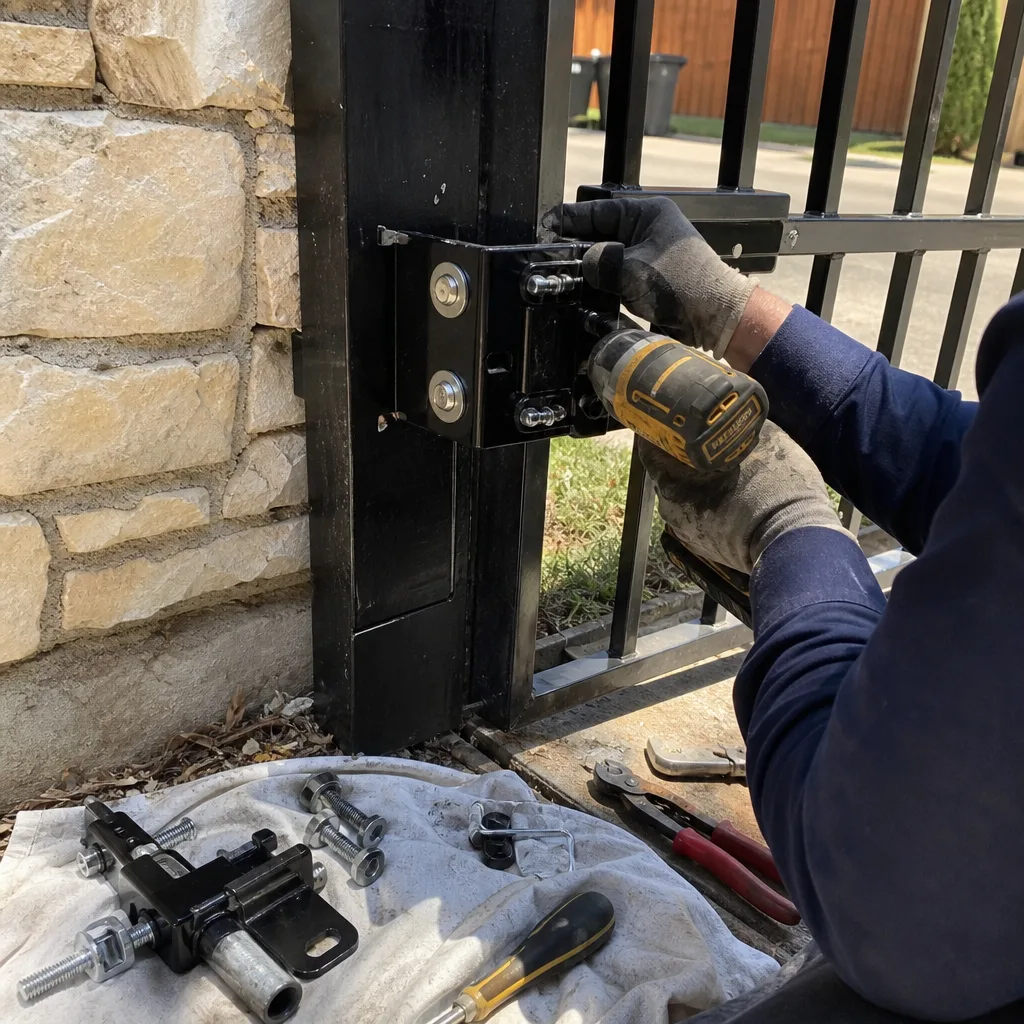
Battery backup systems lose capacity as temperature drops. A battery rated at 7 amp-hours at 77°F may deliver only 60% of that at 20°F. If your gate operator stores its battery in a metal enclosure mounted to the operator post, that enclosure conducts the cold directly into the battery. A battery that tested fine in September can fail to open the gate during a January freeze event, which is precisely when you need it most.
The voltage threshold to test for before a freeze event, not after, is simple: a 12-volt battery should read between 12.6 and 13.2 volts at rest with the charger disconnected. Below 12.4 volts means the battery is undercharged or aging. Below 12.0 volts means it’s substantially degraded, and cold weather will expose that degradation immediately. Test it in November, not when the ice is already on the ground.
What to check in winter:
- Battery voltage at rest – test with a digital multimeter, not a test light. A test light shows voltage is present; it doesn’t show how much.
- Cold cranking behavior – if the gate moves slower after a cold night than it does in the afternoon, the battery or the operator is temperature-sensitive. Note it.
- Photo-eye alignment – the photo-eye (the infrared beam that stops the gate if something crosses the path) can drift out of alignment as metal brackets contract. If the gate reverses unexpectedly or refuses to close, check the beam alignment before assuming the operator has failed.
- Frozen ground and post movement – freeze-thaw cycles in Parker County can heave a post overnight. A gate that operated fine on Friday and drags on Monday morning may have a post that moved.
Winter is not the season for major gate work in Weatherford unless it’s an emergency. Cold metal is brittle, welds don’t take as cleanly, and concrete won’t cure properly below 40°F. If your gate fails during a cold snap, the priority is isolating the failure so you know whether it’s the operator, the battery, or the structure. See our DIY vs Professional Gate Repair: The Weatherford Homeowner’s Decision Guide to help decide your next step. That diagnosis, done carefully, prevents a costly guess when the weather warms and permanent work becomes possible.
BFT and Viking operators, which we service regularly in Weatherford, both have specific battery test procedures documented in their manuals. If you own one of those systems and haven’t tested the battery in the last year, winter is the wrong time to discover the battery’s real capacity.
Spring Care: Weld Inspection After Freeze-Thaw
Spring is inspection season in Weatherford. The freeze-thaw cycles of January and February have already done their work, and now the damage is visible if you know what to look for. The critical components are welds and hinge plates, because metal fatigue from thermal cycling shows up as micro-cracking before it becomes structural failure.
Micro-cracking looks like faint, hairline lines running along the edge of a weld bead or radiating outward from a bolt hole. They’re often visible as discoloration first, a dark line against the lighter steel, then as a fine crack that catches a fingernail. These cracks don’t mean the gate is about to fall. They mean the metal has undergone repeated stress cycles and the weld is beginning to lose integrity. Caught early, a weld repair is a one-hour job. Missed for another year, the same crack propagates until the joint fails, and failure usually happens under load, meaning when someone is using the gate.
Here’s a spring inspection sequence:
- Clean the inspection areas – wipe down weld joints and hinge plates with a rag. Cracks hide under dirt and rust.
- Inspect every weld visually – look for hairline lines along the bead, discoloration, or flaking rust that wasn’t there in fall. Flaking rust at a weld joint can indicate the weld is flexing.
- Check hinge plates for movement – have someone swing the gate slowly while you watch the hinge plate against the post. Any relative movement between plate and post means the bolts or the plate itself are failing.
- Tap test the weld – a solid weld rings when tapped with a small hammer. A cracked weld produces a duller, shorter sound. This takes practice, but the difference is audible.
- Photograph everything – even findings that look fine. A photo record from spring becomes the baseline for fall, and the comparison catches change.
If you’re not comfortable interpreting what you’re seeing, that’s exactly when to bring in someone who looks at weld fatigue professionally. A gate that’s been through several Weatherford winters accumulates stress that a single visual inspection won’t always reveal. For gate installation in Weatherford, we build stress relief into the design specifically because Parker County’s freeze-thaw cycles are known to be hard on rigid structures.
The Monthly Documentation Habit
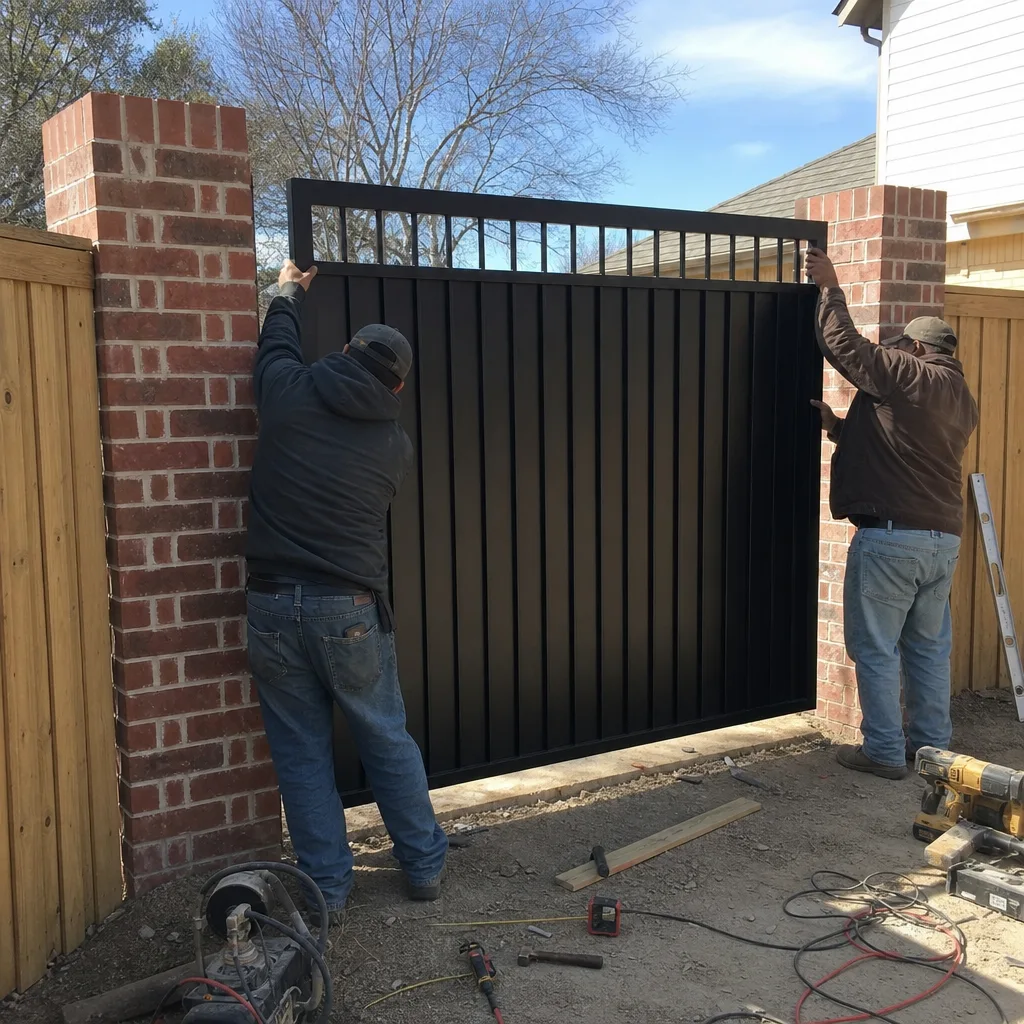
The difference between a gate that gives ten years of service and one that needs replacement after five is rarely the quality of the original installation. It’s whether anyone noticed the small changes accumulating. A documentation habit turns seasonal checks into a running record, and that record is what lets you see a two-millimeter drift before it becomes a broken operator.
Here’s the habit, in its simplest form:
- Once a month, photograph the gate from both sides – same position, same angle, same distance. Phone cameras are fine. The point is consistency.
- Note any change in sound – a creak, a laboring motor, a new vibration. Write it down with the date.
- Measure post plumb on both faces every quarter – record the measurement. A level and two minutes per quarter builds a data set that shows drift in real time.
- Log battery voltage once per season – winter especially. A slowly declining voltage chart is far more valuable than a single reading.
- Keep the record accessible – a simple notebook in the garage is fine. A photo album on your phone works too. The record only matters if you can find it later.
We practice this same documentation discipline on every service visit. Every Vance Gate Repair Weatherford home customer receives a photographed record of what was found, what was adjusted, and what was installed, left with them and filed in the job record. That’s the commercial-grade documentation habit carried over from access-control work into residential gates. When a future technician can see exactly where the limit switch was set in 2024 and how it’s drifted since, they don’t have to rediscover the problem. They can fix it.
For a homeowner, the same principle applies. Your monthly photo log is your documentation. If a hinge starts to wear, you’ll see the change in the photos before you hear it in the gate. If a post is drifting, your plumb measurements catch it. The record is what turns a vague sense that something is wrong into a specific, diagnosable finding.
Common Mistakes to Avoid
- Lubricating without cleaning first – applying fresh lubricant over grit and dirt creates a grinding paste that accelerates wear. Clean the component before lubricating it, every time.
- Using WD-40 as a lubricant – it’s a water displacer. It provides momentary slickness and then evaporates, leaving the metal drier than before. Use a proper lithium or silicone lubricant.
- Testing battery voltage mid-winter for the first time – by the time the freeze has arrived, the battery has already degraded. Test in November. A failing battery always reveals itself at the worst time.
- Ignoring a slowing gate – a gate that opens more slowly than it did six months ago is reporting strain. The cause is usually alignment or lubrication, and both are cheaper to address than replacing the operator.
- Treating post lean as cosmetic – a leaning post isn’t an aesthetic issue. It’s a structural change that loads the operator differently with every cycle. Two millimeters of drift is a measurement, not a concern. Two inches is a repair.
- Adjusting limit switches without understanding the cause – if the gate is hitting the limits in the wrong place, the limits didn’t move on their own. Something else changed. Finding that something is the repair; adjusting the switch is a temporary workaround.
- Skipping the photo record – memory is unreliable across seasons. A photo from March is worth more than a mental note from March. The record is the habit.
When to Call a Professional
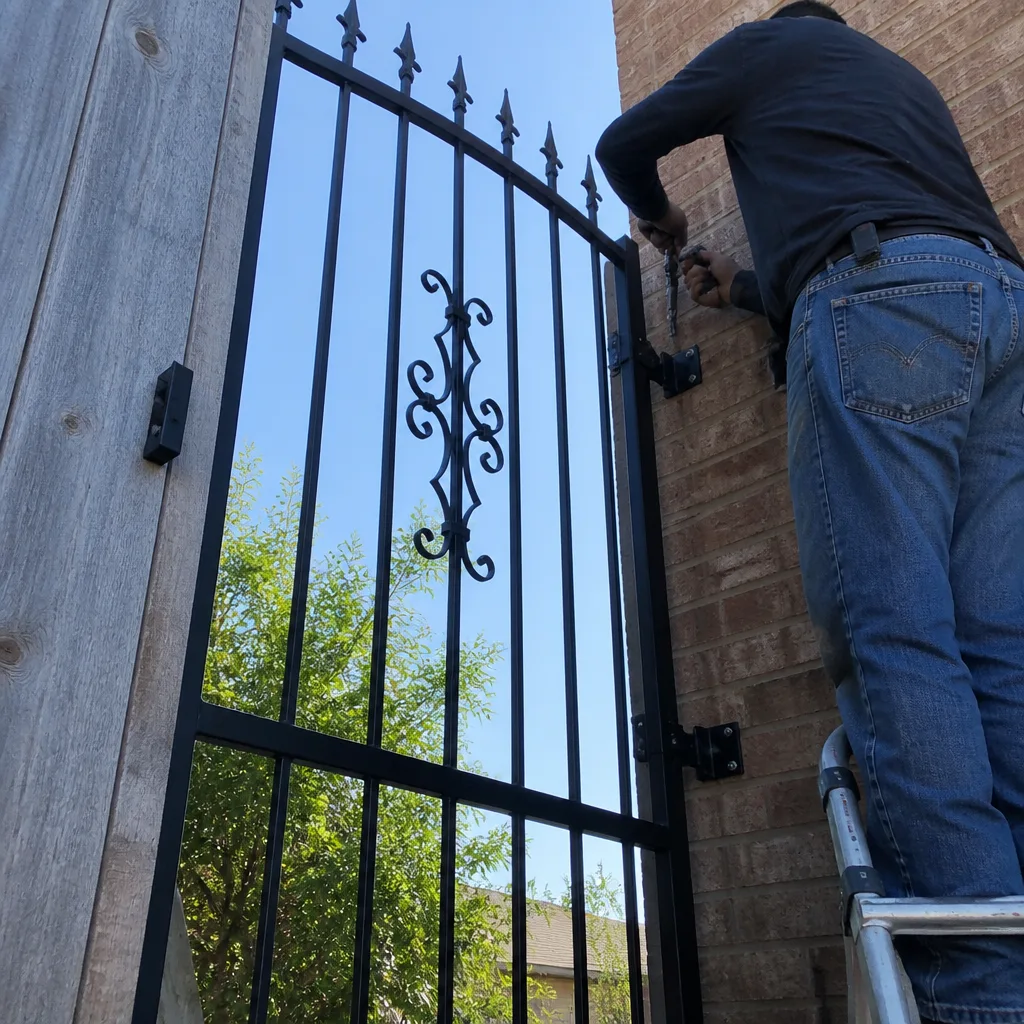
Some seasonal maintenance is straightforward, and some findings warrant a professional eye. Call if you see any of the following: post lean beyond a half-inch, weld cracking of any kind, an operator that hums without moving or moves erratically, a battery that reads below 12.0 volts at rest, or a gate that has reversed direction unexpectedly. These are all signs that the failure is already underway, and the cost of diagnosis is always less than the cost of replacement. Gate Repair from Vance Gate Repair Weatherford includes free estimates in Weatherford, and every job starts with a written price before any work begins. Call (940) 353-4158.
Frequently Asked Questions
A monthly visual check with a photo is sufficient for most gates, with a deeper inspection every quarter that includes post plumb measurement, hinge inspection, and operator observation. Weatherford’s clay soil and temperature swings mean seasonal inspections should be more thorough than in areas with stable soil.
Yes. Vance Gate Repair Weatherford keeps common parts on hand, and a live person answers (940) 353-4158 at any hour. Common repairs like photo-eye realignment, limit switch adjustment, and hinge replacement are typically handled same day.
A seasonal inspection typically runs between $75 and $150, depending on the gate type and the number of components checked. If the inspection finds a needed repair, the repair is quoted in writing before any work starts. Call (940) 353-4158 for an exact quote, estimates are free.
Use a silicone-based or synthetic grease rated for below-freezing temperatures, typically 0°F or lower. Many “all-season” products thicken at 32°F and add drag to the operator. Check the temperature rating on the can, not the marketing label.
The battery provides backup operation during power outages, which are common in Weatherford during spring storms and winter ice events. The battery also smooths voltage delivery to the operator. A weak battery can cause erratic operation even when the main power is on.
We service nine major gate-automation brands including LiftMaster, FAAC, BFT, Linear, Viking, Ghost Controls, DoorKing, Elite, and Mighty Mule. Whatever motor is already on the property, we can work on it. Call (940) 353-4158 with your brand and model for specific guidance.
The Bottom Line
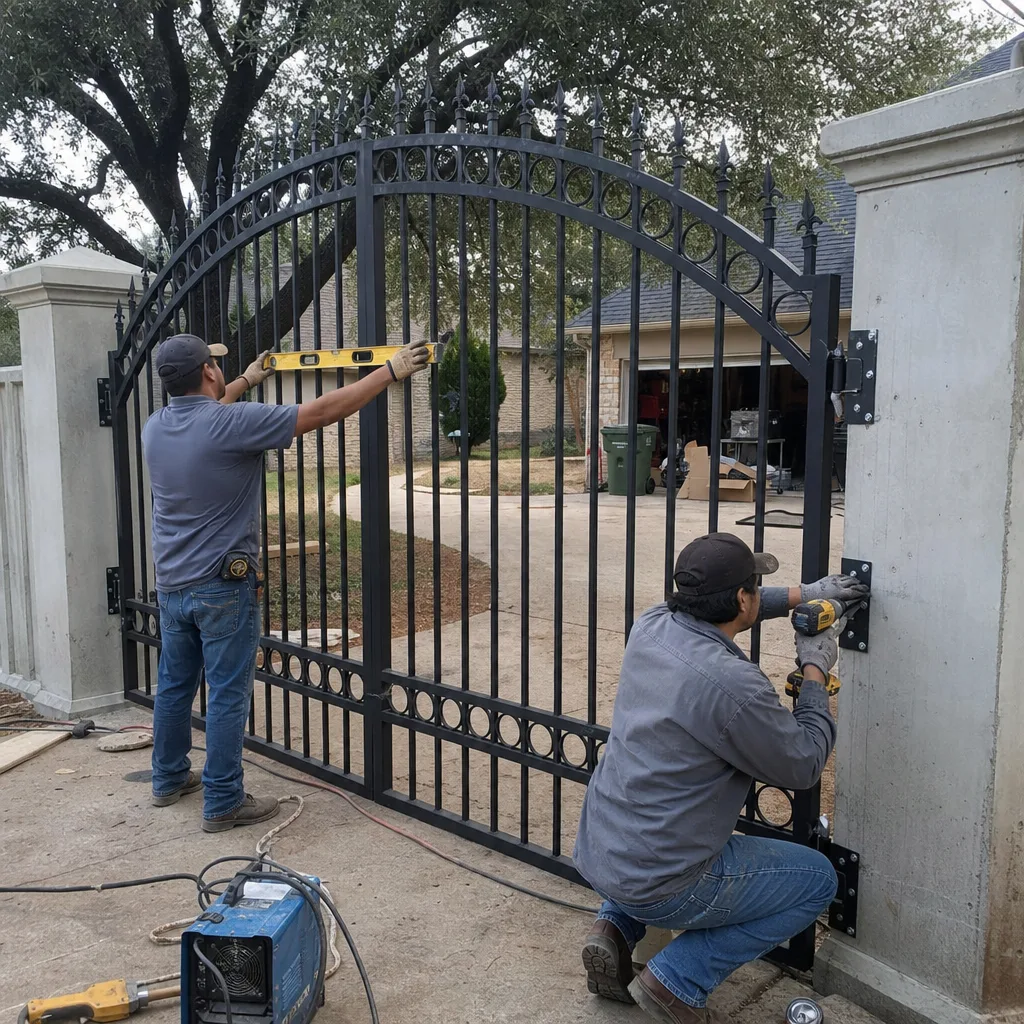
Weatherford gates fail on a predictable seasonal schedule, but the failures are preventable with the right inspections at the right times. Summer is for catching post lean before the operator compensates itself into failure. Fall is for lubrication and battery testing before cold exposes weaknesses. Winter is for monitoring and isolating failures when they occur. Spring is for inspecting welds and hinge plates after freeze-thaw has done its worst. The monthly documentation habit ties it all together into a record that catches change early. Find more guides & resources on our blog to keep your gate running year-round. Twenty minutes a season, a phone camera, and a level will prevent most of the gate failures we see in Parker County.
Written by Adrian Vance, Owner at Vance Gate Repair Weatherford, serving Weatherford since 2014.