
Last updated September 20, 2026
Free on-site gate assessment - hinges, posts, and your LiftMaster or Nice gate operator checked before anything is quoted
The assessment is free and the quote is the invoice.
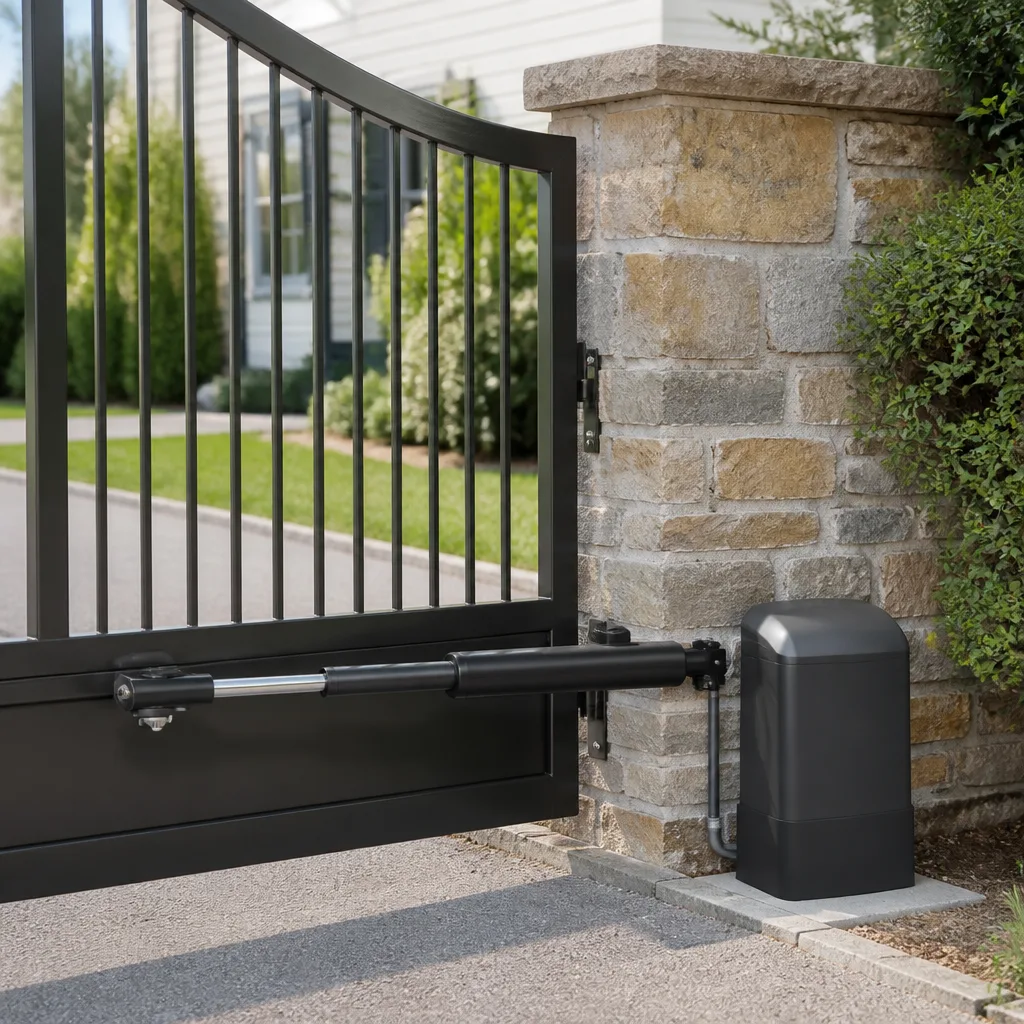
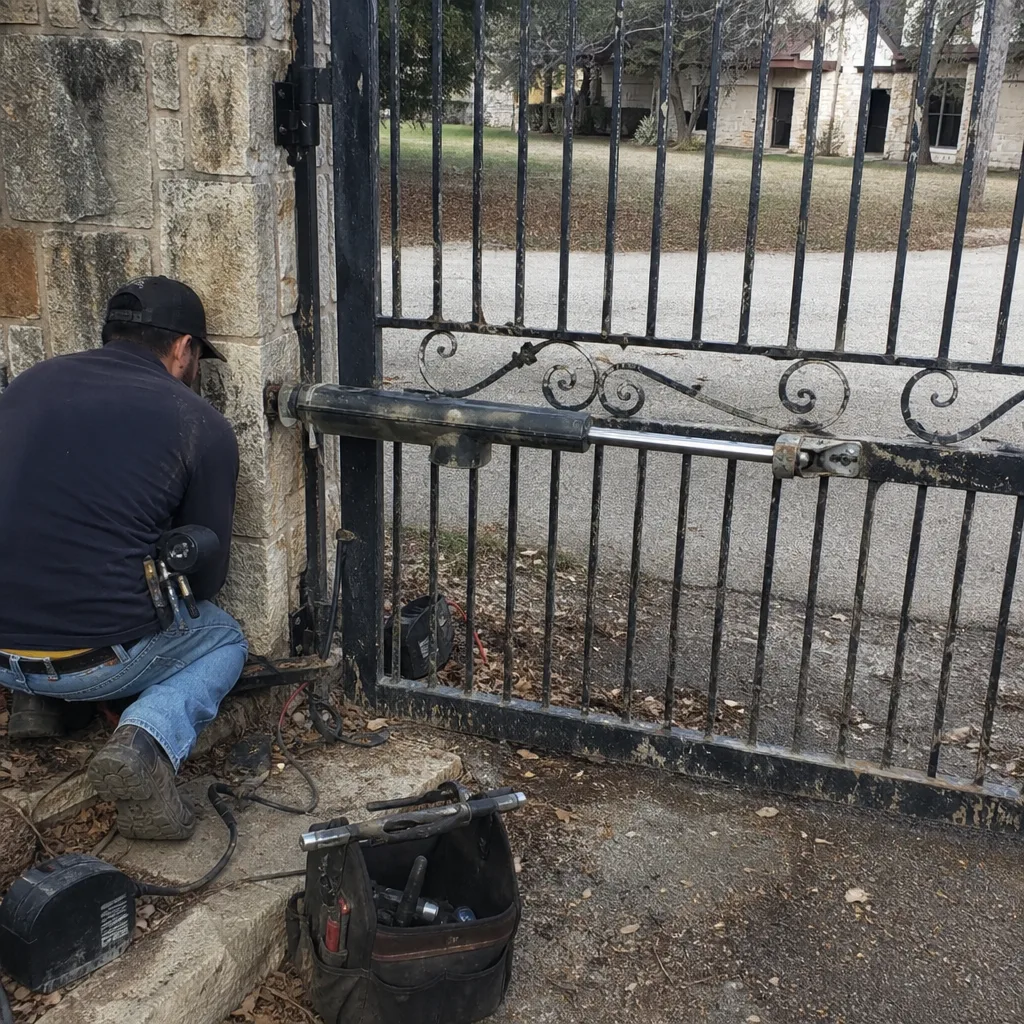 Before
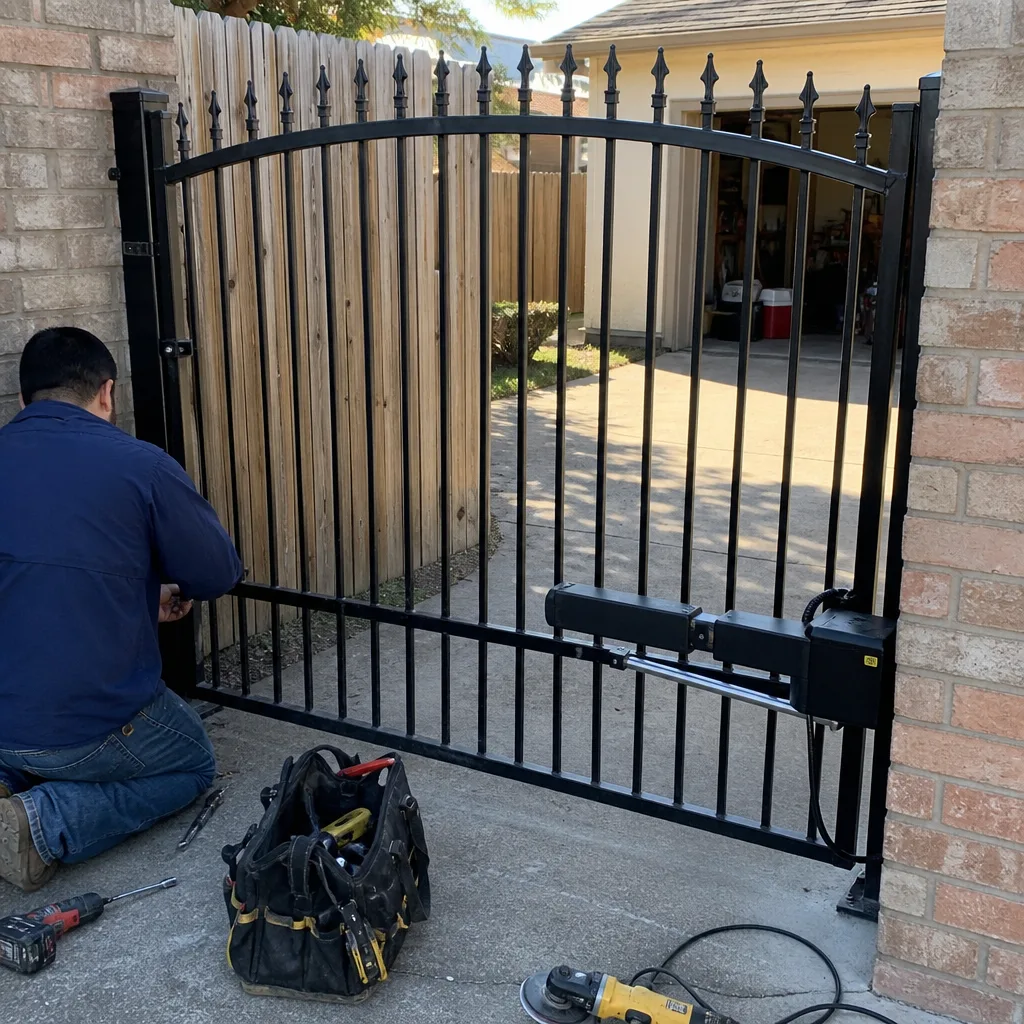 After
After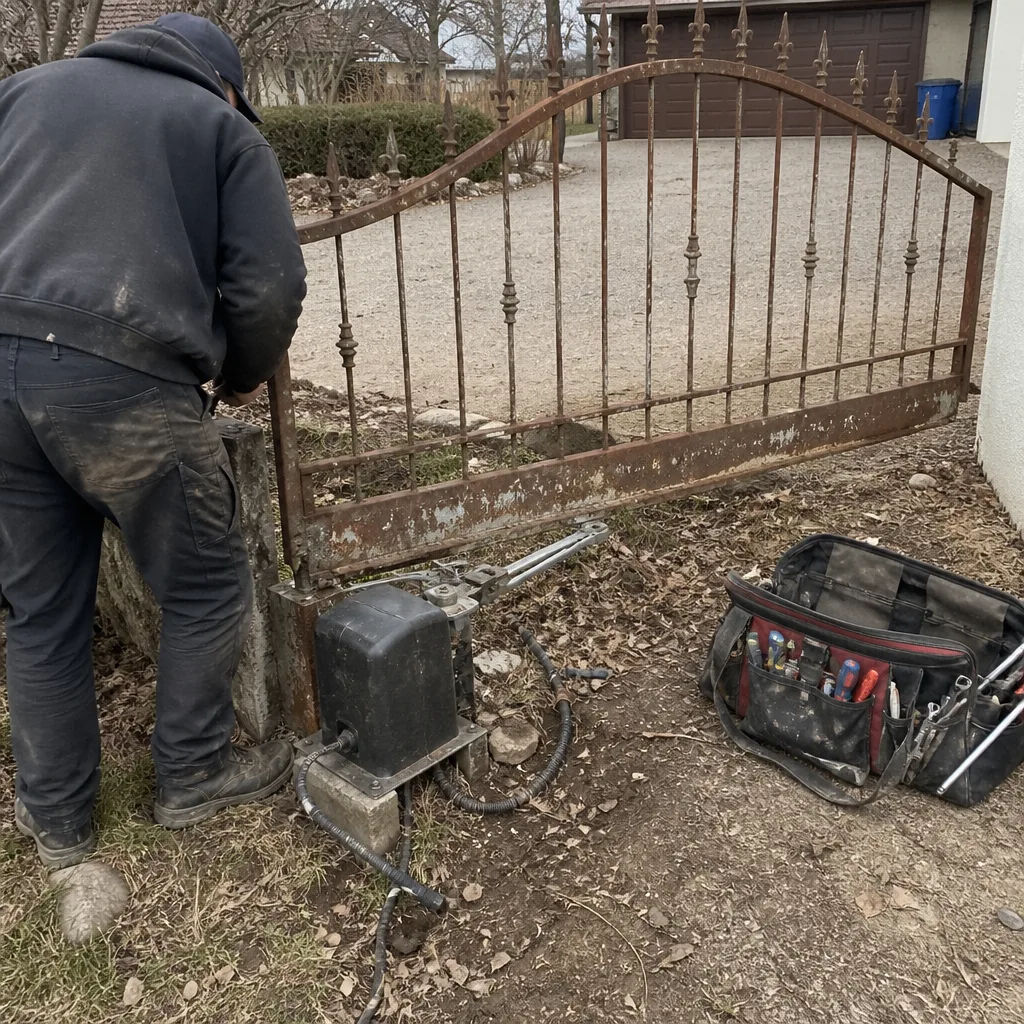 Before
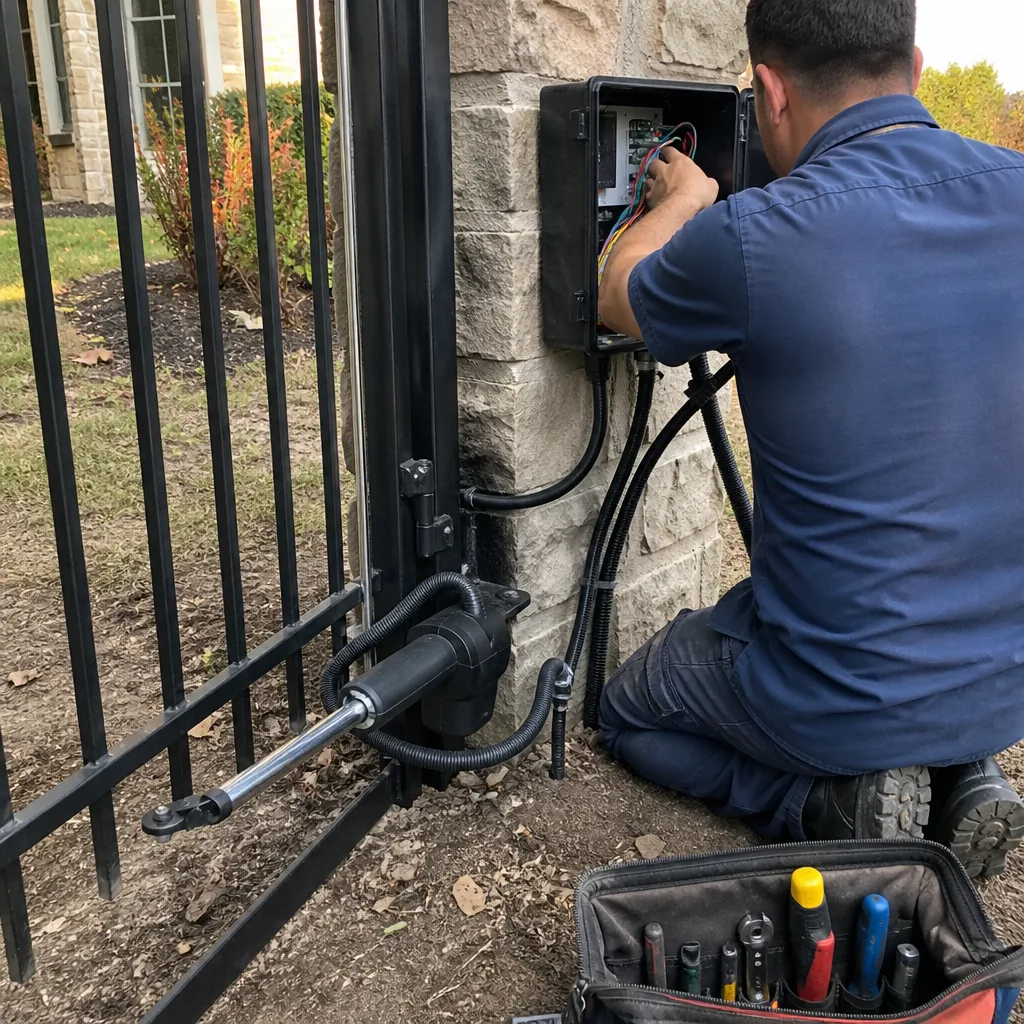 After
After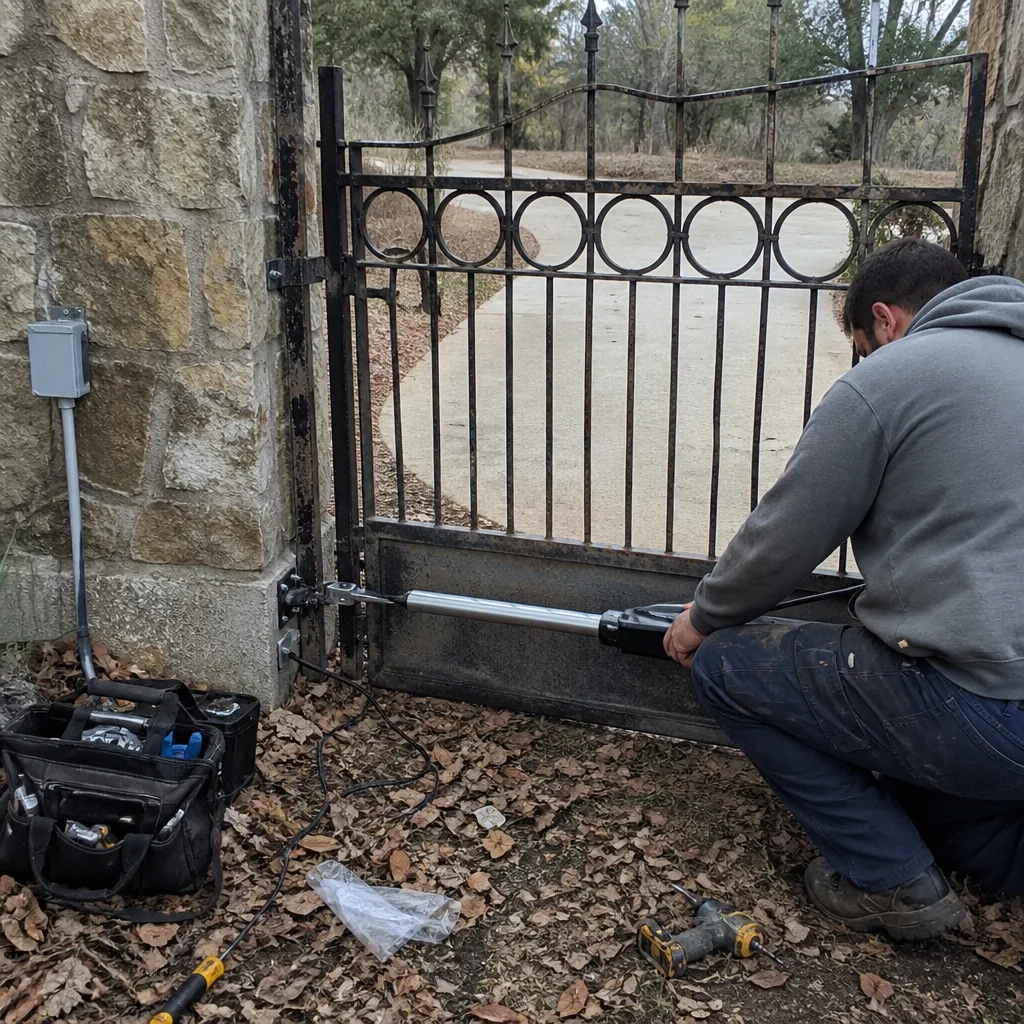 Before
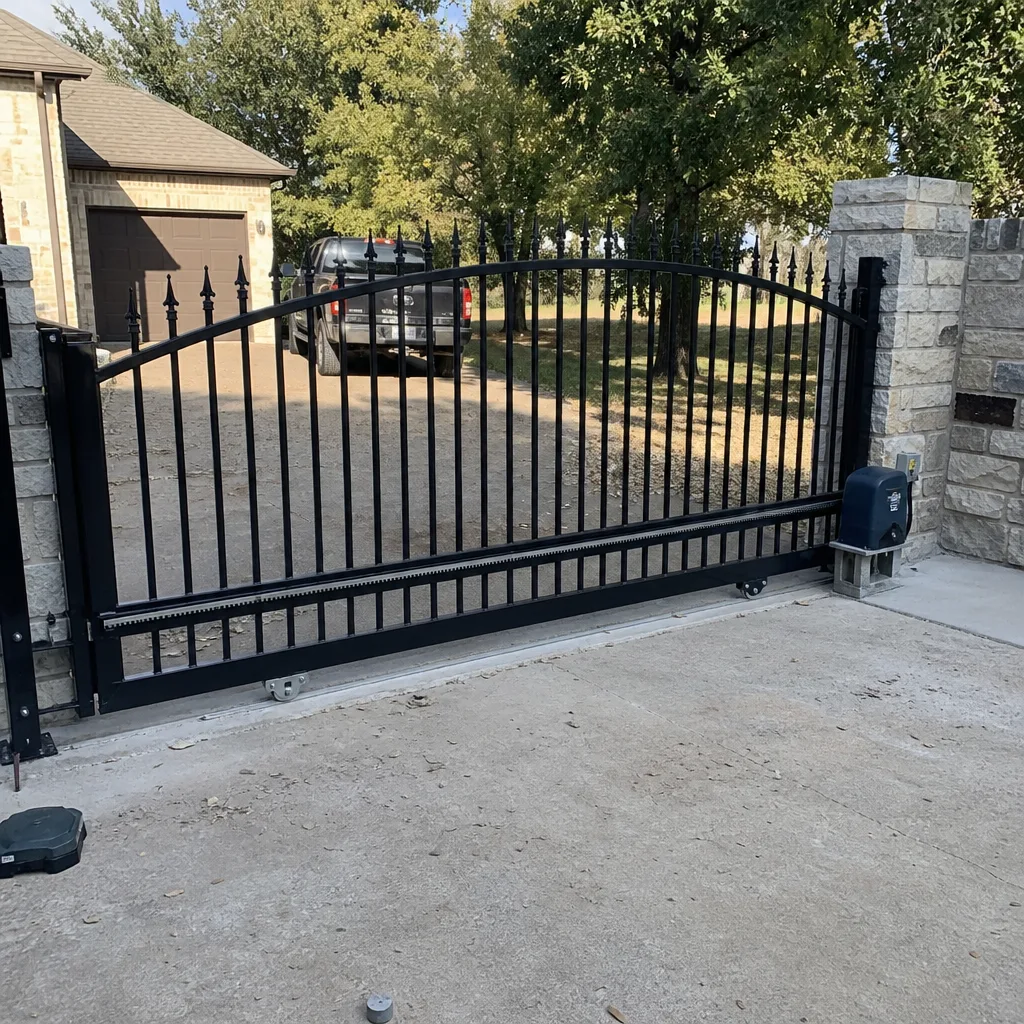 After
AfterGate Repair Warning Signs: A Weatherford Homeowner’s Reference Guide
A gate that hesitates for half a second longer than it used to isn’t ‘getting old’ - it’s telling you exactly which component to look at next. In Weatherford, where temperature swings between February ice and August heat push steel, circuit boards, and capacitor windings through constant expansion cycles, gates fail in a more predictable sequence than most homeowners realize. This guide, alongside our more guides & resources, is built from 22,000-plus gate repairs and installations since 2014, and it walks you through what to listen for, what to measure, and what to photograph before the $200 fix becomes a $900 replacement. You’ll learn the difference between a grinding noise and a clicking noise, why a two-second slowdown matters more than it sounds, and which rust patterns are cosmetic versus structural.
Quick Answer
The most common gate repair warning signs in Weatherford are grinding or clicking noises during travel, a gate that moves slower than it did last month, intermittent response from remotes or keypads, visible sag or lean at the free end of the gate leaf, and rust that has reached welds or hinge plates - all issues our our Gate Repair services handle daily. Each of these symptoms points to a specific component - motor, gear train, capacitor, control board, hinge, or frame - and documenting them early keeps most repairs under $300. A gate that moves normally today but makes a new noise or takes two extra seconds to close is giving you an early diagnostic read; the component telling you about itself is cheaper to fix now than after it takes out its neighbors.
Table of Contents
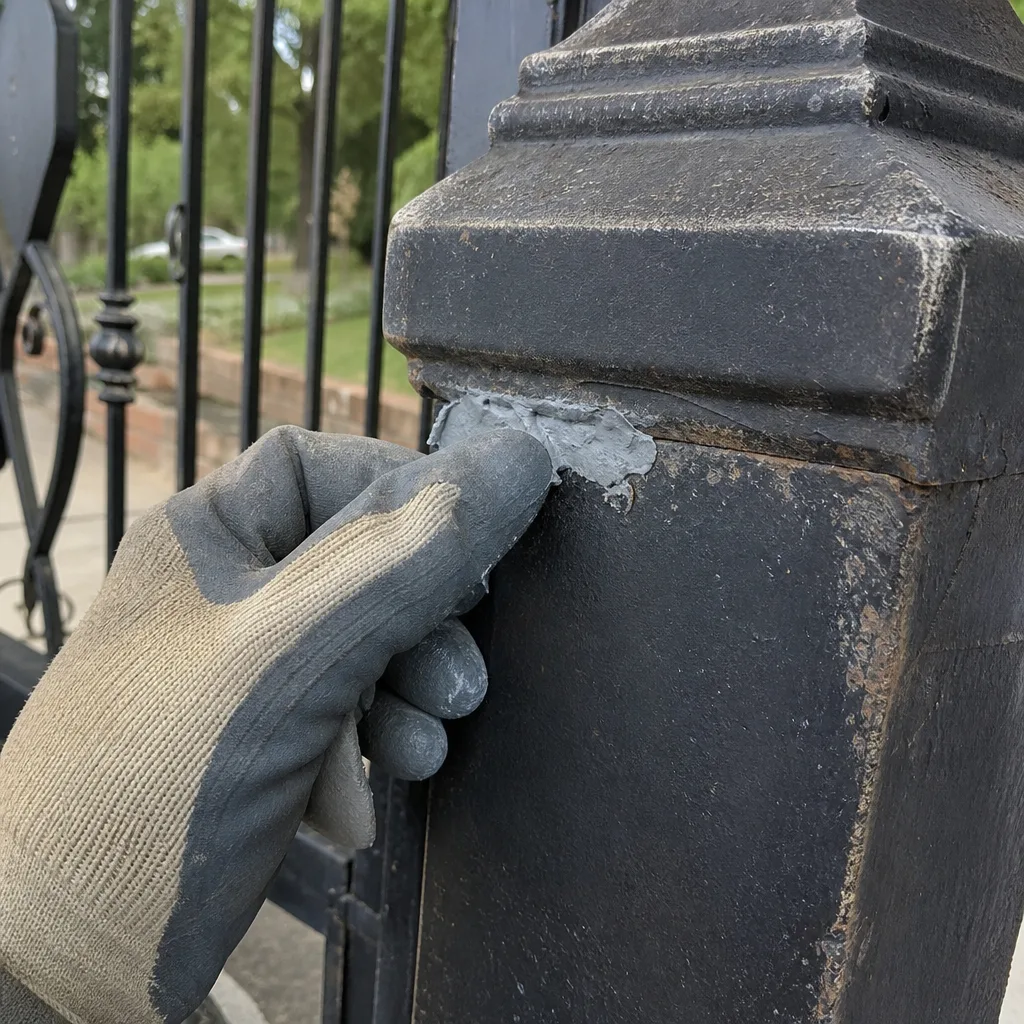
- Noise Diagnostics: Grinding, Clicking, and Humming Sounds
- Timing Changes: Why Two Seconds Slower Is a Real Warning Sign
- Remote Failure: Intermittent Versus Consistent, and Why the Fix Is Different
- Rust Patterns: Surface Oxidation Versus Structural Compromise
- Gate Lean and Sag: How to Measure and Photograph a Baseline
- Electrical Warning Signs: Photo-Eyes, Limit Switches, and Capacitors
- Common Mistakes to Avoid
- When to Call a Professional
- Frequently Asked Questions
- The Bottom Line
BeforeAfterNoise Diagnostics: Grinding, Clicking, and Humming Sounds
Sound is the first and most reliable warning system a gate has. In Weatherford, where wind-blown grit from Parker County roads works its way into gear teeth and bearing surfaces, the noises a gate makes are specific enough to read like a diagnostic code. We find that most homeowners can describe what they heard; what they rarely know is that three distinct sound profiles map to three entirely different problems, priced at three entirely different levels.
A grinding or scraping noise is mechanical. It means metal is contacting metal in a way it was not designed to - a gear tooth with a chipped edge, a chain that has stretched loose and is riding over the top of a sprocket, a roller running dry against its track, or a hinge pin that has lost its lubrication and is now wearing the barrel. Grinding does not go away on its own, and it does not stay cheap forever. We’ve pulled V-belt fragments and disintegrated gear teeth out of motors that ran for six extra months after the first grinding noise, and the repair cost doubled because the debris took out the limit switch assembly on the way through. Grinding, addressed within the first few weeks of appearing, is typically a gear, roller, or hinge repair in the $140-$280 range. Grinding, ignored for three months, is often a motor replacement at $450-$900.
A rapid clicking noise is electrical or relay-based, and it almost always comes from the control board or a battery system that cannot deliver enough current to start the motor. A single click when the gate is told to open, followed by nothing, is frequently a capacitor that has lost its charge-holding capacity in the Weatherford heat. Capacitors are the component that starts the motor; when one dies, the gate clicks but the arm doesn’t move. Capacitor replacement is a $90-$180 repair, and it is one of the most misdiagnosed failures in the industry. Homeowners get quoted a full motor replacement when the actual part cost under $40 - gate motor and opener diagnosis is where a written parts list changes the conversation.
A humming sound with no movement tells you the motor is receiving power and trying to run, but the mechanical path is blocked or the start winding is not engaging. This is the sound pattern that gets a control board blamed for what is actually a seized gearbox or an overheated motor. We approach humming as a board-or-capacitor question first, then move to the mechanical side if the electrical side checks out.
Timing Changes: Why Two Seconds Slower Is a Real Warning Sign
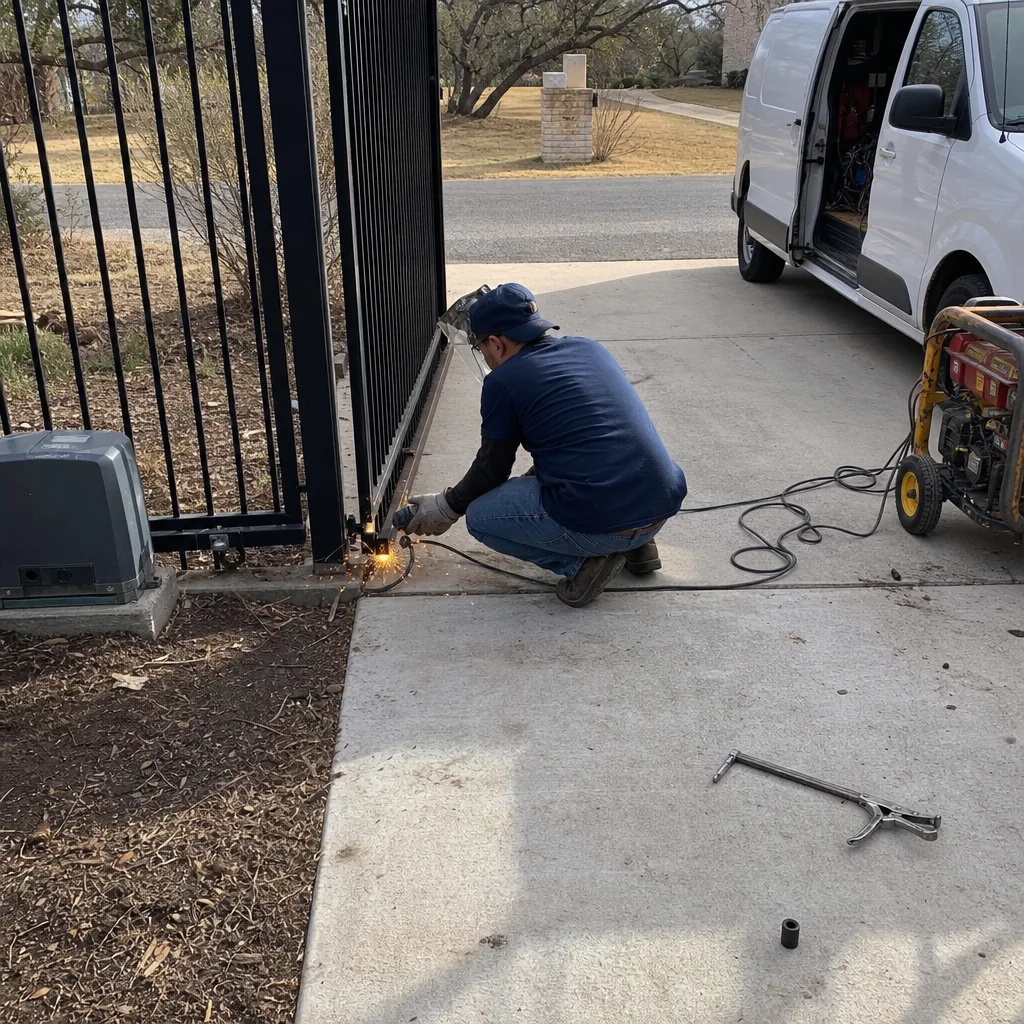
Gates get slower when something in the drive path is resisting. That resistance is measurable, and the earlier you measure it, the smaller the component that’s wearing out. A two-second slowdown on a gate that used to close in 14 seconds means the motor is working against roughly 15 percent more resistance than it was designed for. That resistance is going somewhere: into a hinge that’s seizing, a gear train that’s losing tooth profile, a chain that’s stretching, or a wheel that’s flattening.
What makes timing changes such a strong early signal in Weatherford specifically is the temperature cycling. A gate that works fine in October and slows down in February often has a lubrication issue - the grease in the gearbox has thickened in the cold, or a bearing surface that was marginal in summer has contracted just enough to bind. A gate that slows in August is telling you about heat soak in the motor or a capacitor that loses efficiency as it gets hot. Neither of these is a mystery; both are documented by timing the gate and writing the number down.
How to document a timing change properly:
- Time the gate from fully closed to fully open, and from fully open to fully closed, on three separate days.
- Record the temperature and the time of day. A gate measured at 6 a.m. in January and 3 p.m. in July is not the same test.
- Count the audible strain - note whether the motor pitch changes mid-travel, which usually indicates the gate is binding at a specific point in the arc.
- Photograph the gate in its fully open and fully closed positions. We build baseline photo records on every visit for exactly this reason.
Under the Haven Standard - the operating practice we’ve used since Adrian Vance started Vance Gate Repair in 2014 out of commercial access-control work - every visit leaves a documented record of what was measured. That means a technician who comes out in March can compare against the timing numbers from November, not against a guess. If your gate needs a gate repair in Weatherford, that baseline is what keeps the work scoped correctly.
Remote Failure: Intermittent Versus Consistent, and Why the Fix Is Different
Remote failures break into two categories that are almost never the same problem, and homeowners lose money when they get them conflated. An intermittent remote - works from the driveway lane sometimes, fails from the mailbox line other times, works when the car is within 20 feet - is a signal or receiver issue. It is not a failing motor. It is not a dead battery in the remote, or not usually. Intermittent failure most often traces to antenna placement on the receiver, interference from a nearby transformer or LED driver, or a receiver board that needs a stronger antenna connection.
A consistent remote failure - every press does nothing from any distance, on every remote - is a receiver board, control board, or power supply issue. When all remotes fail simultaneously, the problem is at the gate, not in the hands holding the buttons. This distinction directs the repair budget in completely different directions. A remote range or antenna issue is often a $95-$180 service call and adjustment. A dead receiver board on a DoorKing or Linear control unit runs $250-$450 with the part, depending on the board revision and whether it needs to be ordered or is already on the truck.
Vance Gate Repair services nine gate-automation brands including Linear, DoorKing, and Ghost Controls, which means the fix path starts with the motor and control hardware already on the property - a replacement motor is not the default answer. For help choosing the right professional, see How to Hire a Gate Repair Contractor in Weatherford: A Step-by-Step Guide. Most remote problems in Parker County are thirty-minute repairs, not equipment swaps.
Rust Patterns: Surface Oxidation Versus Structural Compromise
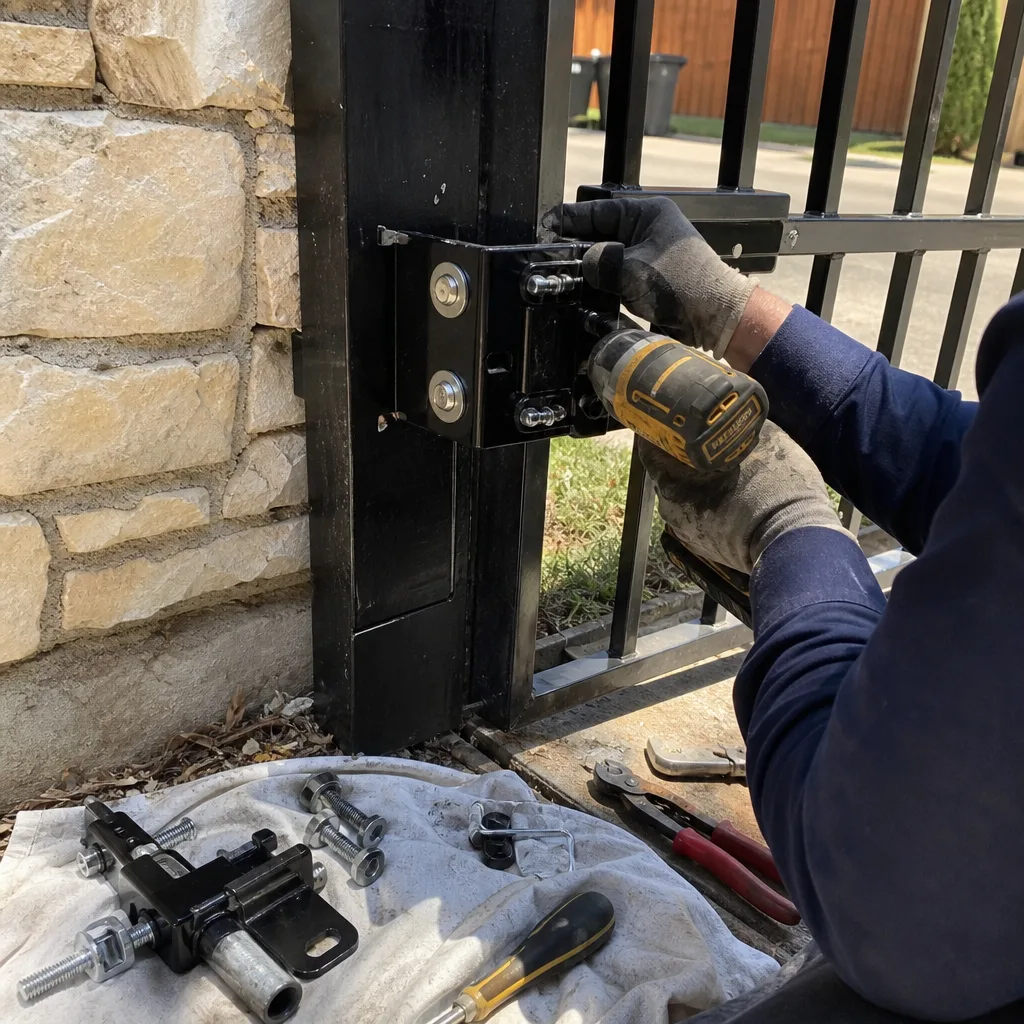
Weatherford’s humidity and the occasional ice event mean steel gates rust. Not all rust is equal, and knowing what you’re looking at on your own gate is the difference between an afternoon with a wire wheel and a gate leaf that needs welding or replacement. Surface oxidation is orange-brown, it sits on top of the steel, and it comes off with some elbow grease and leaves intact steel underneath. Structurally significant rust is darker, often flaking in layers, and it concentrates where two pieces of steel meet - at weld joints, inside hinge barrels, along the bottom rail where water sits, and around bolt holes.
What to look for on a Weatherford gate:
- Flaking or scaling at weld joints - if you can pick pieces of the gate off at a corner joint, the weld is oxidizing through.
- Rust weeping from inside a tube - square-tube gates rust from the inside out because water enters through pinholes in the top rail and can’t escape.
- A brown-orange bloom around the hinge plates - hinges carry the entire weight of the gate leaf; rust there is a structural flag, not a cosmetic one.
- Discoloration spreading from the bottom rail upward - bottom rails sit nearest dew, irrigation overspray, and the occasional Weatherford street-ponding that splashes up.
We weld and repair gates rather than replacing them by default, and the decisive factor is usually whether the rust has reached structural steel - the welds, the hinge pivots, or the main gussets. Surface rust is a paint-and-seal job. Structural rust requires cutting out the compromised section and welding in new material. A gate installation in Weatherford only becomes the right recommendation when the steel itself is no longer safe to weld to.
Gate Lean and Sag: How to Measure and Photograph a Baseline
Every hinged gate leaf has a free end - the end that is not attached to the hinge post - and that free end is where wear announces itself as lean. A gate leaf that has sagged even half an inch at the latch end is telling you the hinge is wearing, the post is shifting, or the gate’s internal frame is beginning to twist. Half an inch of sag changes the way the latch engages, changes the way the gate sits on the opener arm, and accelerates wear on every moving part from that point outward.
Post lean is the most expensive version of this. In Weatherford’s clay-heavy soils, posts move - winter moisture, summer contraction, and the occasional drought-year settling all work against a post that was set without enough concrete mass. The good news is that post movement can be established as a baseline before it becomes structural. For year-round maintenance tips, see Seasonal Gate Repair Care for Weatherford: Year-Round Homeowner’s Guide. Here is the homeowner-level measurement that we teach customers to take:
- Stand at the free end of the closed gate. Place a level vertically against the gate leaf, or use a smartphone level app held flush against the top rail.
- Read the lean in degrees or bubble position. Record it.
- Measure the gap between the gate’s latch and the latch receiver post - the exact distance in inches.
- Measure the height of the gate leaf at the free end from ground level - this number changes as the post leans.
- Photograph all three measurements and store them. Six months later, measure again.
A gate leaf that has moved more than half an inch in any of those three measurements within a year has a hinge or post problem, not a gate problem. The repair is still usually welding or post-resetting work, but it is a $200-$450 repair when caught at the baseline, versus a $900+ replacement when a hinge finally tears through the post mounting plate and the gate drops.
Electrical Warning Signs: Photo-Eyes, Limit Switches, and Capacitors
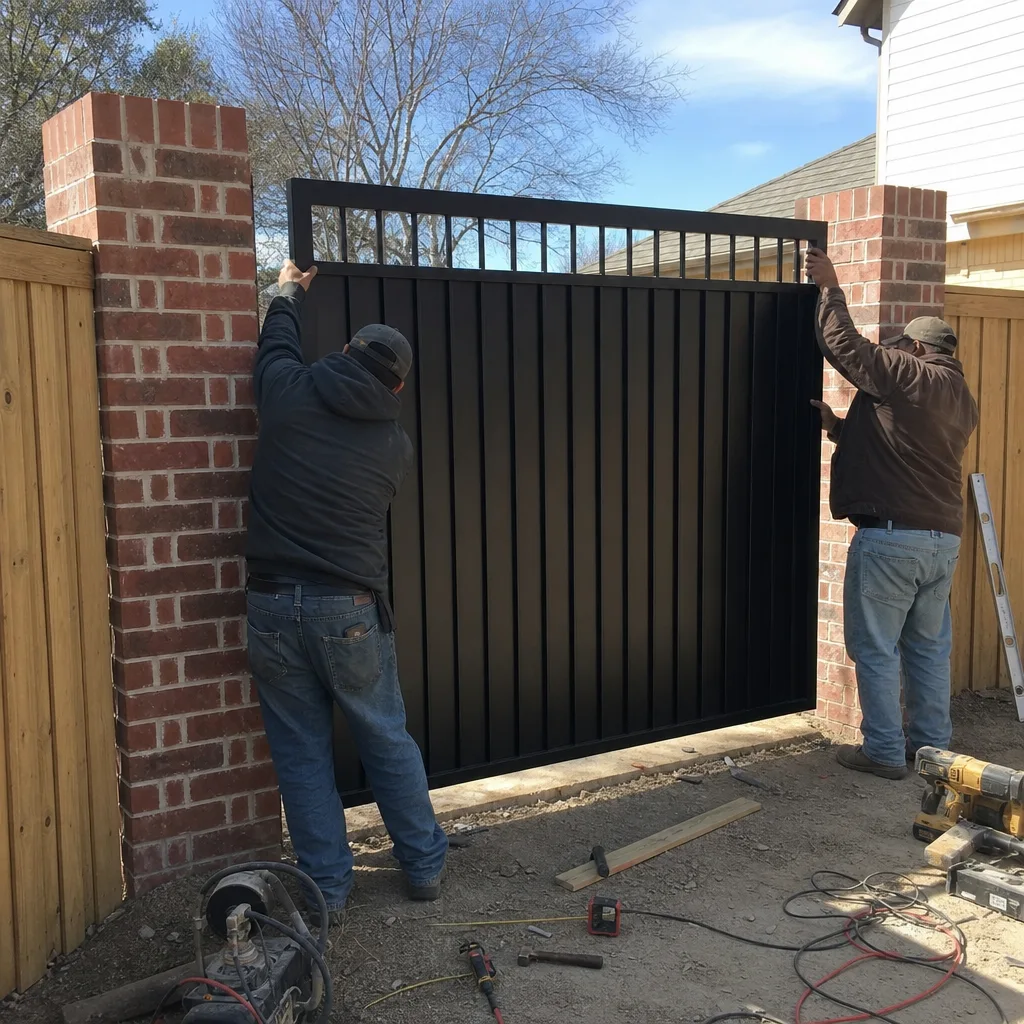
The electrical side of a gate automation system gives off its own warning signs, and they are specific and documentable. Most of our Weatherford calls involving a gate that “has a mind of its own” trace back to one of three components: a misaligned photo-eye, an over-travel limit switch, or a failing capacitor.
A misaligned photo-eye is the infrared beam that stops the gate if something crosses its path while the gate is closing. In Weatherford, strong wind gusts, mower bumps, and the occasional dog collision can knock a photo-eye out of alignment by as little as two inches. The symptom is a gate that reverses mid-close for no visible reason, or a gate that won’t close at all when every other signal checks out. A photo-eye alignment check takes ten minutes and is one of the most common no-charge adjustments on a service call.
A limit switch set past travel produces a gate that stops a foot early, fails to fully close, or slams hard against the stop every cycle. These are switches inside the operator head that tell the motor when to stop; when they drift out of calibration, the gate doesn’t know where it is. We photograph limit-switch positions on every visit - a customer can look at the photo and see exactly where the switch was set, and a future technician can see what’s changed.
A failing capacitor produces the click-and-nothing pattern described earlier, and it also produces a gate that starts fine in the morning and struggles at 3 p.m. Capacitors degrade with heat and with age, and a Weatherford summer is a stress test. The pattern - click, short partial travel, stop - is usually not the motor. It’s the part that starts the motor, and replacing it is typically under $180.
All three of these are gate motor and opener issues we diagnose on the first visit, with the reading written down and the photo on file. That documentation habit came from commercial access control work, where a site technician who couldn’t produce a wiring diagram wasn’t a technician at all. We carried it into residential work because it’s the right way to work.
Common Mistakes to Avoid
- Lubricating a grinding gate instead of finding the grinding part. Spraying lubricant into a gear train quiets the noise for a week, then the lubricant thickens, attracts Parker County grit, and accelerates the wear. Grinding means a component is failing; lubricating masks the diagnostic signal.
- Adjusting the hinges on a sagging gate without checking the post. If the post is leaning, hinge adjustment only transfers the stress elsewhere. The fix is the post, not the hinge plate.
- Treating every remote range problem as a battery issue. We see remotes with fresh batteries still only working at ten feet while the antenna wire is draped inside the operator housing. The antenna is a ten-minute fix; the fresh battery was never the issue.
- Ignoring a gate that reverses mid-close. A gate that reverses for no visible reason is often a photo-eye telling you it’s misaligned. Leaving it means the gate either stops closing at all, or worse, the safety beam gets bypassed and someone touches a closing gate.
- Putting off weld rust until the gate is falling off. Weld rust at a bottom rail or hinge gusset weakens the entire gate leaf. The repair when the rust is first visible is a cut-and-weld job under $300. The repair after the corner lets go is a new gate leaf.
- Running a gate for months after a humming sound starts. A humming motor with no movement is stalled against something. Every cycle heats the winding. By the time the humming stops, the motor is often cooked and the repair budget moves from $150 territory to $700-plus.
When to Call a Professional
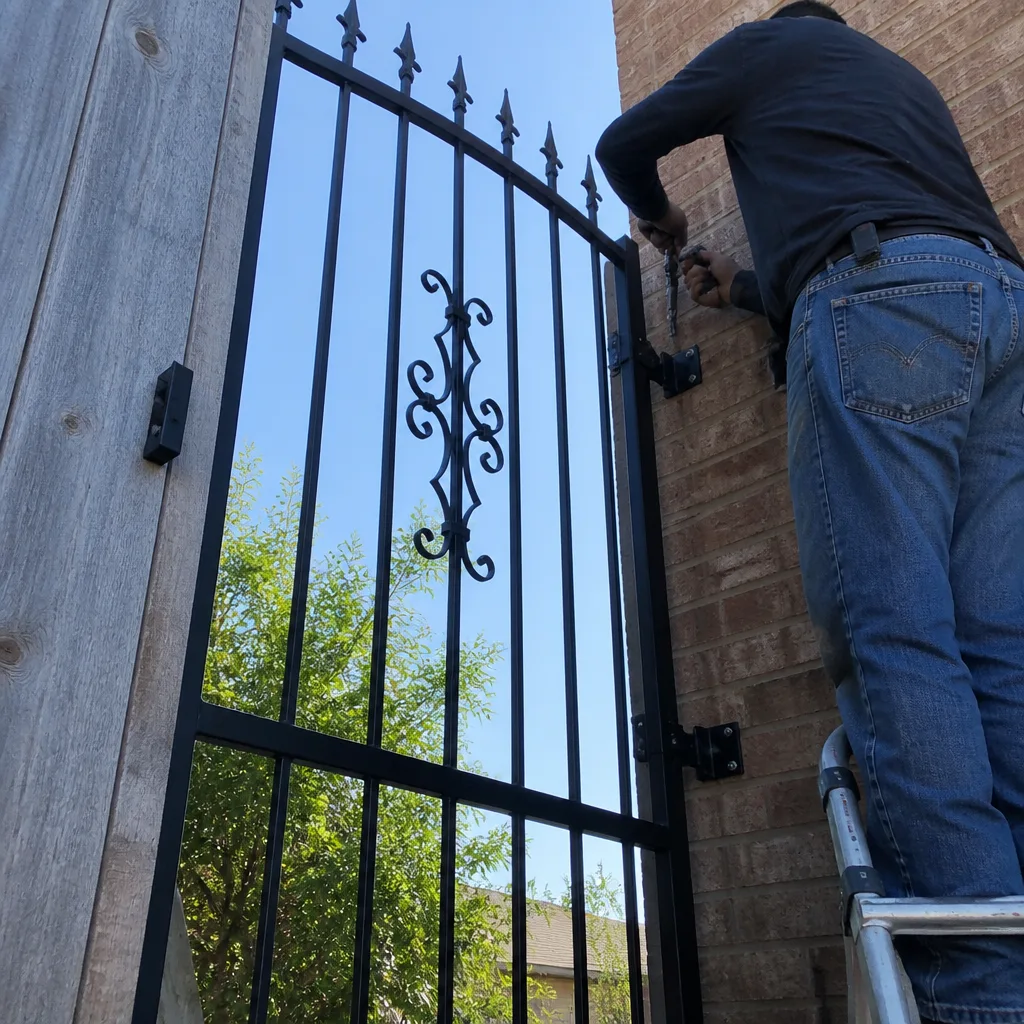
Call a professional when the gate is making a noise it didn’t make last month, when the remote stops working consistently, when the gate reverses without a visible obstruction, or when you can see the free end dip lower than it used to sit. Gate motors involve high-tension springs, and a gate leaf under power has enough stored force to cause serious injury if a spring or hinge releases unexpectedly. This is not a place for exploratory DIY; it’s a place for a named technician with the brand experience on your existing hardware. Vance Gate Repair Weatherford offers free estimates in Weatherford - call (940) 353-4158 and a live person answers, day or night.
Frequently Asked Questions
Most gate repairs in Weatherford run between $140 and $450, with light work like photo-eye alignment and limit-switch calibration on the low end, hinge and weld repairs in the middle, and motor or control-board replacements above that. The price is always written and handed to you before any work starts - no verbal estimate, no end-of-job surprise. Call (940) 353-4158 for a free estimate with exact numbers.
A grinding noise means two metal surfaces are contacting each other in a way the design did not intend - a chipped gear tooth, a loose chain riding over sprocket teeth, a dry roller, or a worn hinge barrel. It is a mechanical failure in progress, and addressing it early usually keeps the repair under $300. Left alone, grinding debris travels into the motor and turns a gear repair into a motor replacement.
A click with no movement almost always points to a capacitor that has failed or a battery that cannot deliver enough current to start the motor. The capacitor is the component that starts the motor; when it dies in Weatherford’s summer heat, the gate clicks and stays still. It is one of the most misdiagnosed failures out there - the part costs under $40, and the repair is typically under $180.
For most gate repair calls in Weatherford, yes - we carry parts for the major automation brands on the trucks, and a substantial number of repairs are completed on the first visit. A live person answers the phone 24 hours a day, so you won’t be routed through a voicemail tree. Call (940) 353-4158 and tell us what the gate is doing; we’ll tell you over the phone whether it sounds like a same-day fix.
A slight lean at the free end of a gate is an early warning, not a normal condition. Half an inch of sag means a hinge or post is wearing, and both are documented with a level and a measurement. The repair at the baseline stage is usually under $450; the repair after the hinge mounting fails is several times that.
Vance Gate Repair services nine gate-automation brands, including LiftMaster, FAAC, BFT, Linear, Viking, Ghost Controls, DoorKing, Elite, and Mighty Mule. You don’t need a specific brand of motor to get a repair; you need a technician who knows the brand already on the property - that’s the whole approach here.
The Bottom Line
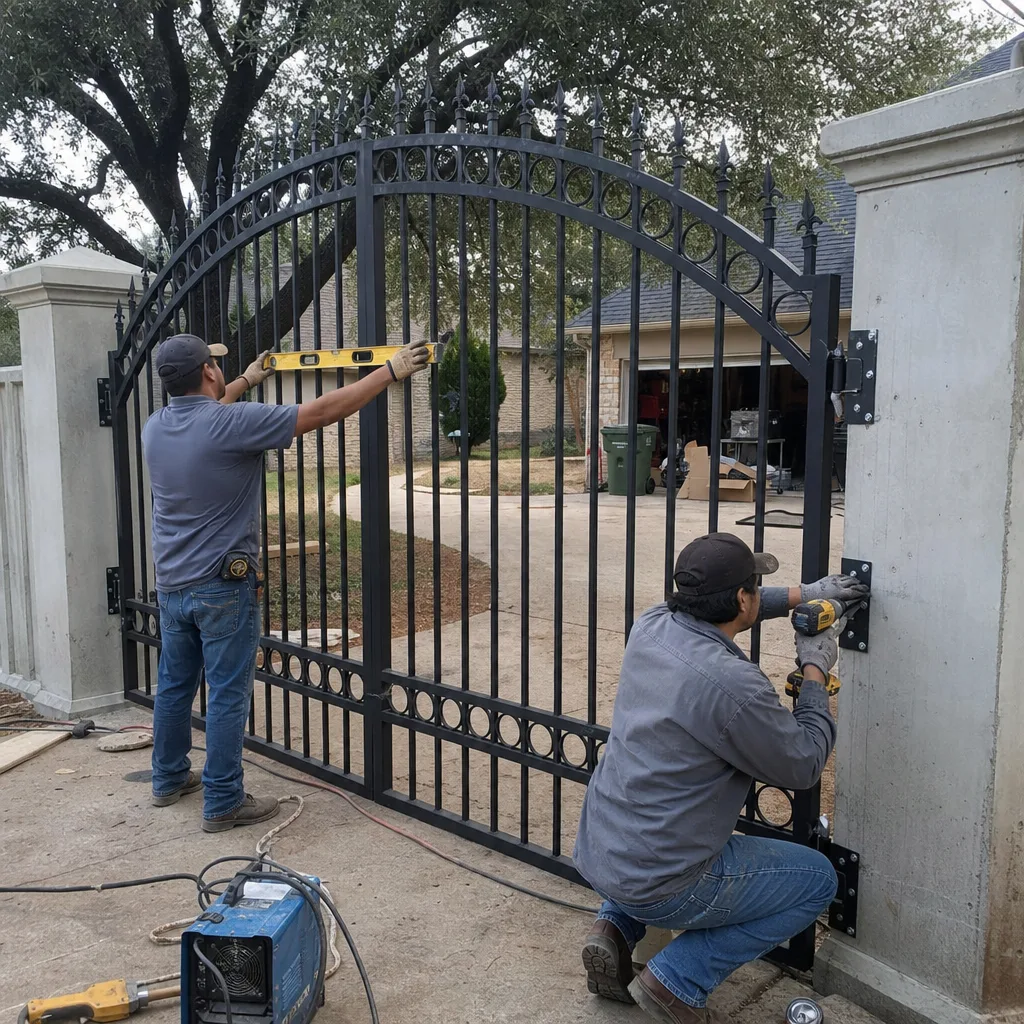
Gate failures in Weatherford announce themselves in sequence - noise first, then timing, then intermittent behavior, then structural movement - and each stage has a specific diagnostic fingerprint. A homeowner who can distinguish a grinding sound from a clicking sound, a timing slowdown from a temperature effect, and surface rust from weld compromise can catch almost every serious gate failure before it becomes a replacement job. Document what you observe, photograph what you measure, and when the noise or the lean shows up, call someone who writes the price down before touching the gate. Vance Gate Repair Weatherford home.
Written by Adrian Vance, Owner at Vance Gate Repair Weatherford, serving Weatherford since 2014.